Technology
Agentic AI Architecture Explained: How Autonomous AI Agents Actually Work
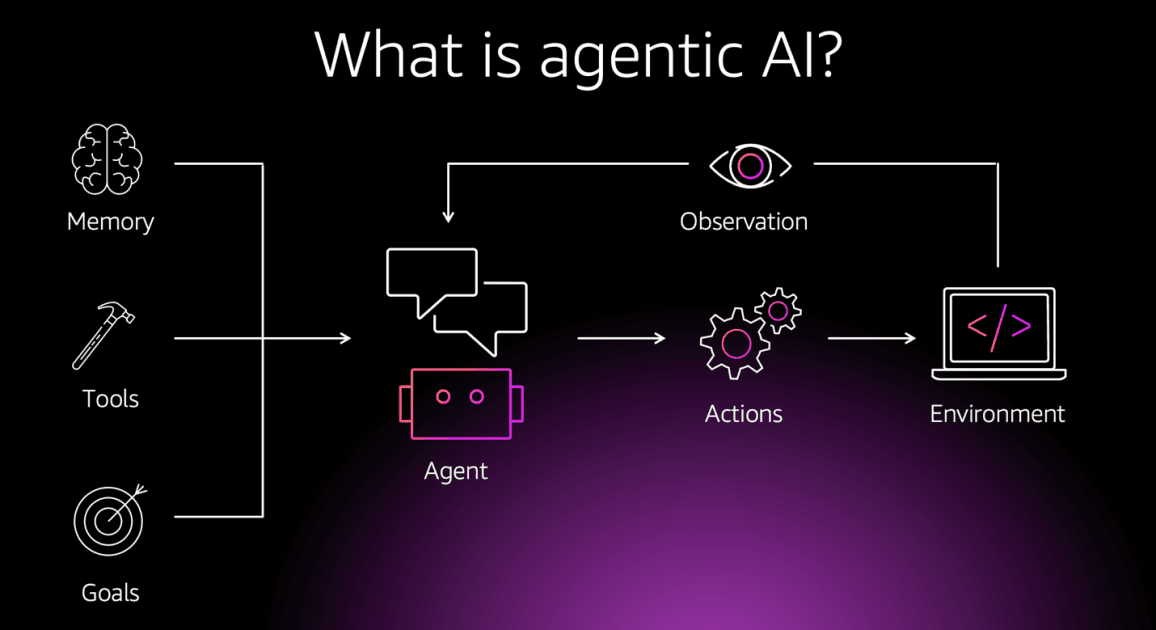
- Agentic AI refers to AI systems that can plan, reason, use tools, remember information, and take actions autonomously.
- Modern Agentic AI Architecture combines LLMs, memory, planning, tool calling, and execution loops.
- AI agents are moving beyond chatbots and becoming autonomous digital workers.
- Multi-agent systems allow specialized agents to collaborate on complex tasks.
- Agentic AI is becoming the foundation of next-generation software products and enterprise automation.
🎯 Introduction
The AI industry is rapidly shifting from simple chatbots to Agentic AI systems capable of reasoning, planning, and executing tasks independently. Companies like OpenAI, Anthropic, Microsoft, and Google are investing heavily in agent-first ecosystems because traditional chat interfaces are reaching their limits.
The future belongs to systems that can understand goals, break them into steps, interact with tools, and complete work with minimal human intervention. This is where Agentic AI Architecture becomes critical.
Understanding how Agentic AI works is quickly becoming an essential skill for developers, architects, and technology leaders.
🧠 What Is Agentic AI?
Agentic AI refers to AI systems that can:
- Understand objectives
- Create plans
- Make decisions
- Use external tools
- Learn from previous actions
- Execute tasks autonomously
Unlike traditional chatbots that simply respond to prompts, Agentic AI systems actively work toward achieving goals.
Traditional AI
User → Prompt → LLM → Response
Agentic AI
User Goal
    ↓
Reasoning
    ↓
Planning
    ↓
Tool Usage
    ↓
Execution
    ↓
Feedback
    ↓
Goal Completion
This additional decision-making layer is what makes Agentic AI fundamentally different.
Why Agentic AI Matters
Developers often struggle with building AI systems that can perform real-world work.
A chatbot can answer questions.
An agent can:
- Book meetings
- Generate reports
- Analyze data
- Manage projects
- Write code
- Execute workflows
This shift transforms AI from an information tool into a productivity engine.
🔥 Contrarian Insight
Most people believe better models will create better AI products.
That's only partially true.
The biggest competitive advantage isn't model intelligence anymore.
It's orchestration.
The companies that dominate the next decade won't necessarily own the best models—they'll own the best agent architecture.
Shareable Insight:
"The future of AI isn't a smarter chatbot. It's an autonomous system that knows how to get work done."
🔍 Core Components of Agentic AI Architecture
Modern Agentic AI systems typically consist of five major layers.
1. Reasoning Layer
The reasoning layer determines:
- What the user wants
- Current context
- Available resources
- Next actions
This layer is powered by LLMs.
Responsibilities:
- Task decomposition
- Goal understanding
- Decision making
2. Planning Layer
Before executing actions, agents create plans.
Example:
Goal:
Create a competitor analysis report.
Generated Plan:
1. Search competitors
2. Collect data
3. Analyze findings
4. Create report
5. Deliver results
Planning allows agents to handle complex objectives systematically.
3. Memory Layer
Memory is one of the most important parts of Agentic AI.
Without memory:
Every interaction starts from zero.
With memory:
Agents remember:
- User preferences
- Previous tasks
- Business context
- Historical conversations
Memory Types:
Short-Term Memory
Stores active task context.
Long-Term Memory
Stores persistent knowledge.
Vector Memory
Stores embeddings for semantic retrieval.
4. Tool Layer
AI agents become useful when connected to tools.
Examples:
- Google Search
- GitHub
- Slack
- Databases
- CRM Systems
- Internal APIs
Tool usage allows agents to interact with the outside world.
Without tools, agents remain limited to model knowledge.
5. Execution Layer
Responsible for:
- Running actions
- Calling APIs
- Managing workflows
- Handling failures
- Monitoring outcomes
Execution transforms plans into results.
Agentic AI Architecture Diagram
+--------------------+
|      User Goal     |
+--------------------+
           |
           v
+--------------------+
|   Reasoning Layer  |
+--------------------+
           |
           v
+--------------------+
|    Planning Layer  |
+--------------------+
           |
           v
+--------------------+
|    Memory Layer    |
+--------------------+
           |
           v
+--------------------+
|     Tool Layer     |
+--------------------+
           |
           v
+--------------------+
|  Execution Layer   |
+--------------------+
           |
           v
+--------------------+
|    Final Result    |
+--------------------+
Multi-Agent Systems Explained
As tasks become more complex, a single agent may not be enough.
This is where multi-agent systems come in.
Instead of one general-purpose agent, multiple specialized agents collaborate.
Example:
Research Agent
Collects information.
Analysis Agent
Processes findings.
Writing Agent
Creates content.
Review Agent
Validates quality.
Architecture:
Coordinator Agent
        |
  -----------------
  |       |       |
Research Analysis Writing
  |       |       |
  --------|-------
          |
      Reviewer
This approach improves scalability and specialization.
🏗️ System Design for Production AI Agents
API Layer
Handles:
- User requests
- Authentication
- Agent communication
Database Layer
Stores:
- User data
- Tasks
- Logs
- Execution history
Common Choices:
- PostgreSQL
- MySQL
- MongoDB
Memory Layer
Stores embeddings.
Popular Options:
- Pinecone
- Weaviate
- Qdrant
- pgvector
Queue System
Used for long-running tasks.
Examples:
- BullMQ
- RabbitMQ
- Kafka
Observability Layer
Tracks:
- Costs
- Latency
- Failures
- Agent decisions
Tools:
- Langfuse
- OpenTelemetry
- Grafana
Example Production Architecture
Frontend
    |
API Gateway
    |
Agent Orchestrator
    |
 -----------------------
 |          |          |
Memory     Tools      LLM
 |          |          |
Vector DB  APIs    AI Models
This architecture scales significantly better than a simple chatbot implementation.
🧑💻 Practical Value: Building Your First Agentic AI System
Step 1
Define a specific goal.
Example:
Automatically generate weekly competitor reports.
Step 2
Create planning workflows.
Step 3
Add memory storage.
Step 4
Connect external tools.
Step 5
Implement execution loops.
Step 6
Monitor outcomes and improve decision-making.
Common Mistakes Developers Make
Overusing Agents
Not every problem requires autonomous systems.
Ignoring Memory
Without memory, agents repeatedly make the same mistakes.
No Observability
You can't improve what you can't measure.
Unlimited Tool Access
Agents require guardrails and permissions.
⚔️ Agentic AI vs Traditional Chatbots
| Feature | Chatbots | Agentic AI |
|---|---|---|
| Answers Questions | Yes | Yes |
| Planning | No | Yes |
| Tool Usage | Limited | Extensive |
| Memory | Basic | Advanced |
| Autonomy | No | Yes |
| Multi-Step Tasks | Weak | Strong |
| Workflow Execution | No | Yes |
Winner:
For enterprise automation and productivity, Agentic AI is dramatically more powerful.
⚡ Key Takeaways
- Agentic AI goes beyond conversations and focuses on autonomous execution.
- Modern agent architectures combine reasoning, planning, memory, tools, and execution.
- Multi-agent systems enable specialization and scalability.
- Memory is one of the most critical components of successful agents.
- Tool integration is what transforms AI into a productive worker.
- Production systems require orchestration, observability, and guardrails.
- Agentic AI is likely to become the dominant software architecture pattern over the next decade.
🔗 Related Topics
- Model Context Protocol (MCP) Explained for Developers
- How to Build Multi-Agent AI Systems in Production
- AI Agent Memory Architecture Explained
- RAG vs Agentic AI: What's the Difference?
- Best Frameworks for Building AI Agents in 2026
🔮 Future Scope
The next evolution of software will be agent-driven.
Future applications may consist of:
- Human supervisors
- AI coordinators
- Specialized agents
- Automated workflows
Instead of users operating software, software will increasingly operate itself.
Agentic AI is not merely another AI trend.
It is becoming a new computing paradigm.
❓ FAQ
What is Agentic AI?
Agentic AI refers to autonomous AI systems capable of reasoning, planning, using tools, and executing tasks independently.
How is Agentic AI different from chatbots?
Chatbots respond to prompts, while Agentic AI systems actively work toward completing goals.
What is a multi-agent system?
A multi-agent system consists of multiple specialized AI agents collaborating to complete complex tasks.
Why is memory important in Agentic AI?
Memory enables agents to retain context, learn from previous interactions, and make better decisions.
Is Agentic AI replacing traditional software?
Not entirely, but Agentic AI is becoming an increasingly important layer on top of existing software systems.
🎯 Conclusion
Agentic AI represents one of the biggest shifts in software architecture since cloud computing. Instead of building applications that wait for user commands, developers are increasingly building systems that can think, plan, and act autonomously.
The organizations that master Agentic AI architecture today will be better positioned to create the next generation of intelligent products. As reasoning models improve and agent ecosystems mature, Agentic AI will move from experimental technology to core business infrastructure.
Share This Bit