AppleMiniMac MiniMac
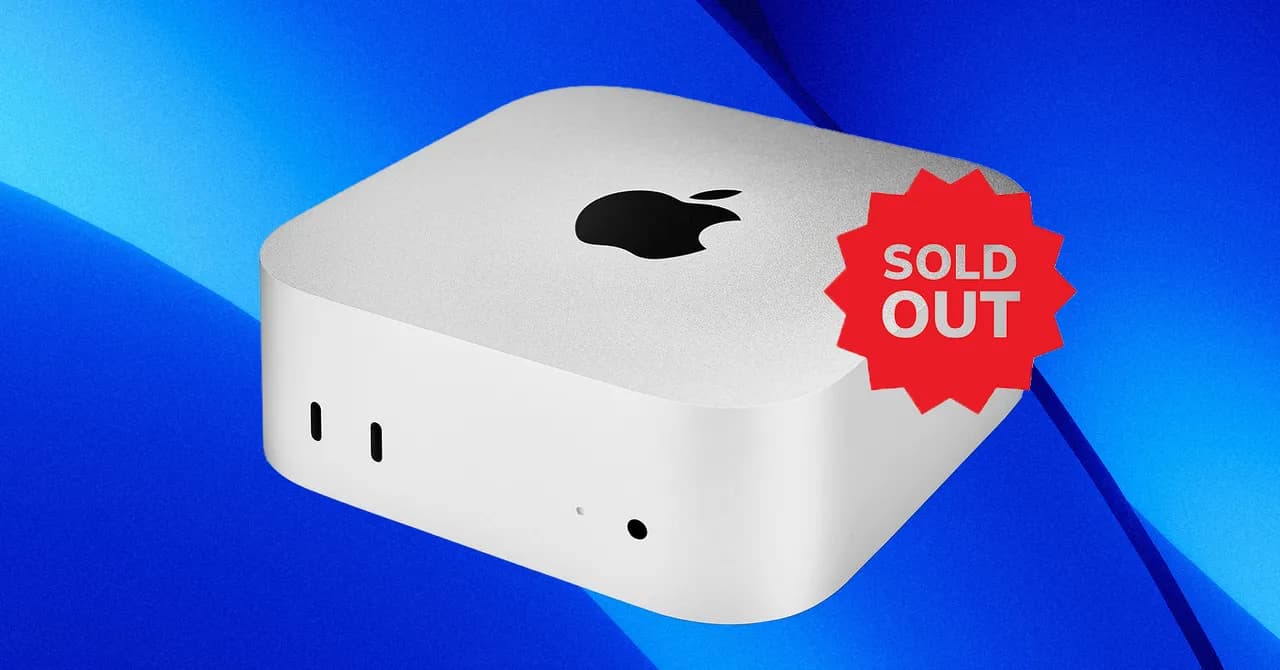
Apple Mac Mini Shortage: Why Supply Can't Keep Up With Agentic AI Demand
🚀 Quick Answer
- Apple CEO Tim Cook confirmed a Mac Mini Supply Shortage will last for "several months" due to skyrocketing demand.
- The primary driver is the rapid adoption of agentic AI tasks and local AI inference tools.
- Customers are struggling to find base models and 512GB configs, leaving many on waiting lists since early 2024.
- Supply constraints are also hitting the MacBook Neo and iPhone 17, further straining Apple’s chip manufacturing.
🎯 Introduction
If you’ve been waiting months to snag a Mac Mini, you’re not alone. Apple CEO Tim Cook recently announced on the company’s earnings call that the company is facing a significant Mac Mini Supply Shortage amidst a turnaround in the AI computing market. While the iPhone 17 launch is supercharging smartphone sales, developers are turning their gaze toward Apple’s compact desktops as the "perfect machine for agentic AI tasks."
Mac Mini Shortage issues are biting hard right now, leaving eager tech enthusiasts and developers in limbo. The situation is complicated by supply chain bottlenecks for iPhone chips and the outsized demand for affordable, powerful computing units specifically optimized for OpenClaw and other AI workloads.
🧠 Core Explanation
The news is simple: supply can't keep up with demand. Tim Cook stated that customer adoption of AI tools is happening "faster than expected." The Mac Mini and Mac Studio are being heralded by the tech community as incredible platforms for running AI locally without the heat and noise of traditional data centers.
Here is the breakdown of why this is happening:
- AI Adoption Spike: Developers have identified the Mac Mini as the ideal form factor for agentic AI tools.
- Screen-Free Efficiency: For data analysis and coding, many developers prefer the bare-bones aesthetic of the Mac Mini to connect multiple monitors easily.
- Competing Demands: Apple is simultaneously funding a new MacBook Neo line and upgrading iPhone chips, dedicating limited silicon resources to the Mac business despite lower unit sales compared to iPhones (currently $8.4B vs $57B).
🔥 Contrarian Insight
Here’s the catch that almost nobody is talking about: The industry has been screaming "Cloud AI is the future" for three years. Now that Edge AI and Local LLMs (like the ones running on OpenClaw) are viable, it turns out that GPU density per dollar is more valuable than raw GPU power in the cloud. Developers are moving from renting expensive API tokens to buying small, quiet, $500 Macs because it’s cheaper and more private. The Mac mini shortage proves that the "Artificial Intelligence" hype cycle has finally bled into the actual hardware purchasing decisions of software engineers.
🔍 Deep Dive / Details
The "Agentic AI" Effect
The term "agentic AI" refers to autonomous systems that can perform complex tasks. Coders determined that the Mac Mini’s architecture—specifically the high memory bandwidth on M-series chips—allows for running large language models locally with surprisingly fast inference times.
The Role of OpenClaw The prompt mentions the launch of OpenClaw, an open-source AI tool. This tool has likely become the "killer app" driving late-night purchasing decisions. It provides a dedicated computing environment that runs natively on macOS, filling a gap in the developer toolchain that Windows traditionally struggled with natively.
Supply Chain Crunch
Cook mentioned that shortages are being driven by a limited supply of advanced chips. The M-series lineup is notoriously hard to forecast because Apple changes chip generations (M2 to M3) frequently. The company is caught in a pincer movement:
- The high-end: Mac Studio demand is high.
- The consumer gateway: Mac Mini is sold out.
- The new volume play: The colorful MacBook Neo is selling better than expected.
Legacy vs. New
While iPhone sales missed projections slightly, the thread is that the ecosystem is pivoting. Services revenue is the real winner here. But for the hardware side, the war for the developer mind is being fought on the 6-inch screen (Phone) and the small enclosure (Mini).
🏗️ Technical Perspective: System Design for AI on Mac
From a system design standpoint, this demand shift changes how developers should architect their "AI Solutions."
The Shift: Server Architectures Historically, AI training/workflow units were multi-rack server farms. The new trend (evident in the Mac Mini shortage) is:
High Density / Low Power Compute Nodes
- From: AWS GPU instances (Expensive, slow network I/O).
- To: On-premise M-series mac-mini clusters.
- Architecture: A local "Compute Mesh."
For developers implementing this, the trade-off is:"); // Imagine a Python script snippet for local inference import openclaw # Hypothetical SDK based on the news
class LocalAgent: def init(self): self.hardware_type = "apple_m_series" self.cost_per_token = "$0.00" # Running local
async def task(self):
    print(f"Executing agentic task on {self.hardware_type}")
    # Scales infinitely as long as you have power sockets and USB-C hubs
Transfer Rate Limit: Moving data off the GPU (in the Mac Studio/Mini) to a separate server for processing is a bottleneck. The OpenClaw environment drives the need to keep it all local.
🧑💻 Practical Value
What should you do now?
If you need a machine right now for coding or AI development:
- Check Refurbished: If you are just a developer, Apple Certified Refurbished Macs are identical to new units in terms of software support but cheaper.
- Look at Windows equiv: While the Mac is dominating for AI right now, don't sleep on RTX 40-series PCIe cards in a small form factor PC if you can't wait for the shortage to end. The Mac's advantage is unified memory (no swapping), but when that's sold out, you have options.
- Configuration Strategy: If you get lucky, try to avoid the 512GB base unit if possible. The shortage report said the 512GB configs (which are the sweet spot for AI models requiring local storage) were wiped out first.
Developer Implementation Advice
When building apps that utilize these specific machine architectures:
- Use Metal: Since these Macs are purely for compute, optimize your shaders.
- Memory Management: Since the user base is strictly developers, assume they will add their own RAM and SSDs (OpenClaw users generally upgrade the base model).
⚔️ Comparison Section
Mac Mini vs. Mac Studio (The Shortage Edition)
| Feature | Mac Mini | Mac Studio |
|---|---|---|
| Processing Power | High (M-series) | Ultra High (Studio M-series Ultra) |
| Performance | 65% of Studio price, 40% of Studio performance | Top-tier, overkill for most devs |
| Rarity | EXTREMELY RARE (Sold Out) | Moderate Availability |
| Best For | Coding, AI Inference, Local LLMs | Video Editing, Heavy Rendering, Research |
| Cooling | Fans can get loud under load | Whisper quiet always |
Winner: Base model Mac Mini is the "rare gem" right now, but Performance King is the Studio.
⚡ Key Takeaways
- Tim Cook admits the Mac Mini Supply Shortage won't resolve for months.
- Agentic AI tools like OpenClaw are the primary demand driver.
- Apple is struggling to balance iPhone chip production with the sudden need for Mac silicon for AI servers.
- Customers are caught in a queue as the industry shifts towards on-device AI processing.
🔗 Related Topics
- How to set up OpenClaw for local AI development
- The best compact laptops for developers in 2024
- Why local LLMs are replacing cloud APIs for coding
- Mac Studio vs Mac Mini: Complete Performance Benchmarks
🔮 Future Scope
We expect Apple to announce an updated chip roadmap soon, specifically addressing the M-series chip allocation. Investors are eager to hear about the "road Mac" John Ternus mentioned—a roadmap that likely prioritizes the Mac's resurgence in the AI era over just incremental iPhone upgrades.
❓ FAQ
1. How long will the Mac Mini shortage last? Tim Cook stated it could last for "several months," though specific dates were not provided.
2. Why is the Mac Mini so popular for AI? It offers a high cost-to-performance ratio. It provides dedicated computing power and high memory bandwidth required for local AI models at a price point that is accessible compared to Mac Studios.
3. What is OpenClaw? According to recent reports, OpenClaw is an open-source AI tool that specifically leverages the Mac Mini's architecture for agentic tasks and coding efficiency.
4. Did iPhone sales fail? While iPhone sales missed analyst expectations, the iPhone 17 is seeing super-high demand, which helped Apple's quarter remain record-setting.
5. Who is the new CEO? Tim Cook is stepping down as CEO later this year to become Executive Chairman, and John Ternus (Senior Vice President of Hardware Engineering) was promoted to lead the company.
🎯 Conclusion
The Mac Mini Supply Shortage is a fascinating market signal. It proves that the developer community has moved beyond "using" AI to building on it. Apple’s decision to prioritize this form factor for AI tasks is a strategic bet—and right now, the bet is paying off. For developers, the message is clear: if you need raw compute power and price efficiency, grab a Mac Mini before the new roadmap disrupts the supply chain again.
If you are stuck waiting, consider upgrading your RAM or Storage now to prepare for when the stock returns, or diversify your stack with Windows-based AI nodes to ensure project continuity.
Share This Bit