Technology
Artisan AI Controversy: The 'This is Fine' Meme Lawsuit & AI Ethics Reality
🚀 Quick Answer
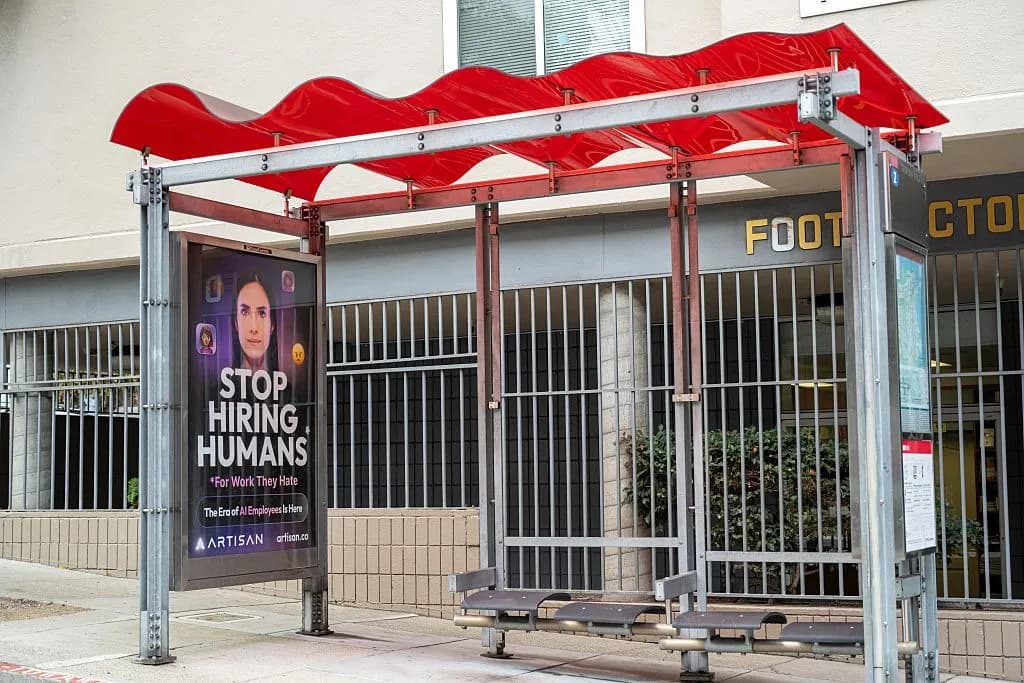
- The current Artisan AI controversy escalated when KC Green accused the startup of stealing his iconic "This is Fine" meme for subway ads.
- Meme copyright is under new scrutiny as AI startups cut corners on data sourcing.
- The incident highlights the ethical hazards of scraping the public internet for AI training data.
- Artisan claims they will speak with the artist, but the viral "Stop hiring humans" backlash exemplifies brand damage from unethical AI usage.
🎯 Introduction
The recent Artisan AI controversy serves as a stark reminder that technology trends don't exist in a vacuum. When Artisan deployed subway advertisements featuring stolen artwork—using KC Green’s "This is Fine" meme to pitch their tool—entirely cut off the ethical checks typical of traditional software development. As a developer, you know that every dependency has a license and an impact. This incident proves that when an LLM outputs a hallucination not just of text, but of culture and copyright, the legal implications are immediate.
While Artisan claims they reached out to the artist, KC Green reacted swiftly, declaring the ad "not anything [he] agreed to" and urging people to vandalize it. The core issue isn't just about a dog in a room on fire; it's about the precarious position of AI art ethics in a race to monetize generative models without paying for the cultural bandwidth they consume.
🧠 Core Explanation
This story falls into the "News" category but carries heavy implications for data engineering and biases.
- The Incident: Artisan, known for its aggressive "Stop hiring humans" billboards, used a modified version of the "This is Fine" webcomic. The dog-mouth is burned, the room is on fire, but the dog says, "My pipeline is on fire." The tagline pushes customers to "Hire Ava the AI BDR."
- The Backlash: Artist KC Green (created the original in 2013) labeled the ad a theft akin to how AI steals art. He clarified he hasn't disavowed the meme entirely (he made a game out of it), but this integration into commercial advertising crossed a line he didn't consent to.
- The "Quote-Worthy" Angle: KC Green didn't just complain; he said, "These no-thought A.I. losers aren't untouchable." This is a hallmark of the current friction: AI creators view memes as free, universal language, while artists view them as distinct, licensed IP.
🔥 Contrarian Insight
Stop pretending that "Fair Use" is a silver bullet for data sourcing. The convention in software engineering is clear: if you need a library, you check the license (MIT, GPL, Apache).
Artisan's PR strategy is a dangerous gamble: They assumed that because a meme is viral, it’s "ownerless." That is a hallucination on their part. By empowering their AI to generate content that mimics stolen artistic nuances, they implicitly trained their models on unlicensed IP. If the legal system rules this ad usage copyright infringement, it sets a dangerous precedent that effectively kills the open-basement model of training LLMs. You don't get to eat the sauce of culture and then claim you don't know where it came from.
🔍 Deep Dive / Details (Tech News & Ethics)
The "Meltdown" of Brand Safety
The "This is Fine" comic is structurally perfect for AI content generation because the prompt is visual but simple: "a dog sitting in a room on fire." Anyone can hallucinate frames of this.
However, the context matters. The meme signifies acceptance of inevitable disaster. Artisan is marketing a business tool (BDR - Business Development Representative) as the solution. The juxtaposition—using memes to sell efficiency to business leaders—frames the company as a joke among other jokers. The ad campaign has become the joke it was intended to parody.
AI Data Sourcing & Legal Risks
From a technical architecture standpoint, this is a "poison pill" scenario.
- Inductive Bias: If a language model is trained on millions of scraped Reddit/Twitter comments without context, it learns that "meme ownership" is undefined.
- Legal Liability: Unlike Chatty Cathie (the Catgirl smoking meme), which has been wildly monetized by Patreon fans, Meme copyright is actually a distinct category. Cartoonist Matt Furie successfully sued Infowars over Pepe the Frog.
- The Verdict: When you scrape data to train a model, you inherit the legal baggage of that data. If the model outputs "This is fine" in a commercial context without a license, you are infringing.
🏗️ System Design (Developer Perspective)
Why this matters for your Repositories
This isn't just for massive corporations like OpenAI. If you are building a custom RAG (Retrieval-Augmented Generation) bot:
- Vector Database Hygiene: Don't index public forums like a university library. A "web crawl" of Reddit is messy because it contains unvetted IPs.
- Content Filtering: Your moderation layer must be strict. An LLM shouldn't be allowed to generate comics or specific recognizable art without explicit filtering of trademarked/individual IP.
- "Whitelisting" vs "Blacklisting": Most devs use blacklists (what not to say). You need a "Whitelist" policy for proprietary training data. Anything not explicitly allowed via a Creative Commons license or standard do-not-license tag should be hallucinated over or refused.
🧑💻 Practical Value
What Developers Should Do Now
The controversy with Artisan is a cautionary tale for your next project. Proceed with these steps:
- Audit Your Source Data: Ask yourself: "Is this dataset commercially licensed?" If you are using data from artists, developers, or creators who didn't opt-in (like most public web data), assume the legal risk.
- Check Your Ad Copy: Even if your code is clean, your marketing materials (advertising your AI) are public. Do not use copyrighted images, memes, or art assets in landing pages without looking at the URL. (e.g.,
measurecontent.comis a tool to check content ownership). - Stop the "Slop" Generation: Don't let your model produce "meme-able" content for ads. LLMs struggle with visual reasoning anyway. Use stable diffusion models with specific, paid, non-creative-commons checkpoints for visual assets.
⚔️ Comparison Section
| Feature | Ethical AI Implementation | The Artisan Approach |
|---|---|---|
| Data Sourcing | Licensed datasets, opt-in contributors (e.g., Hugging Face controlled). | "The Internet" (Implicit trust in no-infringement). |
| Ad Strategy | High-fidelity, brand-aligned visuals. | Low-res, stolen memes, "edgy" irony. |
| **Longevity | High (usually survives legal review). | Zero (current viral hit, future legal liability). |
| **Brand Perception | "Innovative but responsible." | "Desperate and unethical." |
⚡ Key Takeaways
- Memes are IP: Meme copyright does exist. You cannot treat viral internet culture as public domain.
- FAQ: (Coming up)
- The "Stop Hiring Humans" Paradox: By using phrasing that evokes human replacement in their own ads, Artisan ultimately made their AI look useless and their moral compass nonexistent.
- Regulation is Coming: We are moving from "creative chaos" in AI generation to strict AI compliance.
🔗 Related Topics
- How to Verify AI Image Ownership
- OpenAI DALL-E 3 Commercial Licensing
- Understanding Patronage vs. Copyright in the Crypto Era
- System Design for Safe AI Outputs
❓ FAQ
-
Who is the artist behind "This is Fine"? He is KC Green, a webcomics artist known for the series Gunshow. The comic originally appeared in 2013 and has since escaped into the wild.
-
Did KC Green sue Artisan yet? KC Green stated he is "looking into legal representation," but a formal lawsuit might take time to file as he coordinates with his legal team.
-
Was this a Deepfake? No. The ad featured the actual original comic art manipulated (or cropped) and overlaid with AI text, rather than AI generating a completely new image.
-
Why is AI stealing art a big deal? Because training datasets are built on stolen work. When companies use those datasets commercially without compensation, it devalues the labor of human artists and violates IP law.
-
Can I use memes in my startup marketing? Generally, no. If the creator has not explicitly authorized commercial use, you expose yourself to a lawsuit. Even if they have, the risk of brand association (if the meme turns out to be controversial) is high.
🎯 Conclusion
The Artisan AI controversy is a textbook example of cutting corners in pursuit of speed. While Artisan AI tries to pitch efficiency, their actions demonstrate a fundamental lack of efficiency in risk management. For developers building the future, this is a clear signal: the era of "sloppy scraping" is over. If your AI training data is ethically murky, your product will eventually face a legal and public relations "room on fire." Don't let your code be the next meme stolen from the masses.
Share This Bit