GadgetsTechnology
Best Bluetooth Speakers 2026: Engineering Review, Durability & Battery Performance
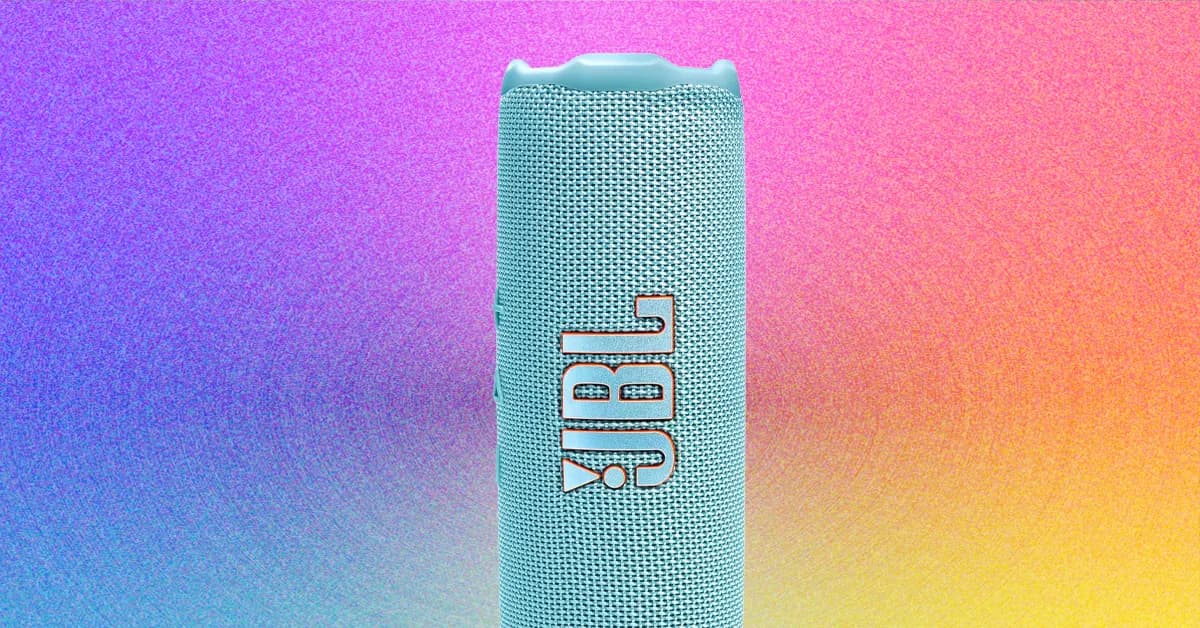
Best Bluetooth Speakers 2026: Engineering Review, Durability & Battery Performance
🚀 Quick Answer (Featured Snippet)
- The Power User Pick: JBL Flip 7 offers the best balance of class-D amplification power, Auracast connectivity, and IP68 ruggedization for general field development.
- The Pro Network Pick: Sonos Play is supreme for developers requiring seamless Wi-Fi/Bluetooth hybrid integration and multi-room audio labs.
- The Durability Monster: Soundboks Mix uses proprietary bass-boosting DSP to deliver 120dB output suitable for loud outdoor events.
- The Best Budget Pick: Tribit StormBox 2 provides high-efficiency output (30W) at an IPX7 rating for under $100.
- Key Specs to Scan: Check for IP67 (submersible) vs IP68 (deep sink), and Bluetooth 5.x with proprietary streaming protocols (like Auracast).
🎯 Introduction (SEO Optimized)
When you need reliable audio while developing in the field, finding the best bluetooth speakers becomes a critical infrastructure decision. As an engineer, I don't just want loud music; I need a portable unit that maintains connection integrity and withstands environmental stressors. This guide evaluates the best bluetooth speakers currently on the market, analyzing their audio architecture, battery management systems, and IP durability ratings. Whether you are decoding code from a beachside coworking space or testing IoT devices outdoors, the right speaker shouldn't just play music—you need waterproof bluetooth speaker reliability.
🧠 What is a Bluetooth Speaker (System View)?
Technically, a high-end portable Bluetooth speaker is a closed-loop acoustic system designed to drive analog audio signals to air via Class-D amplification. It acts as an endpoint for your wireless stack, handling audio codecs (aptX, AAC, LDAC, SBC) and power management protocols.
- Input Stage: Receives encoded audio data via Radio Frequency (2.4 GHz).
- Processing (DSP): Decodes audio, applies EQ, and handles volume scaling.
- Amplification: Converts digital signals to analog with high efficiency (often 80-90%+).
- Acoustic Output: Converts electrical energy to physical movement of diaphragms.
The "best" speakers successfully decouple the battery power requirements (cold start up-time) from the audio offset (clipping/distortion) to maintain signal-to-noise ratio (SNR) at maximum volume.
🔥 Contrarian Insight
"The most overengineered feature on modern engineers' lists is 'Smart Assistant' integration in a waterproof box. You don't walk into the ocean to ask Siri for the weather."
If you are buying a rugged speaker for field deployment or outdoor coding, skip the "Alexa Built-in" models unless you have a strict safety use case. The smart features consume processing cycles and bloat the firmware, while the microphone arrays are usually terrible at voice recognition in windy environments. A simple, direct bluetooth speaker with high-quality UI controls is often more robust than a feature-filled "assistant" device when exposed to sand and salt.
🔍 Why This Matters in 2026
The landscape of audio has shifted from simple connectivity to smart networking and processing.
- Auracast (LE Audio): This standard allows multiple devices to connect to a single speaker using Bluetooth Low Energy (BLE). While experimental now, it allows developers to sync up to 180 devices (like conference attendees or IoT sensors) in the future for distributed audio monitoring.
- Hybrid Connection (Wi-Fi + BT): The Sonos Play represents a shift toward hybrid architectures. By connecting to both Wi-Fi and Bluetooth, a speaker can offload processing to the network while maintaining a high-fidelity bridge for local audio losslessly.
- Lossless Over Air: As OTT platforms push for higher resolution, Bluetooth audio codecs (aptX Lossless) are becoming standard, requiring devices with robust DACs (Digital-to-Analog Converters).
⚔️ Comparison: High-End vs. Mid-Range
| Feature | Consumer (Flip 7 / MegaBoom 4) | Pro (Sonos Play / Soundboks Mix) |
|---|---|---|
| Connectivity | Primarily Bluetooth (often proprietary apps) | Wi-Fi + AirPlay 2 + Bluetooth |
| Max Volume | 90-95 dB | 110+ dB (Soundboks) |
| Battery Architecture | Internal Li-ion (sealed) | Removable/Max capacity (Soundboks) |
| Durability | Drop resistant, splash proof | Drop tested, extreme weather (Snow/Sand) |
| Use Case | Music listening, Field notes | Public address, construction sites |
🏗️ How It Works (Technical Deep Dive)
Under the hood, the best portable speakers utilize Active noise cancelling or Bass Boost circuits to market to human perception rather than raw physics.
1. The Enclosure Resonance: Compact speakers face the "choking" problem—small air volume limits bass response. Engineers solve this using Bass Reflex (ported) systems or active woofer motors to push air volume. The JBL Flip 7 and Soundboks Mix use large passive radiators to move air efficiently without overloading the small woofers.
2. The Crossover Network: A crossover splits the signal into frequencies: highs go to tweeters (often made of soft domes for durability against rain) and lows to woofers (surrounding materials must be synthetic/latex to resist pool chemicals).
3. Battery Management: Battery degradation is a known variable in IoT engineering. High-quality battery management systems (BMS) in the Sonos Roam 2 and Bose Soundlink Plus monitor cell capacity to ensure consistent voltage delivery, preventing voltage droop which causes audio distortion during long playtimes.
🧑💻 How Developers Can Use This (ACTIONABLE)
As an engineer, your workflow can be optimized with the right audio gear:
- Stereo Pairing for Field Reviews: If you are testing a mobile app's audio interface, avoid low-output monaural speakers. Use the JBL Flip 7 or Ultaarudio Go Party in stereo pairing mode to check for mono-widening errors in your spatial audio panning.
- Remote Debugging Audio: The Sonos Play allows you to stream your local machine's audio to the speaker via AirPlay/Spotify Connect, acting as a physical remote speaker for debugging browser-based audio glitches.
- IoT Sensor Testing: Use high-fidelity speakers like the Soundboks Mix to test flutter/echo measurements for acoustic sensors in harsh environments (industrial noise floors).
- Surface Mounting: For hardware integration, look for Tribit StormBox Micro 2. Its silicone strap-mount allows you to securely affix the device to the frame of a drone or a rugged tablet during field deployment.
🧪 Real-World Use Case: The "Field Ops" Scenario
Scenario: A dev team travels to a remote location to fix a water treatment system monitoring IoT nodes.
- The Problem: Noise coming from 50 yards away (wind, rushing water) makes phone calls impossible.
- The Solution: The Soundboks Mix (21 lbs).
- Why: It provides 40 hours of battery life. It creates a localized "audio bubble" at ~120dB due to its exclusionary enclosure design (often called "Alien Audio" for its lack of bass cancellation in open air). Crucially, the USB-C charging interface allows them to charge their Raspberry Pi field units simultaneously.
⚡ Best Practices & Mistakes
- Don't ignore the IP Rating: Developers often rely on "Water Resistant" marketing text. Look for IP67 or IP68. IP67 means it can be submerged in 1 meter of water for 30 minutes. IP68 is for deeper immersion. If you are coding by a pool, be specific.
- The "Bass Boost" Trap: Many budget speakers (like the Tribit StormBox 2) use an EQ button to boost bass. In acoustically reflective environments (concrete jungles), this muddy bass creates odd phase shifts. Listen to clinical audio in your office before trusting the boost.
- USB-C Charging Strategy: Modern speakers use USB-C PD (Power Delivery). However, the JBL Flip 7 carries USB-C data ports. If you plug a cheap USB-C cable, signal integrity might get jittery on some devices.
- Firmware Updates: Like any embedded device, Bluetooth audio endpoints (Sonos, JBL) require firmware updates to fix audio latency bugs. Keep them patched.
🔗 Related Topics
- Best Bookshelf Speakers for DAWs: Monitor-Rig Focus
- Surface Computing: How to Mount Speakers on Industrial Machines
- Audio Latency in WebRTC: Engineering Low-Latency Bluetooth Audio
- IoT Power Management: Expired Battery Diagnostics in Portable Audio
🔮 Future Scope
Next-gen Bluetooth speakers will likely integrate Ultra-Wideband (UWB) for precise directional audio—imagine playing a whisper-directional beat only your friend can hear. Furthermore, energy harvesting (solar charging strips integrated into the IP68 enclosure) will likely trickle-charge these units during long field operations.
❓ FAQ
Q: What does IP67 mean compared to IP68? A: Both are dust-tight. IP68 is the standard for "can be immersed," while the exact duration and pressure depend on the manufacturer. For a beach, IP68 is generally safer than IP67.
Q: Why is the JBL Flip 7 unable to connect to older JBLs? A: The Flip 7 uses Auracast technology. While modern, it relies on encoding methods older generations (like Flip 6/Clip 5) may not fully support. For backward compatibility, check the specific Bluetooth version supported (5.2+).
Q: Is lossless audio over Bluetooth real? A: Yes. With modern codecs like Qualcomm aptX Lossless or Sony LDAC (High Quality), compressed files can stream almost indistinguishable from lossless files over the best bluetooth speakers.
🎯 Conclusion
Searching for the best bluetooth speakers shouldn't just be about brand name or price. For developers and engineers, it is about system reliability. The JBL Flip 7 is the best all-rounder, but the Sonos Play is the best smart-network integration. Don't underestimate the low-tier audio output; sometimes, a simple $30 JLab Go Party equipped with volume controls is all you need to debug a macro when simple is the best interface design.
Share This Bit