AI appsagentic ragAIAI AssistantLLMRAGAI Agents
Building a Self-Improving Agentic RAG System
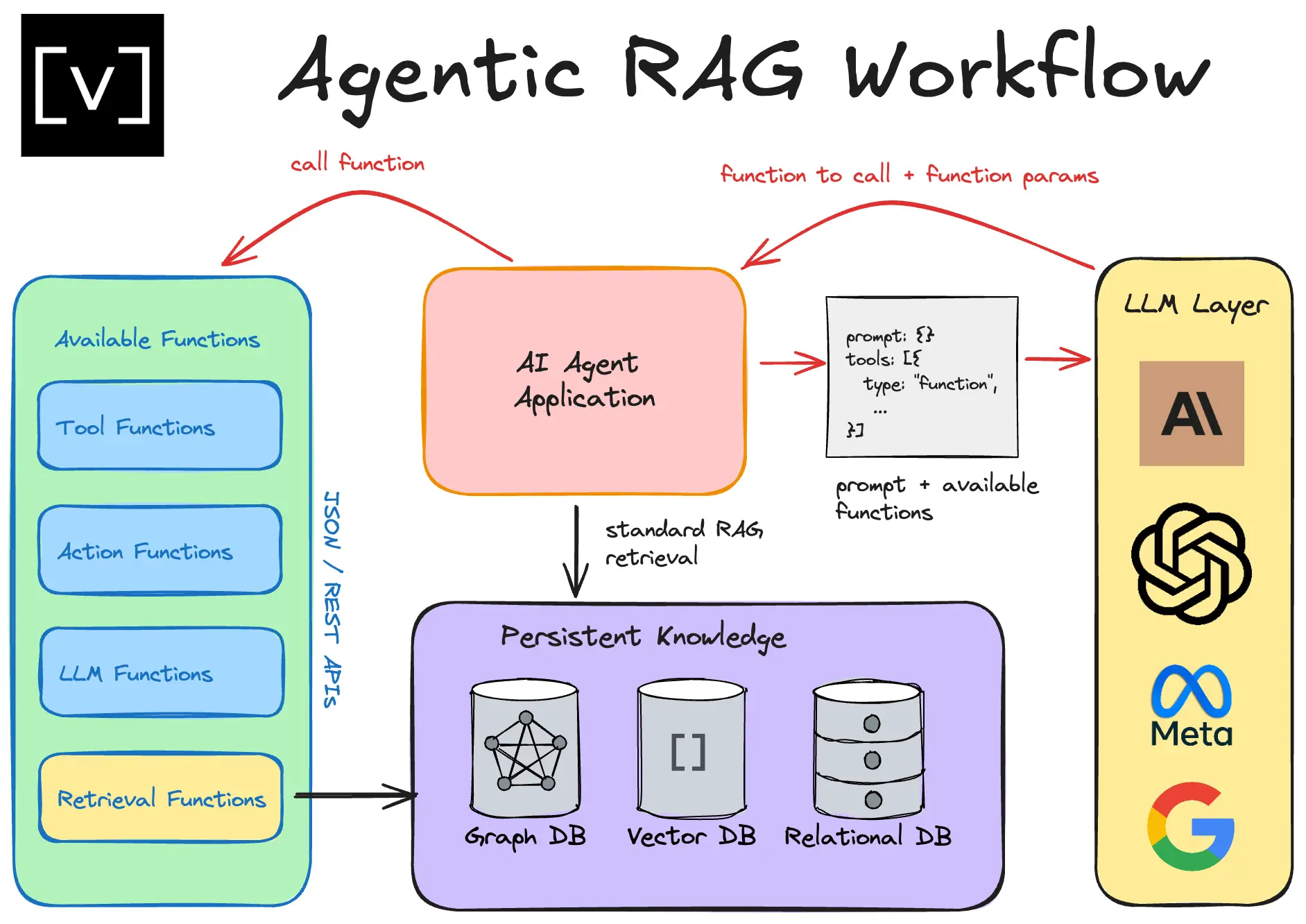
-
A self-improving Agentic RAG system combines Retrieval-Augmented Generation (RAG) with autonomous AI agents.
-
Unlike traditional RAG, an Agentic RAG system can:
- evaluate its own responses
- improve retrieval quality
- refine prompts
- learn from failures
-
The architecture usually includes:
- vector databases
- retrieval pipelines
- memory systems
- evaluation agents
- feedback loops
-
The main goal is to build AI systems that become smarter over time instead of remaining static.
-
This approach is becoming critical for:
- AI copilots
- autonomous assistants
- enterprise AI search
- coding agents
- research systems
Building a Self-Improving Agentic RAG System: Architecture, Feedback Loops, and Real-World Scaling
🎯 Introduction
A self-improving Agentic RAG system is one of the most important evolutions happening in AI infrastructure right now. Traditional RAG systems can retrieve documents and generate answers, but they are still mostly static. Once deployed, they rarely improve unless engineers manually retrain or tune them.
That’s the real limitation.
Modern AI products need systems that can:
- detect hallucinations
- evaluate retrieval quality
- learn from bad outputs
- optimize prompts automatically
- adapt retrieval strategies dynamically
This is where Agentic RAG changes everything.
Instead of a simple “retrieve + generate” workflow, Agentic RAG introduces autonomous agents that continuously analyze and improve the pipeline itself.
In real-world usage, this becomes extremely powerful for:
- AI coding assistants
- enterprise knowledge bases
- autonomous research agents
- AI customer support systems
- internal company copilots
Here’s the catch:
Most developers still build RAG systems like glorified search engines. The future belongs to systems that can improve themselves.
🧠 What Is an Agentic RAG System?
A traditional RAG pipeline looks like this:
User Query
   ↓
Retriever
   ↓
Vector Database
   ↓
LLM
   ↓
Response
An Agentic RAG system adds intelligence layers around this flow:
User Query
   ↓
Planning Agent
   ↓
Retriever Agent
   ↓
Vector Database
   ↓
Reasoning Agent
   ↓
Evaluation Agent
   ↓
Memory + Feedback Loop
   ↓
Improved Future Responses
The system becomes:
- adaptive
- self-correcting
- memory-aware
- evaluation-driven
This is the core difference.
🔥 Contrarian Insight
Most companies are obsessed with building larger context windows.
That’s the wrong direction.
A smarter retrieval and feedback architecture is often more valuable than adding millions of tokens to the context.
Why?
Because context stuffing creates:
- latency issues
- hallucinations
- irrelevant retrieval
- higher inference costs
A well-designed Agentic RAG system can outperform huge-context models by:
- retrieving less
- reasoning better
- learning continuously
The future is not “bigger prompts.”
The future is autonomous retrieval intelligence.
🔍 Deep Dive: Core Components of a Self-Improving Agentic RAG System
1. Retrieval Layer
This layer fetches relevant information from:
- vector databases
- SQL databases
- APIs
- knowledge graphs
- document stores
Popular choices:
- Pinecone
- Weaviate
- Qdrant
- Chroma
- pgvector
Key optimization techniques:
- hybrid search
- reranking
- metadata filtering
- semantic chunking
Example:
results = vectordb.similarity_search(
    query=user_query,
    k=5,
    filter={"department": "engineering"}
)
2. Planning Agent
The planning agent decides:
- what information is needed
- which tools to call
- whether retrieval is necessary
- how many retrieval passes are needed
This transforms the pipeline from static to dynamic.
Example behaviors:
- multi-hop reasoning
- query decomposition
- tool orchestration
Instead of:
“Answer directly”
The agent thinks:
“I should first retrieve architecture docs, then API references, then summarize.”
3. Memory System
A self-improving RAG system requires memory.
Without memory, there is no learning.
There are typically 3 memory types:
Short-Term Memory
Stores:
- current conversation
- temporary reasoning steps
- tool outputs
Long-Term Memory
Stores:
- user preferences
- successful retrieval patterns
- historical interactions
Episodic Memory
Stores:
- previous failures
- hallucination cases
- evaluation feedback
4. Evaluation Agent
This is the most important layer.
The evaluation agent checks:
- factual correctness
- retrieval quality
- hallucination probability
- answer relevance
Example evaluation prompt:
Evaluate whether the generated answer:
1. Uses retrieved context correctly
2. Contains hallucinations
3. Fully answers the query
4. Includes unsupported claims
This creates automated quality control.
5. Feedback Loop
This is where self-improvement happens.
The system can:
- rewrite failed prompts
- adjust chunking strategies
- rerank documents differently
- improve retrieval queries
- store successful reasoning traces
Example:
if evaluation_score < 0.7:
    retry_with_better_retrieval()
Over time:
- retrieval improves
- prompts improve
- reasoning improves
- hallucinations decrease
🏗️ System Design / Architecture
High-Level Architecture
                    ┌─────────────────┐
                    │     User        │
                    └────────┬────────┘
                             ↓
                    ┌─────────────────┐
                    │ Planning Agent  │
                    └────────┬────────┘
                             ↓
                ┌──────────────────────┐
                │ Retrieval Orchestrator│
                └────────┬─────────────┘
                         ↓
        ┌────────────────────────────────┐
        │ Vector DB / APIs / Knowledge DB│
        └────────────────┬───────────────┘
                         ↓
                ┌──────────────────┐
                │ Reasoning Agent  │
                └────────┬─────────┘
                         ↓
                ┌──────────────────┐
                │ Evaluation Agent │
                └────────┬─────────┘
                         ↓
               ┌────────────────────┐
               │ Memory + Feedback  │
               └────────────────────┘
Database Design
Retrieval Store
CREATE TABLE embeddings (
    id UUID PRIMARY KEY,
    content TEXT,
    embedding VECTOR(1536),
    metadata JSONB
);
Memory Table
CREATE TABLE agent_memory (
    id UUID PRIMARY KEY,
    user_id TEXT,
    interaction JSONB,
    evaluation_score FLOAT,
    created_at TIMESTAMP
);
API Structure
Query Endpoint
POST /api/query
Feedback Endpoint
POST /api/feedback
Memory Endpoint
GET /api/memory/:userId
Caching Strategy
A production Agentic RAG system needs aggressive caching.
Common layers:
- embedding cache
- retrieval cache
- LLM response cache
- reranking cache
Redis is commonly used for:
- session memory
- hot retrieval paths
- evaluation caching
Scaling Approach
Developers often struggle with scaling retrieval-heavy systems because vector search becomes expensive at scale.
Solutions:
- sharded vector indexes
- hybrid retrieval
- asynchronous retrieval
- distributed embedding pipelines
At enterprise scale:
- retrieval latency matters more than model latency
That’s a huge architectural shift.
🧑💻 Practical Implementation Example
Tech Stack
Backend
- FastAPI / Node.js
- LangGraph
- LlamaIndex
- Haystack
Vector Database
- Qdrant
- Pinecone
- pgvector
LLMs
- GPT-4.1
- Claude
- Gemini
- local LLMs via Ollama
Memory
- Redis
- PostgreSQL
Example Workflow
Step 1 — User Query
"Explain our payment retry architecture."
Step 2 — Query Decomposition
Agent breaks it into:
- payment retry logic
- retry scheduler
- webhook failures
Step 3 — Retrieval
System fetches:
- architecture docs
- retry service code
- incident reports
Step 4 — Reasoning
LLM synthesizes:
- architecture explanation
- edge cases
- retry timing
Step 5 — Evaluation
Evaluation agent checks:
- correctness
- missing information
- hallucinations
Step 6 — Feedback Storage
Stores:
- successful reasoning trace
- useful retrieval path
- evaluation metrics
This becomes reusable intelligence.
⚔️ Comparison: Traditional RAG vs Agentic RAG
| Feature | Traditional RAG | Agentic RAG |
|---|---|---|
| Static Retrieval | Yes | No |
| Autonomous Planning | No | Yes |
| Self-Improvement | No | Yes |
| Memory System | Limited | Advanced |
| Evaluation Layer | Rarely | Core Component |
| Multi-Step Reasoning | Weak | Strong |
| Hallucination Reduction | Moderate | High |
| Scalability | Simpler | Complex but powerful |
⚡ Key Takeaways
-
Self-improving Agentic RAG systems are the next evolution of AI infrastructure.
-
Traditional RAG systems are mostly static and require manual optimization.
-
Agentic systems introduce:
- planning
- memory
- evaluation
- feedback loops
-
The evaluation layer is the most critical component.
-
Better retrieval architecture often beats larger context windows.
-
Production-grade systems require:
- caching
- reranking
- memory management
- scalable vector infrastructure
-
AI agents that learn continuously will dominate enterprise AI.
🔗 Related Topics
- “How to Build a Production-Ready RAG System”
- “LangGraph vs LangChain: Which One Scales Better?”
- “Vector Databases Explained for Developers”
- “How AI Memory Systems Actually Work”
- “Building Autonomous AI Agents with Multi-Step Reasoning”
🔮 Future Scope
The next generation of Agentic RAG systems will likely include:
- autonomous tool creation
- self-generated evaluation datasets
- dynamic memory compression
- adaptive reasoning graphs
- multi-agent collaboration systems
Eventually, AI systems won’t just retrieve information.
They will:
- critique themselves
- redesign workflows
- optimize architectures autonomously
That’s where the industry is heading.
❓ FAQ
What is Agentic RAG?
Agentic RAG is an advanced form of Retrieval-Augmented Generation where autonomous agents manage retrieval, reasoning, evaluation, and self-improvement.
Why is self-improvement important in RAG systems?
Because static RAG systems degrade over time and require manual optimization. Self-improving systems adapt automatically.
What databases are used in Agentic RAG?
Common options include:
- Pinecone
- Weaviate
- Qdrant
- Chroma
- PostgreSQL with pgvector
How do evaluation agents work?
They analyze generated responses for:
- hallucinations
- factual correctness
- relevance
- retrieval quality
Is Agentic RAG expensive?
Yes, compared to traditional RAG. But the quality improvements often justify the infrastructure complexity for enterprise AI systems.
🎯 Conclusion
Building a self-improving Agentic RAG system is not just about adding retrieval to an LLM.
It’s about creating an AI architecture that can:
- reason
- evaluate
- learn
- adapt
- improve continuously
That’s the real shift happening in AI engineering right now.
The companies that master autonomous retrieval and feedback loops will build AI systems that become exponentially better over time — while everyone else keeps manually tweaking prompts.
Share This Bit