DeepseekAI
DeepSeek Funding Round: $45B Valuation, China's AI Sovereignty, and the Compute Shift
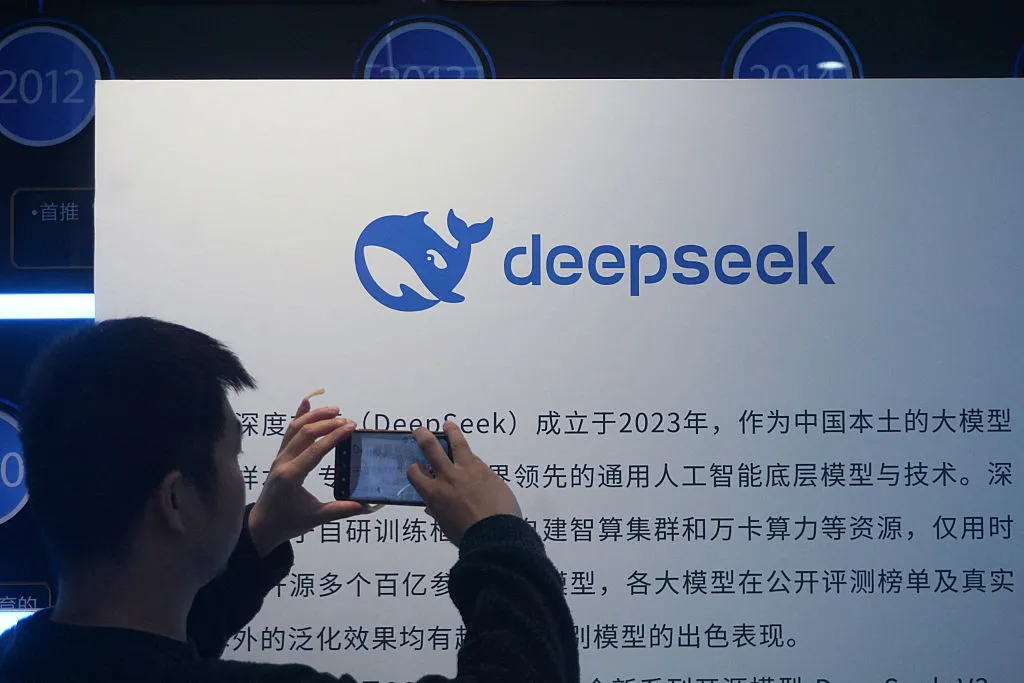
- Current Valuation: Soared from $20 billion to $45 billion in just a few weeks.
- Lead Investor: China Integrated Circuit Industry Investment Fund (State-backed).
- Key Hardware: Optimized to run on Huawei Technologies Ascend chips.
- Strategic Goal: Secure local AI talent and bypass U.S. technology sanctions.
- Developer Impact: Proves that high-performance AI can run on localized compute, not just expensive US GPUs.
🎯 Introduction
The market is reacting sharply to the news of the DeepSeek funding round, as the Chinese AI lab’s potential valuation skyrocketed from $20 billion to $45 billion in a matter of weeks. This surge isn't just about capital; it represents a fundamental pivot in Chinese AI development. While U.S. giants like OpenAI are hunting for more chips, DeepSeek is betting on high-efficiency models and state-backed hardware partnerships to close the gap.
This funding move highlights a critical shift: the AI arms race is no longer just about having the most dollars, but solving the supply chain puzzle for compute power.
🧠 Core Explanation
DeepSeek is currently the hottest topic in the open-weight AI community. Unlike closed ecosystems, DeepSeek has released openly available weights on Hugging Face, allowing developers to replicate and fine-tune their models. They have achieved a rare feat: competing with the best U.S. reasoning and coding models while using significantly less compute.
This new funding round is the catalyst to turn these impressive benchmarks into a long-term, competitive entity. Founded and largely controlled by Liang Wenfeng (of the Chinese hedge fund High-Flyer), the company utilizes proprietary data to train models that rival GPT-4 capabilities.
The twist? They are doing this optimization specifically for hardware that U.S. sanctions make difficult or expensive to source.
🔥 Contrarian Insight
"If we judge AI overperformance by the size of the GPU cluster, DeepSeek is an anomaly. But if we judge it by the ability to build a national champion without American hardware, they are winning. The real story isn't just that they built a good model; it's that they just hacked the geopolitical bottleneck."
🔍 Deep Dive / Details
The "Chip War" Bypass
The primary driver for the DeepSeek funding round is the ruthless poaching of U.S. researchers by top tech firms. To stop the brain drain, Liang Wenfeng had two choices: hand out more free cash (he is already a billionaire) or offer stakes in the company. He chose the latter.
However, the state backing changes the game entirely.
The investor leading the pack is the China Integrated Circuit Industry Investment Fund (often called 财政部 or "The Big Fund"). This is a government vehicle designed to support semiconductor manufacturing. By pairing DeepSeek’s software optimization with this chip infrastructure, they have created a "sovereign AI" stack that can operate effectively within China’s contained ecosystem.
The "Huawei + DeepSeek" Synergy
DeepSeek has explicitly stated their models are optimized to run on Huawei Ascend chips. This isn't just a preference; it's a necessity. In a world where Nvidia H100s are difficult to acquire for Chinese entities, DeepSeek valuation is intrinsically tied to the success of local Chinese silicon.
This partnership is significant because Huawei’s Ascend chips are now powerful enough to handle the parallel processing required for large language models, but they lack the mature software stack (CUDA) that Nvidia has dominated for a decade. DeepSeek is effectively rewriting the rules of this software ecosystem to suit their hardware.
Alibaba and Tencent Enter the Fray
For the first time, the global cloud giants are in talks to join. Alibaba Cloud and Tencent Cloud typically compete to dominate their domestic market. Their participation in the DeepSeek funding round suggests they view DeepSeek not just as a threat, but as a national priority: a bulletproof, compute-efficient AI layer upon which their other services should be built.
🧑💻 Developer Implementation & Value
What should engineers do?
You should look at DeepSeek as a template for how to use "cheaper" compute more efficiently.
- Leverage Mixed Quantization: Their training efficiency suggests they utilize advanced quantization techniques that preserve reasoning performance while reducing memory footprint. If you are running local LLMs, check out the GPTQ or AWQ formats DeepSeek has released recently.
- Hardware Agnosticism: This narrative serves as a reminder that don't need a $30,000 server rack to build AI. By studying how they optimize for non-standard hardware, developers can build more resilient pipelines that don't choke when cloud GPUs are out of stock.
⚔️ Comparison Section: Sovereign vs. Open
| Feature | OpenAI / Anthropic (US) | DeepSeek (China) |
|---|---|---|
| Compute Source | Nvidia H100 (Global Supply Chain) | Huawei Ascend + Localized Chips |
| Funding Model | Private VC + Enterprise Spending | State Investment + VC |
| Data Privacy | US-EU/US Cloud GDPR compliance concerns | Domestic compliance / Centralized |
| Accessibility | Closed API (mostly) | Open Weights (Hugging Face) |
| Current Valuation | ~$80B+ (Unicorn status) | $45B (News) |
⚡ Key Takeaways
- Valuation jumped to $45 billion in weeks, signaling massive confidence in their tech.
- Led by China Integrated Circuit Industry Investment Fund, pairing software with domestic silicon.
- Huawei chips are now a viable, competitive alternative to Nvidia for specific training workloads.
- Focus is on solving the "Hardware Blockade" created by U.S. technology export controls.
- Open-source strategy allows global developers to evaluate the model without API access.
🔗 Related Topics
- How to Run Large Language Models Locally on Consumer Hardware
- Huawei Ascend Chip Architecture: A Developer's Deep Dive
- China’s Ambitions for Sovereign AI Data Centers
🔮 Future Scope
We are likely to see DeepSeek release more "MoE" (Mixture of Experts) architectures. Their track record suggests that as they integrate more with Alibaba and Tencent's cloud infrastructure, they will move faster than the traditional, slower-moving corporate AI labs. The real test will be whether this architecture can scale globally without access to American AI acceleration libraries.
❓ FAQ
Q: Why is the $45 billion valuation significant? A: It signifies that the market views DeepSeek not just as an open-source experiment, but as a sovereign rival capable of challenging the U.S. in the strategic field of Artificial Intelligence.
Q: What makes DeepSeek models different? A: They are optimized for efficiency, training on fewer chips, and are openly accessible (weights available on Hugging Face) compared to "black box" models like GPT-4.
Q: Can I use DeepSeek models right now? A: Yes, the open weights are available on Hugging Face, allowing you to self-host them on your own GPU rig.
Q: Who is Liang Wenfeng? A: A Chinese billionaire and founder of High-Flyer, a quantitative hedge fund that pioneered AI for financial trading before fulling pivoting to general-purpose AI with DeepSeek.
Q: Why is the funding round controversial? A: It highlights the fragmentation of the AI market. While US companies hoard chips and talent, Chinese companies are funding each other to create a parallel tech stack independent of US hardware and software dominance.
🎯 Conclusion
The DeepSeek funding round is a watershed moment. It proves that while money buys compute, adaptability buys market share. By leaning into sovereign chip partnerships and open-source ethos, DeepSeek is building a moat that U.S. models simply cannot cross easily due to supply chain constraints.
For developers in the West, this is a warning shot: you are facing an opponent using different rules. If you want to compete, you better start looking at the continent of the hardware inside your box.
Share This Bit