deepmindGoogleAI
Google DeepMind Invests in EVE Online: Why Complex Games are the Future of AI
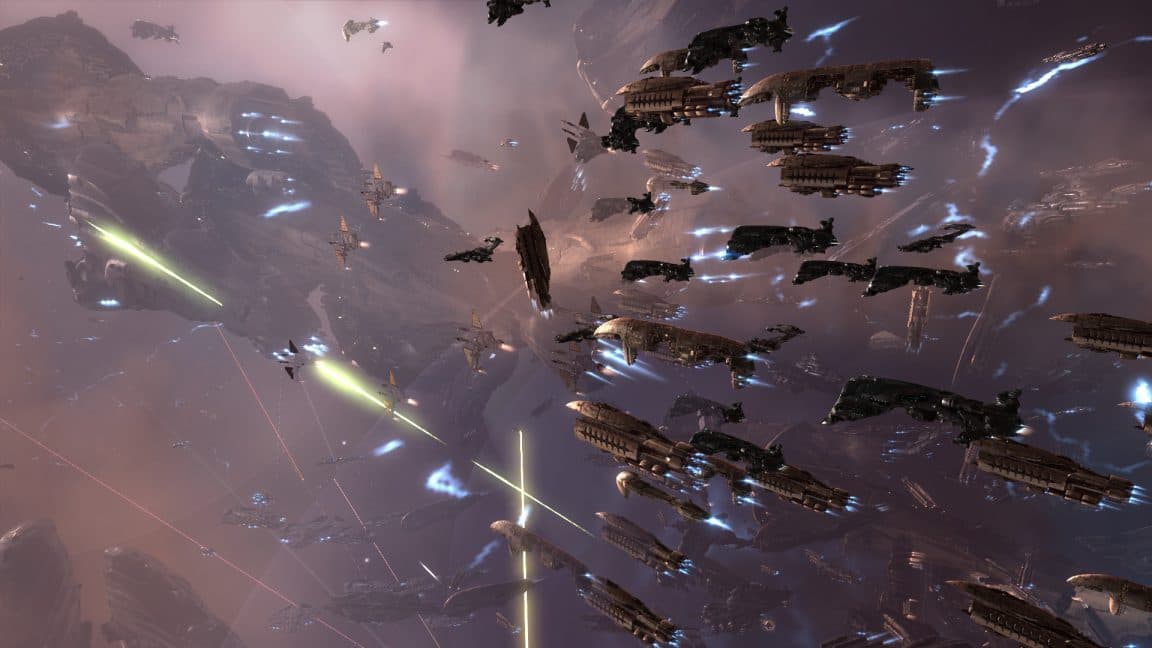
- Google DeepMind has acquired a minority stake in Fenris Creations (formerly CCP Games) to use EVE Online as a testbed for studying intelligence in complex, dynamic systems.
- Fenris Creations has fully bought back ownership from publisher Pearl Abyss, ending a partnership that began with a $225 million buyout.
- DeepMind will run offline, isolated simulations to train AI models on "long-horizon planning" and memory without disrupting the live online game environment.
- This partnership highlights how simulated economies may be a more effective training ground than turn-based games (like Chess) or even deterministic FPS games for developing General AI.
🎯 Introduction
Google DeepMind has just taken a minority equity stake in EVE Online developer Fenris Creations, marking a fascinating convergence of gaming and machine learning. This move signals that complex, player-driven systems are perhaps the final frontier for artificial intelligence research.
Google DeepMind has taken a minority stake in the maker of EVE Online to study artificial intelligence within complex player-driven economies. This move comes as the developer, now independent as Fenris Creations, buys out its former owner, Pearl Abyss, to focus on long-term strategic goals. For developers looking at the intersection of games and AI, this is a significant signal of where compute resources and research focus are shifting.
🧠 Core Explanation
The partnership is driven by a specific technical need: most AI research happens in isolated environments—chess boards, grid worlds, or simple mazes. But neither DeepMind nor the broader industry has cracked the code on training AI to operate effectively in multi-agent systems where players have agency, economic influence, and long-term memory.
Why EVE Online? EVE Online is unique because it simulates entire economies, political alliances, and combat thousands of times per day. It is a "living world" that reacts to the chaos of human nature.
- Dynamic Challenges (OODA Loops): Players constantly change the rules, forcing AI to adapt immediately.
- Memory & Planning: Players plan strategies weeks or months in advance. AI must be able to retain context over long timelines.
- Agent Interaction: Unlike a static map (like StarCraft), EVE involves hundreds of thousands of entities negotiating, trading, and battling.
Google DeepMind will utilize a specially designed, offline version of the game running on a local server. This ensures that millions of real players enjoy their experience without encountering AI agents generated by cutting-edge models.
🔥 Contrarian Insight
"AI doesn't need a physical robot body to learn complex physics; it just needs a complex economy."
While current trends hype "Embodied AI" (robots that walk and lift), DeepMind’s focus on EVE suggests that Asset-Based AI might be the true bottleneck for General Intelligence. After mastering video games like Pac-Man and Go, the industry has realized that the hardest simulations aren't about reflexes—they are about diplomacy and economy.
🔍 Deep Dive / Details
The Financial Context: Independence from Pearl Abyss
The technical partnership is happening against a backdrop of significant corporate restructuring.
- The Write-Down: In 2018, Pearl Abyss purchased CCP Games for $225 million. Selling it back to the previous management team costs just $120 million.
- The Strategic Pivot: Fenris CEO Hilmar Veigar Pétursson believes that being independent is essential for making "far-reaching decisions" that the live service game requires.
- Financials: Despite losses in 2023/2024 (attributed partly to spinoffs like EVE Frontier), Fenris claims profitability in 2025 on $70M revenue and "strong reserves," allowing them to take a long-term view without pressure from a parent corporate entity.
The "EVE Forever" Philosophy
The term "EVE Forever" isn't just a slogan. It represents a specific engineering challenge. To maintain an MMO for decades requires systems that scale with the player base.
- Decentralized Structure: EVE's economy is fully player-driven. A bot cannot simply read a rulebook to know when to buy minerals; it has to deduce market trends from scattered data.
- Safe Sandbox: As discussed by AI Director Alexandre Moufarek, EVE is a "one-of-a-kind simulation" because it is safe to launch a language model or reinforcement learning agent into—unlike the real world, the worst-case scenario in New Eden is an in-game loss of assets.
⚔️ Comparison: EVE vs. Traditional AI Benchmarks
Why DeepMind chose EVE over other environments for their research.
| Feature | StarCraft II / Go | EVE Online | Why it Matters for AI |
|---|---|---|---|
| Dynamics | Deterministic / Predictable | Fluid / Chaos (NPCs evolve with players) | AIs failing at EVE fail at real-world unpredictability. |
| Scope | Micro-management (Shooting / Moves) | Macro-management (Economy / Politics) | Requires multi-agent negotiation, not just reflexes. |
| Time Horizon | Minutes / Seconds | Weeks / Years | Tests memory retention and long-term strategy. |
| Success Metric | Win Condition | Survival & Growth in an ecosystem | More aligned with human economic motivations. |
🏗️ System Design: The Sandbox Approach
If a developer were to replicate this for their own AI training, here is the architecture DeepMind is likely utilizing:
- The Mirrored Environment (Offline Instance): A separate Kubernetes cluster replicating the EVE Online physics engine.
- Stateless vs. Stateful Agents:
- Old AI: Stateless. Restricted by a move limit (e.g., 200 commands).
- DeepMind AI (EVE Focus): Stateful. The AI must maintain a "memory state" representing its assets, standing with factions, and market knowledge.
- Safe RL (Reinforcement Learning) Interface: The agent interacts using a proxy API—sending text commands ("Buy 1000 Tritanium") rather than direct pixel inputs. This allows the AI to learn "concepts" rather than specific button presses.
🧑💻 Practical Value for Developers
For developer teams considering using game engines (Unity/UE5) for simulation:
- Simulation Cost: This proves that running LLAMA-3 or other LLMs locally within a game loop is viable if the instances are isolated.
- Data Generation: EVE is a "data flywheel." Every player interaction becomes training data for future NPC behaviors.
- Implementation Tip: Don't build bots for your users yet. Build an offline evaluation environment first. "Lemming Testing" (seeing how AI behaves when it fails) is valuable data in this context.
⚡ Key Takeaways
- Google DeepMind ➝ EVE Online: A strategic move to study complex multi-agent systems.
- Fenris Creations ➝ Independence: Acquired-back from Pearl Abyss ($225M → $120M), funding the "EVE Forever" vision.
- Research Focus: Long-horizon planning, memory, and continual learning in human-like economies.
- Technical Constraint: AI runs completely offline to protect the integrity of the live player economy.
- The Grid: EVE is arguably the closest thing we have to a real-world economy simulation, making it the perfect "Lab" for Agentic AI.
🔗 Related Topics
- How Google DeepMind Uses StarCraft II to Train AI
- Autonomous Agents: The Future of Online Economies
- DeepMind's Virtual Environments Bridge the Gap to Reality
🔮 Future Scope
This partnership could reveal a new class of "Sim-to-Real" agents that understand market dynamics of trade, supply chains, and logistics—skills transferable directly to enterprise operations management and logistics planning, far beyond just "twitch skills" found in shooters.
❓ FAQ
Why does Google need EVE Online specifically? Standard games like Chess or Go are deterministic. EVE Online is essentially a massive, automated economy simulation driven by humans. It exposes AI to non-deterministic, chaotic variables which are the true difficulty of general intelligence.
Can players expect AI invading the game experience? No. DeepMind is using a "specially designed offline version" that runs on a local server and does not impact the experience for online players.
What does this mean for Fenris Creations financially? While CCP was owned by Pearl Abyss for a write-down period, Fenris states they are now profitable with strong reserves, allowing them the freedom to experiment with AI without outside corporate pressure to monetize aggressively.
🎯 Conclusion
The DeepMind and Fenris Creations partnership proves that the best training ground for future AI isn't necessarily the real world—it's the most complex, chaotic, and robust simulations we can build, like EVE Online.
For the developer, this is a reminder that complexity is a feature, not a bug. If you are designing an AI system, look for environments with agency and memory—not just buttons and logic gates. Watch this space; the integration of LLMs into these complex multiplayer economies will define the next decade of interactive storytelling.
Liked this breakdown? Read more about the intersection of AI and Web3 gaming here.
Share This Bit