AIAnthropicMythos
Guardians of the Firewall: The Inside Story of Anthropic’s Secret Cyber-Stratagem and the Mythos Briefing
🛡️ Guardians of the Firewall: The Inside Story of Anthropic’s Secret Cyber-Stratagem and the Mythos Briefing
In the high-stakes theater of artificial intelligence, a new, terrifying acronym has emerged not from a dystopian cyberpunk novel, but from the corridors of power in Silicon Valley. Mythos, the name assigned to Anthropic’s latest and most potent architectural iteration, represents more than just an upgrade in inference speed or model persona. It represents a pivot toward raw, unbridled capability primarily designed for the most complex calculus of national security: cybersecurity.
With the public effectively barred from accessing this model—Jack Clark, Anthropic’s co-founder and Head of Public Benefit, has confirmed that the information was primarily restricted to a briefing with the Trump administration—the tech world is on edge. This isn't just about chatbots; it's about the future of digital sovereignty. Today, we dissect the legal battles, the classified briefings, and the economic ripple effects of a technology capable of rewriting the rules of digital warfare.
TL;DR: Anthropic co-founder Jack Clark confirmed briefing the Trump administration on the restricted "Mythos" model due to its dangerous cybersecurity capabilities. Amidst a lawsuit against the DoD regarding supply chain risks and disagreements over autonomous weapons, Anthropic insists on government partnership for national security, while simultaneously addressing the looming economic shift in the workforce that experts believe could dwarf previous industrial revolutions.
💡 The "Why Now": Navigating the Dual-Use Dilemma
The timeline of AI development is accelerating at an exponential clip, and the briefings regarding Mythos signal a crystallization of the "dual-use problem." This is the conundrum where technology offers immense benefits (better security, faster innovation) and immense risks (critical infrastructure takeover, automated warfare).
Why is this briefing happening now? Because the capabilities demonstrated by Mythos have crossed an invisible Rubicon. When a model is described as too dangerous for the public but too powerful to ignore by the state, it indicates a maturity level where the model can autonomously generate complex cyber exploits with a proficiency that rivals or exceeds trained human hackers.
This urgency is underscored by the current geopolitical landscape. Cyberattacks on critical infrastructure are becoming more frequent. The State Department and intelligence agencies view AI as the next "catalyst" for conflict. By bypassing the public distribution channels (the cloud API) and moving straight to classified, on-premises government clusters, Anthropic is addressing a specific need: the ability to defend the nation's digital borders without the model being repurposed for existential threats by bad actors.
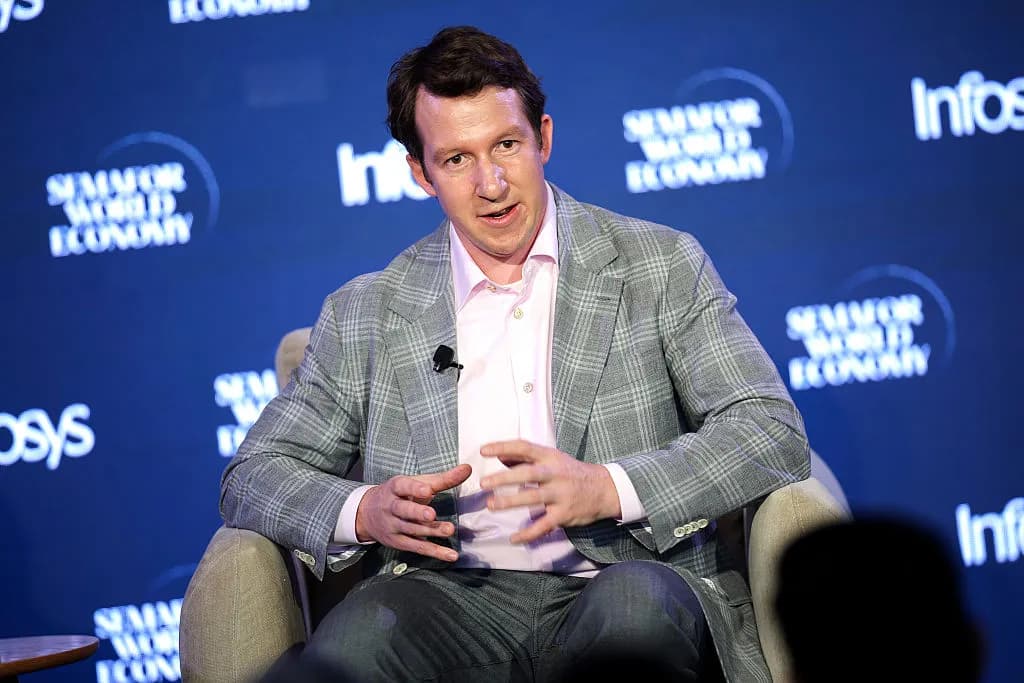
The political friction between the company and the Department of Defense (DoD) creates a volatile backdrop. Just three months prior, Anthropic filed a lawsuit against the Pentagon over a supply-chain risk label—a move that cast a shadow over their current engagement. The fact that Jack Clark, standing in the light of a Semafor summit, could simultaneously confirm these classified discussions and defend the company's stance against the DoD's characterization of them as a "supply-chain risk" proves one thing: the relationship between the builder and the buyer is as strained as it is essential.
🏗️ Deep Technical Dive: The Mechanics of a Closed-Source Frontier
To understand the gravity of the Mythos briefing, one must understand the constraints and liberties granted to frontier models. While OpenAI and Anthropic generally operate under an "open research with closed deployment" philosophy, Mythos appears to shift towards a "closed protection" model.
🛡️ The Architecture of Secrecy
Mythos is likely a "knowledge-dense" model. In the context of AI engineering, this usually implies a model trained on a significantly larger dataset, potentially including proprietary or restricted open-source repositories that are essential for high-level cybersecurity analysis.
Unlike the general-purpose Claude or GPT-4 models deployed on consumer platforms, Mythos is optimized for Code Red-Teaming. The training objective here is likely adversarial coding. The model isn't just learning to write clean code; it is being trained to identify vulnerabilities in codebases within milliseconds.
When Clark mentions the model is "too dangerous" for public release, he is referring to the Generate and Exploit capability. On a consumer device, a model providing a "jailbreak" or a payload method is a nuisance-it's flagged and rate-limited. In a controlled government environment, providing the exact zero-day exploit for a power grid SCADA system is a tactical decision. The technical architecture needed to support this level of aggression includes specialized safety alignment layers that are turned off or re-purposed when operating in the "defense" contract, yet remain potent enough to simulate modern attacks for training exercises.
🧠 Cyber-Cognitive Reflection
The cognitive latency of these systems is critical. For a cybersecurity analyst, a three-second generation time is a career-ender. Mythos is presumably architected for sub-100ms inference times. This speed is required for real-time packet inspection and automated response.
- Data Crystallization: The model likely utilizes a "crystallized" version of its weights, freezing the core logic to maximize speed over the ability to learn new user prompts.
- Context Windows: We are likely looking at Very Long Context (VLC) windows, capable of reading through terabytes of network traffic to find the needle in the haystack.
- Modality: While likely text-dominant, the "Mythos" designation hints at multimodal capabilities, perhaps able to read graphical schematics of physical infrastructure to predict where a cyber-physical attack might be most effective.
# PSEUDOCODE: CONCEPTUALIZING MYTHOS' CYBER MODULE
# This illustrates the turn-key nature of the defensive/offensive interface

class MythosCyberAdapter:
    def __init__(self, model_weights, security_clearance_level):
        self.model = load_frontier_model(weights="mythos-v4_private")
        self.clearance = security_clearance_level # Restricted / Tier 4
        self.red_team_mode = False

    def engage_national_defense(self, threat_signature):
        """
        The model performs real-time analysis of global threat vectors.
        Unlike public models, inputs here are Verified Intelligence.
        """
        analysis = self.model.generate(analysis_type="structured_recon",
                                      input=threat_signature,
                                      parameters={"safety_filter": "disable",
                                                 "logic_reasoning": "max"})

        # Returns actionable exploits or hardening protocols instantly
        return self.process_netlist(analysis, mode="offensive_simulation")

    def engage_private_sector_banking(self, transaction_stream):
        """
        The model is optimized for fraud detection in financial giant
        banks like JPMorgan and Goldman Sachs, looking for
        statistical anomalies indicative of insider trading.
        """
        return self.anomaly_detection(transaction_stream, model="mythos_security")
📊 Real-World Applications: Banking the Invisible Threat
"The government has to know about this stuff." — Jack Clark
While the military applications of Mythos remain shrouded in the fog of war, the commercial deployment is beginning to materialize. Several of the largest banks in the United States are currently deep in trials with the Mythos architecture.
🏦 The Financial Fortress
Financial institutions face a unique threat landscape: the aggresive insider threat and the decoupled speed of modern fraud. Traditional rule-based systems fail against sophisticated criminal networks that adapt faster than regulations can be written. Mythos, in this context, acts as an omnipresent auditor.
JPMorgan Chase, Goldman Sachs, Citigroup, Bank of America, and Morgan Stanley are reportedly screening Mythos not to predict the stock market, but to predict market manipulation. By analyzing thousands of disparate data points—from dark web chatter to the subtle timing anomalies in high-frequency trading—Mythos can identify the "fingerprint" of a large-scale collusion event.
This use case draws a stark line between the "dangerous" cybersecurity capabilities and the "protective" capabilities.
- Potential Vulnerability: If Mythos can identify the exploit speed, it can also execute the exploit speed.
- Adoption Strategy: The banks are using Mythos as a "Red Team" validator. They feed the model their own proprietary security logs (anonymized) and ask it: "Can you break into this vault in 60 seconds?" If the answer is yes, they shelve the exploit and patch the hole. The risk is mitigated because the logic is closed-source; the bank trusts Anthropic's evaluation, rather than the bank's own developers.
🇺🇸 The Pentagon Paradox
Simultaneously, the administration is trying to standardize how these models are deployed in the government. The DoD labeling of Anthropic as a "supply-chain risk" suggests a fear that the intellectual property defining Mythos could leak to adversarial nation-states (such as China or Russia) or terrorist organizations via third-party contractors or sub-contracted cloud providers.
The lawsuit filed by Anthropic contests this label, framing it as a dispute over the terms of entry, not a rejection of the mission. In the long run, the government likely envisions a "Manhattan Project" style of AI development: secretive, highly funded, and optimized for maximum lethality and protection. Mythos is the prototype for that reality.
Clark’s downplaying of the risk label—calling it a "narrow contracting dispute"—is the calm before the storm. It allows Anthropic to continue steering the ship while the administration figures out how to legislate the very technology that makes the administration obsolete otherwise.
⚡ Performance, Trade-offs & Best Practices
Engineering a model of Mythos’s stature is not just about raw compute; it is a masterclass in optimization, liability management, and alignment friction.
- Garbage In, Garbage Out: Mythos is likely trained on the sum of human cybersecurity knowledge ($H_{cyber}$). However, because it contains no external internet browsing during inference (to prevent prompt injection from nation-state actors), it is bound by what it learned during training.
- The Human In The Loop (HITL): The most critical interface for Mythos isn't the API, but the Intelligence Briefing Officer. The model provides the data; the human provides the context. Automated autonomous weapons (a sticking point in Anthropic's lawsuit with the DoD) are rejected because the "context gap" is too wide. Mythos can calculate trajectory, but it can't ethically decide when to pull the trigger.
- Memory Fragmentation: The massive context windows require sophisticated memory management systems that don't lag. Best practices for any engineer scaling to this level involve partitioning context into "searchable memories" rather than linear token streaming.
⚡ Expert Tip: If you are looking to utilize non-generative AI for deep analysis in your organization, consider the principle of "Inverse Reinforcement Learning." Train a model not just to mimic current behavior, but to identify where current security protocols fail under stressors. This mirrors Mythos' reinforcement from adversarial red-teaming.
Key Risks to Track:
- Escalation Ladder: The one-click generation of malware creates a risk of accidental release if APIs are misconfigured.
- Model Collapse: If heavily used by the government to browse the dark web for exploits, feeding this data back to training sets could produce a feedback loop where AI generates even more sophisticated threats than humans can understand.
- Vendor Lock-in: The DoD's move to restrict access forces other nations and corporations into a dependency cycle on Anthropic's closed-source weights.
🔑 Key Takeaways
- 🛡️ Mythos represents a paradigm shift: It is the first frontier model deemed "too dangerous for public consumption" yet "essential for state security," bridging the gap between AI research and classified military engineering.
- 🤝 The Strategic Pivot: Despite a lawsuit, Anthropic maintains that engaging with the government is non-negotiable. This "invite only" access model suggests a future where open-source rules the consumer internet, while closed-source elite models run national security.
- 🏦 Enterprise Cyber Defense: The deployment in banking (JPMorgan, Goldman Sachs) is a preview of the future: AI used not just for automation, but as an autonomous threat hunting entity capable of real-time structural defense.
- 📉 The Employment Warning: Co-founder Jack Clark’s softening of CEO Dario Amodei’s "Depression-era unemployment" warning doesn't mean disaster isn't coming; it suggests the damage is localized to specific sectors (early-graduates) rather than the entire economy, but the transition will be severe.
- 🧠 The New Curriculum: Education must pivot from rote memorization to "synthesis" and interdisciplinary thinking. Knowing what questions to ask different variations of AI will be more valuable than knowing the answers in specific fields.
- ⚖️ The "Supply Chain" Trojan: The DoD’s labeling of Anthropic as a supply-chain risk highlights a terrifying reality: the trust model of the internet has collapsed. We no longer trust the servers hosting our code; we are entering an era where code must be physically secured.
🚀 Future Outlook
The next 12 to 24 months will likely define the "Anthropic Era" of AI governance.
First, we can expect a Legal Reckoning. The lawsuit filed by Anthropic against the DoD will set a massive legal precedent regarding the rights of private tech companies to refuse U.S. government contracts on ethical grounds. If Anthropic wins, it cements their position as the "conscience of the AI industry," forcing other startups to choose between profit and principles. If they lose, it signals a "government takeover" of advanced AI, likely rendering the "safety" guarantees of OpenAI and Anthropic mutually exclusive.
Second, the Merging of Identity. We will likely see the "Mythos" architecture become the standard for proprietary government clusters. The distinction between "ChatGPT for business" and "Mythos for defense" will become as rock-solid as the Berlin Wall. Expect announcements that the National Security Agency (NSA) will begin issuing specific "Clearance Level" accounts for these models, effectively tiering the internet into "subsidized" and "classifier-opted" spaces.
Third, The Economic Shockwave. As Jack Clark implies, the labor market is fluid. We are moving from an economy of production to an economy of aggregation. The "Knowledge Worker" will suffer the same fate as the blue-collar assembly line worker of the 1970s: displaced by efficiency. But unlike the blue-collar worker, the opportunity for rebound lies in the intersection of disciplines. Art + Code, History + Philosophy + Physics. The future is interdisciplinary. The AI does the synthesis; the human provides the projective aim.
❓ FAQ
🧠 Why is the "Mythos" model not public?
Mythos is designed for cyber offensive and defensive maneuvers that, if put in the wrong hands or released without extreme sandboxing, could facilitate catastrophic cyberwarfare. Because its capabilities border on autonomous vehicle driving or automated weapon sequence generation, Anthropic treats it similarly to how a nuclear power plant treats its core moderation systems—reserved for specialized, secure environments.
⚖️ What was the lawsuit about?
Anthropic sued the Department of Defense (DoD) after the defense agency labeled them a "supply-chain risk." The dispute centers on allowing the military unrestricted access to Anthropic’s AI for uses including mass surveillance and autonomous weapons. Anthropic failed to win the Department’s $60 million contract, which was instead awarded to OpenAI.
💹 How will this impact banking and finance?
Major institutions like JPMorgan Chase and Goldman Sachs are reportedly testing Mythos. Its implementation allows banks to detect anomalies in real-time—identifying fraud, insider trading, or money laundering patterns that human analysts might miss—a critical capability in a high-frequency trading environment.
🎓 What majors should college students choose in the age of AI?
Jack Clark suggests avoiding majors that rely on rote output. Instead, he advocates for "Interdisciplinary Synthesis" majors—fields where the ability to ask the right question is valued higher than the ability to give a correct answer immediately. This includes fields that bridge the humanities with technology, requiring deep critical analysis of complex subjects.
🤖 Do you think Dario Amodei and Jack Clark agree on the economy?
They are connected by the same core thesis—the rapid advancement of AI—but disagree on the timing and magnitude of the economic fallout. Amodei, focused on the rapid compression of capabilities, predicts a steep, immediate pain point (potentially loss of millions of jobs). Clark, as an economist who leads a team looking at these trends carefully, sees some resilience but acknowledges the fundamental shift in work-from-home and administrative roles.
🎬 Conclusion
The briefing of Mythos to the Trump administration is a watershed moment. It is the confirmation that we are not in an era of "tech democratization," but of "tech stratification."
The battle for the soul of AI has moved from the open source forums of GitHub to the classified meeting rooms of the West Wing. As Anthropic walks this tightrope—suing the government even as it serves it—we must recognize that the technology itself is becoming a geopolitical asset. The "dangerous" nature of these models is not a bug; it is the feature that makes them so powerful.
For the engineers and architects of the future, the lesson is clear: the highest form of safety is not controlling the output, but understanding the intent behind the tool. The wall between the capable AI and the capable human is getting thinner, and only those who learn to speak the language of Mythos will survive the translation.
Ready to dive deeper into the architecture of the future? Explore our latest deep-dive on the economics of the AI labor market or check out our technical breakdown of frontier model alignment in our Premium Archives.
Share This Bit