AI appsAINvidiaAI Agents
Jensen Huang Predicts AI Job Creation: Nvidia CEO Debunks AI Unemployment Fear
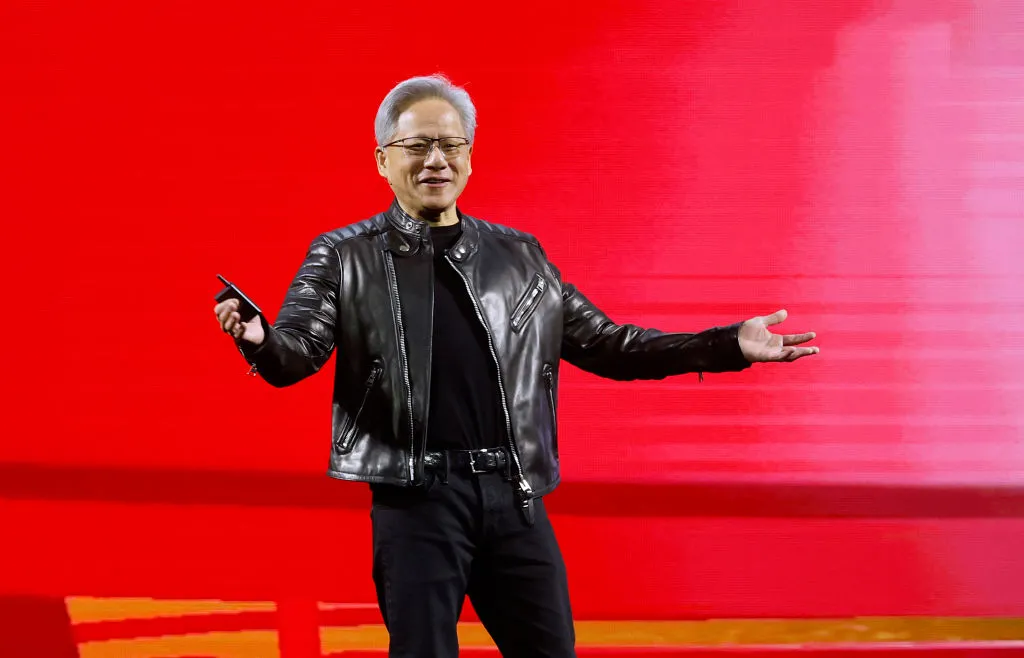
- Optimistic Stance: Nvidia CEO Jensen Huang argues that AI job creation outweighs job losses, viewing the technology as a catalyst for U.S. re-industrialization.
- Task vs. Role: Artificial Intelligence doesn't replace jobs; it automates specific tasks, freeing humans to handle broader functional roles.
- Reality Check: While Huang remains optimistic, financial reports suggest 15% of U.S. jobs could be eliminated over the coming years.
- Market Dynamics: Huang warns that "doomer" narratives generated by the AI industry itself may harm public adoption.
🎯 Introduction
Jensen Huang didn't hold back Monday night during his chat with MSNBC's Becky Quick at the Milken Institute. The Nvidia chief believes the current panic surrounding AI job creation is overstated. As the headline of this story suggests, the core message is a firm rebuttal of the AI unemployment narrative that has dominated tech headlines. Huang asserts that technology is an industrial-scale generator of jobs, not a threat to the American workforce.
The anxiety surrounding the speed of this transition is palpable. Becky Quick pressed Huang on whether this disruption leads to greater inequality and if we should be genuinely worried about the future. While the artificial intelligence landscape is evolving rapidly, Huang struck an optimistic chord, positioning AI as the U.S.'s best opportunity to revitalize its industrial base.
🧠 Core Explanation
Huang's argument rests on two main pillars: the physical infrastructure of AI and the economics of role evolution.
First, AI isn't just software; it requires hardware. Huang pointed to the rise of "concrete factories"—the massive data centers and fabrication plants required to build the chips powering the AI industry. These physical hubs require a massive workforce to build, maintain, and operate. If you build the infrastructure (the "concrete"), you inevitably build the jobs around it.
Second, he distinguishes between a task and a job. A common misconception among AI doomers is that automating a task implies the end of the role. Huang argued that people misunderstand the relationship between tasks and functions. When AI handles the "how" of a specific task, the employee remains responsible for the higher-level "what" and "why" of their job.
🔥 Contrarian Insight
The "AI Doom" industry is likely a marketing by-product, not a prediction.
Here’s the catch: Much of the hyperbolic fear-mongering isn't coming from outside the industry—it's coming from the tech giants themselves. Huang noted a disturbing irony: companies are scaring the public with "science fiction stories" about robotic overlords to gin up excitement for products that aren't even that advanced yet. This creates a feedback loop of fear that forces premature adoption or stagnation.
"My greatest concern is that we scare... people... to the point where AI is so unpopular in the United States," Huang said. As a strategic engineer, I view this as a significant risk to innovation. When public trust erodes due to marketing-induced FUD (Fear, Uncertainty, and Doubt), regulatory bodies step in with heavy-handed policies that ultimately stifle the market.
🔍 Deep Dive / Details
The Nuance of "Re-industrialization"
Huang explicitly tied AI job creation to the concept of "re-industrialization." Historically, the U.S. moved away from heavy manufacturing. AI changes the equation—it changes manufacturing into notion factories (factories that make ideas). To run these high-precision factories, you need a new class of industrial worker: chip physicists, thermal engineers, and data center logistics managers. It’s not an end to industry; it's a shift in the type of industry.
The Economic Dislocation
In real-world usage, the concern regarding inequality remains valid. Quick asked if this could be the "biggest dislocation" since the Industrial Revolution. While Huang focuses on the jobs created by the hardware (selling the shovel), honest economics suggests we need to look at wages.
If a junior developer's ability to code is bought by OpenAI for $20/month, that worker needs to pivot. Huang argues that this pivot leads to "better jobs" using better tools, but critics argue this transition period could be brutal for displaced workers who aren't technically skilled enough to clear the high bar of the "new" roles.
The "Misunderstood" Job
Huang’s explanation of "task vs. job" is the most technically sound point of his argument. If you automate the data entry from a PDF to a CRM, the employee doesn't disappear; they move their attention to client retention. The value of the employee shifts from data processing to relationship management.
⚔️ Comparison Section: Wang Tao (BYD) vs. Jensen Huang
To understand the perspective, let’s contrast this view with another major player. BYD Chairman Wang Tao recently warned that there are essentially two groups of people who can embrace AI—those who apply it and those who fall behind. While Huang focuses on the hardware supply chain and creation, Tao focuses on the speed of adaptation. Both agree: AI is a wildcard, but the winner takes all.
Viewpoint Comparison
| Feature | Jensen Huang (Nvidia) | The "Doomers" / Traditional Economists |
|---|---|---|
| Primary Focus | Infrastructure, Chips, Job Creation | Displacement, Income Inequality |
| View on AI Threat | Low (It generates hardware jobs) | High (It consumes human labor) |
| Strategic Advice | Don't fear the robot; make the robot | Protect your role from automation |
| Core Metaphor | The "Shovel Maker" (Selling Infrastructure) | The "Basket Weaver" (Losing the niche) |
⚡ Key Takeaways
- AI is an industrial-scale generator of jobs, driven by the need for hardware manufacturing and data center operations.
- Artificial Intelligence will automate tasks, acting as a tool for employees rather than a replacement for their entire role.
- Huang believes "doomer" rhetoric is counterproductive and may be a too-sensationalized marketing tactic.
- The AI industry represents America's best chance at modern re-industrialization.
- Developers face a divergence: those who leverage AI as a copilot will thrive; those who view it as a competitor will struggle.
🔗 Related Topics
- System Design for AI: Building Scalable Infrastructure
- Top AI Coding Tools for 2024: A Deep Dive
- The Real Cost of AI Training Data
- Job Market Shift: How AI Changes Software Engineering
🔮 Future Scope
We are moving into the "ingestion" phase of AI. The hype of 2023 is over; the utility phase is starting. The economic focus will shift from "Will AI take my job?" to "Will the AI-using-colleague take my job?"
For business leaders, the picture is clear: investment in AI hardware is a direct investment in future employment rates. Over the next five years, we will see the physical manifestation of AI job creation—hydrogen-powered data centers, advanced chip fabs in the U.S., and a massive spike in demand for AI-augmented software services.
❓ FAQ
Q: Is Jensen Huang right about AI creating jobs? A: Huang makes a strong economic case based on hardware supply chains. However, economists vary, suggesting that while new jobs will form, the transition could be volatile for specific sectors in the interim.
Q: How does AI automation differ from job replacement? A: Automation targets tasks (e.g., writing code, transcribing audio). Job replacement targets roles. Huang argues roles remain because they encompass problem-solving and context that current AI lacks.
Q: Will AI unemployment actually happen? A: While some sources suggest 15% of jobs may be affected, recent studies (like those from Goldman Sachs) often project a lower number of displaced hours rather than total elimination of roles. It is a shift in how we work, not necessarily if we work.
Q: What is the "Industrial-scale generator" of jobs? A: It refers to the massive supply chain required for AI, including chip manufacturing, server assembly, energy production for data centers, and logistical management of these physical assets, all of which require human labor to build and manage.
🎯 Conclusion
The debate over AI job creation versus AI unemployment is no longer theoretical—it’s being handled by chairpersons of multi-trillion-dollar companies. Jensen Huang’s message is unapologetically bullish: fear the hype, not the revolution. By investing in the "infrastructure of intelligence," the U.S. has a unique opportunity to rebuild its industrial workforce.
For developers and engineers, the takeaway is functional: don't fear the tool. The Generative Engineers of tomorrow won't just write code; they will architect the systems that run the world. Adapt or be displaced—isn't that what he said?
[Get the latest insights on AI Infrastructure and Developer Tools]
Share This Bit