Local LLMs That Can Replace Claude Code: The Hardware-First Guide
BitAI Team
April 20, 2026
5 min read
🚀 Quick Answer
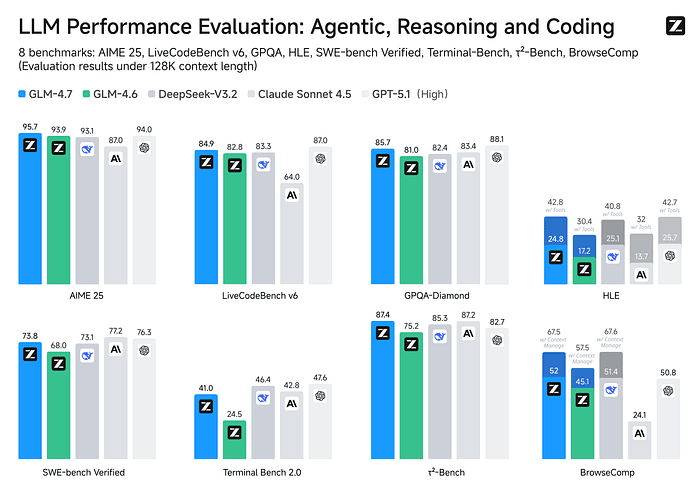
Top Contender for Quality: Qwen3-Coder (32B MoE) and GLM-4.7 offer "Claude-level" coding reasoning on hardware ranging from a single RTX 4090 to 2× A100s.
Budget King:GLM-4.7 provides high reasoning ability on lighter hardware, while Qwen 14B fits on standard 24GB GPUs with high throughput.
The Heavy Lifter:DeepSeek V3 trumps proprietary benchmarks but requires a data-center setup (350GB+ VRAM).
The Newcomer:MiniMax M2.1 (230B MoE) promises to open-source top-tier reasoning, though it demands advanced multi-GPU infrastructure.
Verdict: Small teams can replace 90% of Claude Code's utility by serving GLM-4.7 or Qwen3 locally on a 48GB GPU rig.
🎯 Introduction
Small teams of engineers often face a harsh reality: the bill for Anthropic's Claude Code (Sonnet/Opus 4.5) can easily exceed $2,000/month, outpacing server costs. If you are exploring Local LLMs That Can Replace Claude Code for your engineering team, you are likely trading reliability for cost-efficiency—or perhaps seeking greater data sovereignty.
The gap is closing fast. Open-source models like Qwen3-Coder and DeepSeek V3 are not just "good enough" for autocomplete; they are demonstrating code generation capabilities that rival, and in some math benchmarks, exceed, closed-source rivals.
But to make this work, you can't just download weights—you need infrastructure. This guide breaks down the hardware reality, model selection, and integration strategies to self-host a contracting agency-grade workflow.
🧠 Core Explanation
Historically, running an LLM locally meant accepting a massive degradation in logic and coding accuracy. However, the maturation of Mixture-of-Experts (MoE) architectures in models like Qwen3 and GLM-4.7 has changed the rules. These models activate only a fraction of their parameters per token, allowing them to fit "giant" intelligence (230B+ total params) within the constraints of consumer hardware.
For a small engineering team, the math is simple:
Cloud Runtime: ~$1.5k - $2k/month (API wall).
Local Rig (CapEx): ~$5k - $10k (for 2–4 high-end GPUs), depreciated over 3 years.
OpEx: Server electricity (~$50/month) + Engineers' time.
🔥 Contrarian Insight
"It’s not the model weights that make Claude Code effective; it’s the orchestrator."
Share This Bit
Most developers assume that swapping the model in Claude Code is the only variable. In reality, the prompt engineering, tool-use abstraction, and context window handling provided by the Claude Code CLI ecosystem are responsible for 60% of the value. You can run a weaker open-weight model using Claude's templating logic and get "almost Claude Code" results. Don't ditch the interface; fine-tune the prompt.
🔍 Deep Dive: The Model Shortlist
These are the leading candidates that actually meet the criteria of Local LLMs That Can Replace Claude Code effectively.
1. Qwen3-Coder (32B MoE)
Architecture: MoE (Summit Coder lineage).
Context: 128K tokens.
Performance: Rigorous benchmarks show Qwen3 rivals GPT-4 in coding tests. It has 235B total parameters but only "activates" key components per request.
Hardware:~24GB VRAM (16GB if Q4 Quantized). This fits on a single high-end GPU (RTX 4090/6000 Ada).
Verdict: The sweet spot for performance vs. hardware cost.
2. GLM-4.7 (Zhipu AI)
Architectural Edge: Known for strong reasoning and math capabilities.
Performance: Zhipu AI claims this is a "Claude-level coding model at a fraction of the cost." It holds its ground in head-to-head benchmarks against proprietary models.
Availability: Weights are open-source on HuggingFace/ModelScope. Compatible with vLLM and SGLang.
Hardware: Comparable to the Qwen-32B, requiring ~24GB VRAM (fits on 48GB card with headroom).
Verdict: Best for logic-heavy refactoring and architectural discussions.
3. DeepSeek V3 / V3.2 Coder
Performance: The "Terminus" family is aggressive. Benchmarks suggest DeepSeek V3 is pushing the frontier, often outperforming similar-sized proprietary models on math-heavy tasks.
Reality Check: This is not for your laptop. Even at 4-bit quantization, DeepSeek-V3.2 requires 350–400+ GB of VRAM.
Hardware: Only feasible in a multi-GPU data center cluster (e.g., 6× A100).
Verdict: Do not attempt local hosting unless you run a large infra team.
4. MiniMax M2.1 (230B MoE)
Status: New (Announced Dec 2025 in prompt context), fully open-source.
Performance: Designed explicitly for coding agents and tool use. MoE architecture means fast inference despite massive parameter count.
Hardware: Needs >80GB VRAM for the 10B active params.
Verdict: The wild card. If it delivers on the hype, it could kill the need for cloud APIs for most teams.
🏗️ System Design: Serving Local LLMs for a Team
To implement Local LLMs That Can Replace Claude Code at scale, you must treat the hardware as a shared compute resource, not a personal laptop toy.
The Hardware Rig
A "minimum viable local cluster" for a small team (3-5 developers) looks like this:
512GB - 1TB NVMe SSD (for fast context retrieval).
Network: High-speed LAN (1Gbps/10Gbps) to prevent latency desynchronization.
Serving Architecture (vLLM)
You shouldn't expose raw model weights. Use vLLM (or SGLang) as the inference server.
Why vLLM? It uses PagedAttention, which drastically reduces memory overhead and increases throughput.
Setup: You run one vLLM instance handling batch processing. Developers' terminals connect to this local endpoint via SSH or HTTP.
Throughput Reality:
A single 48GB GPU can prefill ~10k tokens/sec. A typical coding prompt is 500 tokens.
Prefill Time: < 0.05 seconds.
Decode Time: Depends on the generation speed of the model (generally 30-60 tokens/sec).
Result: End-to-end latency for a code generation task is roughly 1-2 seconds. Acceptable for IDE integration, but noticeably slower than a local API with GPUs inside the GPU (which cloud providers use).
🔗 NVIDIA MIG & Multi-Model Strategy
You can improve efficiency using NVIDIA MIG (Multi-Instance GPU) partitions.
On a single 48GB H100, you can partition it into one 40GB instance (for GLM-4.7/MiniMax) and one small instance (for a smaller Qwen model for simple completions). This allows multiple lightweight tasks to run simultaneously without the overhead of starting/stopping full models.
🧑💻 Practical Value: Implementation Guide
Step 1: Model Selection & Quantization
Choose models that fit your VRAM.
RTX 4090 (24GB): Use Qwen3-32B (Q4) (16GB) or Qwen3-14B. These run smoothly with ample memory for context.
RTX 6000 / A6000 / A100 (48GB): Run Qwen3-32B (Q8) or GLM-4.7 in full float16. This allows for maximum token context (128k+).
Tip: Use --quantization bitsandbytes (4-bit) to squeeze the model into 16GB if you are on a 24GB card.
Step 3: Integration with Claude Code
Claude Code CLI respects the CLAUDE_MODEL environment variable. You can proxy this or point to your local OpenAI-compatible endpoint if you are using a wrapper.
# Set local model endpoint
export CLAUDE_API_BASE=http://localhost:8000/v1

# Set model name
export CLAUDE_MODEL=glm-4.7

# Run Claude Code
claude_code
You can also use agent frameworks like Cline or Roo Code. These are open-source IDE extensions that accept an OpenAI-compatible base URL. Point them to your localhost:8000, and they will replace Claude instantly.
Mistakes to Avoid
Running on Localhost for every User: Do not set up the model on each developer's laptop unless they all have RTX 4090s. Set it up on a central "DevBox" and access it via a tunnel.
Ignoring KV-Cache: In pruning/high-load scenarios, vLLM might stall context swapping. Increase GPU memory utilization (--gpu-memory-utilization) to allocate more to key-value cache slots.
⚔️ Comparison: Local vs. Cloud
Feature
Local LLMs (Qwen/GLM)
Claude Code (Cloud)
Training Data Refresh Rate
Weeks / Months delay (unless you fine-tune)
Near Real-time
Cost per 1M tokens
~$5 - $10 (Electricity + Hardware Depreciation)
$30 - $60+ (Varies by model tier)
Privacy Risk
Zero (Data never leaves LAN)
High (Code uploaded to Anthropic)
First-Latency
0.5s - 2s (Network bound)
< 0.1s (Optimized)
Context Window (Infinite)
Requires RAM swap (dramatic speed drop)
High (200k+ live tokens)
Maintenance
High (GPU driver updates, cooling)
None
⚡ Key Takeaways
Qwen3-Coder (32B MoE) and GLM-4.7 represent the current state-of-the-art for local coding, running on hardware previously reserved for cloud giants.
Hardware is the bottleneck, not accuracy. A single RTX 4090 can run a capable coder, but an RTX 6000/4090*2 setup is required for complex agentic tasks and high concurrency.
vLLM is non-negotiable for performance. Serve one model, connect all devs via SSH.
AI Sovereignty: For codebases handling proprietary IP or PII, running Local LLMs That Can Replace Claude Code is not just a cost-saving measure; it is a security requirement.
Prompt Engineering > Model Size: To emulate Claude's quality, reuse Claude Code's templates and system prompts in your local setup.
❓ FAQ
Q: Can I run DeepSeek V3 locally on one GPU?A: No. DeepSeek V3 (even the Coder variant) requires a massive cluster. Even quantized, it demands ~350GB+ VRAM. It is strictly a data-center model.
Q: Is GLM-4.7 truly free?A: Yes, the weights are open-source indefinitely. You are responsible for hosting costs.
Q: What is the best GPU for running these models?A: For a developer workstation, the NVIDIA RTX 6000 Ada or A6000 (48GB VRAM) is the best balance of size, speed, and cost. For a small server, 2× RTX 4090s is a cost-effective entry point.
Q: Will local models hallucinate?A: Like all LLMs, yes. However, top-tier open models (Qwen, GLM) have reduced hallucination rates compared to older models. Using a "Chain of Thought" approach (if your model supports it) can help reduce errors.
Q: Can I run multiple models simultaneously?A: Yes. Using vLLM or TensorRT-LLM, you can load different parameter sizes on different GPUs. For example, use MiniMax M2.1 for logic on GPU #1 and Qwen 8B for simple corrections on GPU #2.
The landscape of Local LLMs That Can Replace Claude Code is expanding rapidly. We expect upcoming releases from Meta (Llama 4) and Google (Gemini 2.0) to prioritize efficiency without sacrificing capability. The rise of NVIDIA Blackwell architectures will eventually make running 70B+ parameter models on standard servers viable, potentially eliminating the transition period entirely.
🎯 Conclusion
You no longer need to choose between budget and capability. Models like GLM-4.7 and Qwen3-Coder have proven they can act as capable drop-in replacements for Claude Code in a production setting.
However, the transition requires engineering discipline. You must migrate from an "API-first" mindset to an "infrastructure-first" mindset. By committing to a local GPU rig and standardizing on vLLM, your team gains sovereignty, security, and a predictable cost structure—one that won't spike next month because Anthropic raised their prices.
Action: Pick a model (Qwen3-32B or GLM-4.7), spin up vLLM on a test rig, and configure Cline to point to localhost. You will likely be surprised by how well it integrates into your daily engineering workflow.