MicrosoftXbox
Microsoft Reveals New Xbox UI: Is Consistency the Future of Gaming?
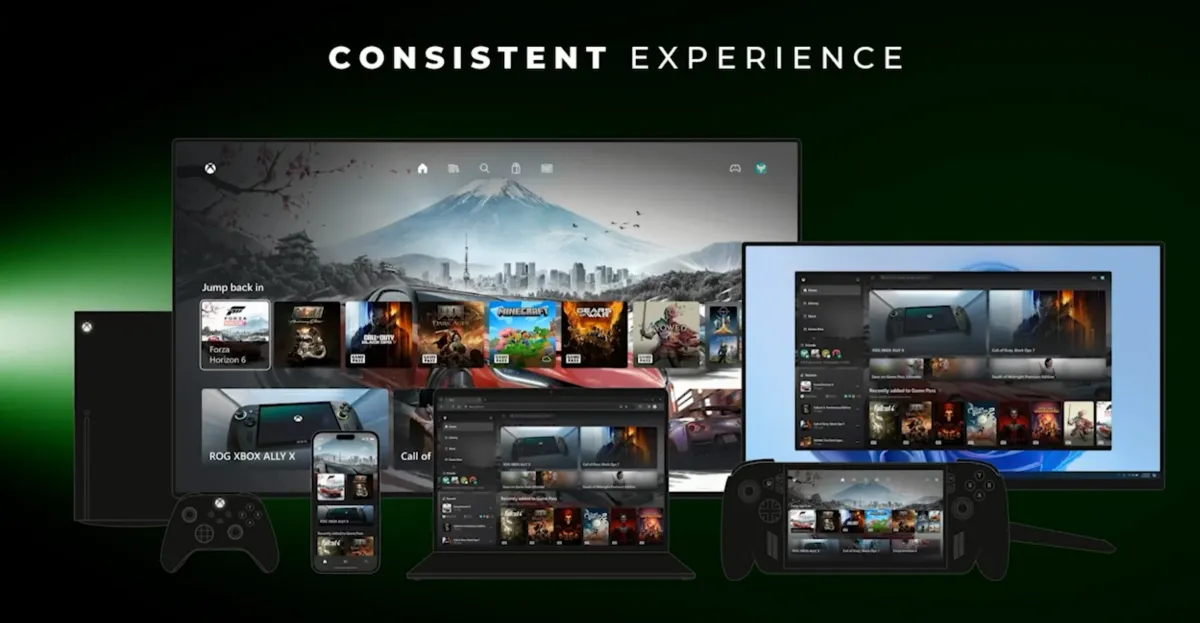
- Microsoft has officially teased a new Xbox UI designed to feel familiar across devices, aiming to solve the fragmentation issue in the ecosystem.
- The updated interface introduces a unified design language for Xbox Cloud Gaming, the PC app, and console dashboards.
- Key changes include a more rounded aesthetic, a mouse-like cursor for cloud gaming, and adaptive layouts based on screen size and input input modalities.
- While the changes are subtle, they signal a shift toward a single, seamless Xbox experience regardless of where or how you play.
- The update was presented by VP Jason Ronald during the GDC Keynote, addressing years of user feedback regarding the disjointed look of the platform.
🎯 Introduction
Microsoft is finally fixing the fragmented gaming ecosystem by revealing a new Xbox UI designed to be absolutely consistent across consoles, PCs, and cloud gaming. During the recent Game Developers Conference (GDC), Senior Director Jason Ronald showcased a unified interface that aims to eliminate the disjointed look of the current dashboard. This update suggests a major shift toward a seamless ecosystem, addressing years of user complaints regarding the lack of uniformity between the Xbox Series X and the Xbox Cloud Gaming platform. For developers and hardcore users, this isn't just about prettier buttons; it’s a centralization of design language that could define the next decade of the Microsoft gaming strategy.
🧠 Core Explanation
The core announcement here is the strategic unification of the Microsoft gaming stack. For years, the "Xbox experience" has suffered from what Jason Ronald calls "fragmentation."
- The Problem: Users have had to mentally switch gears when moving from an Xbox Series X console (using controller), to an Xbox Cloud Gaming browser tab (mouse/keyboard), or to the PC app. Each had a different layout, color palette, and "feel."
- The Solution: A "Universal Adaptive Interface." This isn't a 1:1 clone of Windows (thankfully), but a design system built on shared principles—rounded corners, specific spacing, and UI elements that scale.
- The Demo: Ronald showed a single slide/image contrasting the new UI on three devices:
- Console: Slight modifications. Profile in the top right, three ad slots at the bottom (down from four) to standardize loading times.
- Handheld (evaluation hardware): The same adaptive layout fits the smaller screen naturally.
- PC/App: This looked to be the closest to the Xbox Cloud Gaming experience, featuring the new "motion" and "rounded" design language seen previously in testing.
🔥 Contrarian Insight
Stop Calling it "Consistency." Call it "Loss of Identity."
Here’s the catch: While Microsoft emphasizes the consistency of the new Xbox UI, I worry this devalues the unique hardware identities they are trying to sell. An Xbox Series X is a high-powered monolith; the Xbox Cloud Gaming web interface is a utility. Forcing a "distinctly Xbox" look on a browser window via mouse movements feels like trying to force a square peg into a round hole. We applaud the effort to fix the fragmentation, but we must ensure that the touch of a controller and the hover of a mouse feel equally powerful, rather than just "samey." Sometimes, distinct interfaces serve distinct workflows better than a "one-size-fits-all" design system.
🔍 Deep Dive / Details
The Engineering Philosophy (System Design)
From a systems perspective, Microsoft is shifting from a "device-specific deployment" model to a "responsive design system."
- Dynamic Scaling: The UI components aren't hard-coded for 4K TVs or 1080p monitors. They likely utilize fluid layouts (CSS Grid/Flexbox equivalent in UI libraries) that recalculate space based on
deviceId,resolution, andinputType. - Asset Management: By unifying the UI, they reduce the engineering overhead of maintaining three different styling codebases. They only maintain one source of truth (likely built on top of their internal Fluent UI design language) and render it to target devices.
- Input Modalities: The prompt mentions they won't be identical because of input types. This is crucial. A "clickable" area on a cloud UI might need to accommodate touch targets for stylus use on a handheld, whereas on a console screen, you are using a controller stick. The "ad slots" (more literally, content slots) are likely just adaptive containers designed to prevent layout shifts that frustrate players.
🧑💻 Practical Value
What should you do now?
- Don't uninstall your PC app yet. A video shot at a keynote is different from a production build. There’s a 0% chance this rolls out exactly as shown next week, but it confirms the roadmap.
- Watch the Keynote. Jason Ronald’s GDC talk is the gold standard here. The 90-minute video below starts exactly where the new Xbox UI is shown.
- Join the Conversation. Since Microsoft is finally admitting there was a "fragmentation" problem, now is the time to give feedback on where the new UI feels lacking.
⚔️ Comparison Section
| Feature | Old Ecosystem | New "Unified" Ecosystem |
|---|---|---|
| Aesthetics | Sharp, basic, distinct between devices | Rounded, animated, "Fluent" style |
| PC App | Functionally similar to Console | Closer to Cloud Gaming/Web experience |
| Loading | Sidebar-heavy, potentially slower loading slots | Adaptive slots (3 on console) for pacing |
| Cursor | Used infrequently | Prominently featured on Cloud Gaming |
| User Mental Model | Fragmented (Mental map required for each device) | Cohesive (Same map everywhere) |
⚡ Key Takeaways
- Fragmentation is real: Microsoft VP Jason Ronald openly acknowledged that the current experience felt disjointed across inputs and hardware.
- Unified Design System: The new Xbox UI is an adaptive system—tailored for screen size and input modality, not a pixel-perfect clone.
- Cloud Gaming focus: The PC app and Xbox Cloud Gaming are getting the most significant visual overhaul, bridging the gap between streaming and native gaming.
- Not just pretty: Faster loading (via fewer ad slots) and smoother animations are functional benefits of this shift.
- Detail matters: Profile placements and interface density are being standardized to reduce visual noise.
🔗 Related Topics
- Microsoft Announces That Official Apps Are Coming to the Steam Deck
- Inside the World of Xbox Cloud Gaming Performance Metrics
- Why the "Gamer Tax" on UI Ads is Becoming Mainstream
- Head-to-Head: OLED vs 4K 120Hz TV for Console Gaming
🔮 Future Scope
We expect to see this UI migrate out of GDC demos and into the public TestFlight (flighting) programs over the next 6-12 months. Expect to see similar "Responsive Layouts" appear in the Windows Store integration, as hinted at in the same keynote. This also sets the stage for potential adaptive handhelds from Microsoft, as the cursor and touch interface needs must be perfect to justify a dedicated device in a market dominated by Steam Deck and ROG Ally.
❓ FAQ
Q: When will the new Xbox UI come out? A: Microsoft hasn't set a release date, but you can expect it to start appearing in public "flighting" programs later this year.
Q: Will the new UI fix the lag on Xbox Cloud Gaming? A: The new design includes faster-loading content slots, which should improve perceived performance, though it doesn't upgrade the underlying streaming resolution directly.
Q: Does this mean the Xbox console UI will get a massive overhaul? A: Yes, but the console UI is likely to remain controller-first, adapting the new design language to fit around thumbsticks rather than mouse clicks.
Q: Is this using the same Flex UI framework as Windows 11? A: It is highly likely using a derivative of Microsoft's Fluent UI system, adapted for gaming, which allows for the rounded corners and smooth animations seen in the demo.
Q: Will this affect my existing game libraries? A: No, the new UI is a skin on top of the existing gaming services; your library and save games remain untouched.
🎯 Conclusion
The "game" for Microsoft right now isn't a single blockbuster title; it's the Xbox ecosystem. By unveiling this new Xbox UI, they are signaling that they are serious about making their gaming portfolio compatible across every available screen. Whether you are playing on a TV, a laptop, or in the browser, the goal is a "a familiar and distinctly Xbox" feeling. While the changes might look subtle at first glance to the average user, for the developer and the power user, this consolidation of the stack has significant long-term implications for how we consume games.
Share This Bit