MicrosoftAI
🚀 Revolutionizing the Driver's Seat: How the Microsoft-Stellantis AI Alliance is Re-engineering the Autonomous Ecosystem
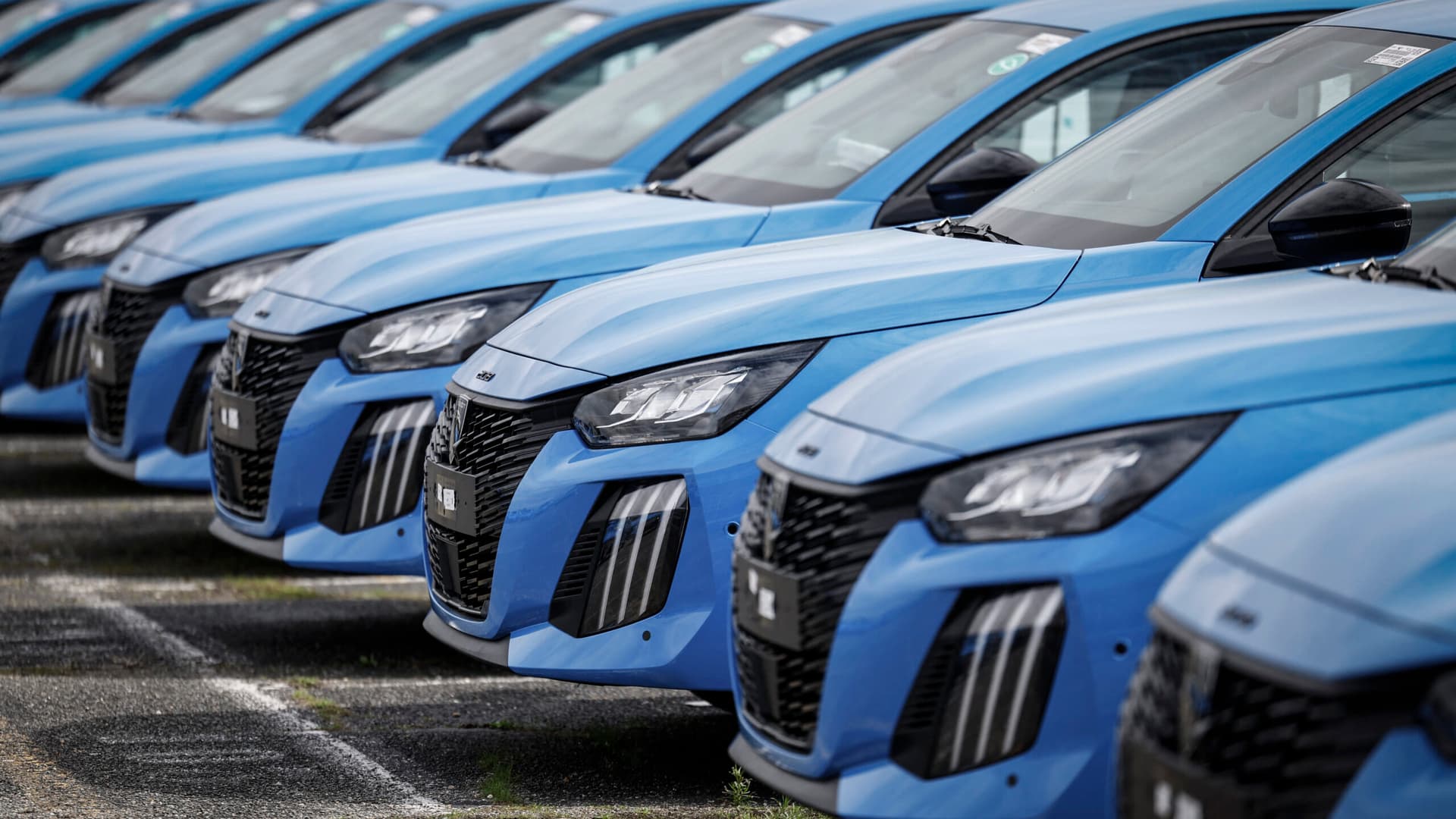
🚀 Revolutionizing the Driver's Seat: How the Microsoft-Stellantis AI Alliance is Re-engineering the Autonomous Ecosystem
The automobile has undergone perhaps the most radical transformation in human history over the last two decades. What began as a humble mechanical box designed purely for locomotion has mutated into a complex, compute-rich silicon ecosystem that rivals your living room in processing power. Yet, despite this surge in digital sophistication, the user experience often feels like a regression. We have sacrificed intuitive physical controls for capacitive touchscreens, inviting driver distraction, while embedding modems capable of breathing attacks into the safest transport device we own.
The future of mobility isn't about adding more pixels; it is about infusing intelligence into the very infrastructure of the vehicle. Enter the game-changing strategic alliance announced between Stellantis, the global automotive giant owning over 25 brands from Jeep to Ram, and Microsoft. This isn't just a vendor deal; it is a sovereign digital merger aimed at rewriting the rulebook for automotive software and security. By leveraging Microsoft's vast AI and cloud hierarchy, Stellantis aims to harden its cybersecurity posture, slash datacenter energy consumption, and deploy predictive maintenance algorithms that anticipate mechanical failures before they occur.
In this deep dive, we will unpack the architecture driving this partnership, examine the architectural shift required to merge automotive engineering with enterprise-grade AI, and analyze how this collaboration will impact the end-user experience of the modern driver.
TL;DR: The five-year strategic partnership between Stellantis and Microsoft marks the dawn of the "AI-Native Vehicle." By embedding advanced machine learning into the core operating system, Stellantis aims to boost cybersecurity, reduce datacenter footprints by 60%, and offer predictive maintenance, fundamentally shifting cars from static machines to dynamic, intelligent assets.
🤖 The "Why Now" for Intelligent Automotive Infrastructures
Why has the automotive world suddenly pivoted toward such a heavy reliance on Enterprise AI? The trajectory is clear: the "mobile" in "mobile computer" is fast becoming obsolete. As we move closer to Level 3 and Level 4 autonomous driving capabilities, the car is no longer a destination; it is a data center on wheels.
Historically, the automotive industry has been averse to risk. The complexity of vehicle Electronic Control Units (ECUs) has ballooned from a handful in the 1990s to hundreds in modern vehicles. This explosion of nodes means a corresponding explosion of potential vulnerabilities. When a connected car becomes a target for state-sponsored cyberattacks or ransomware, the stakes are no longer about a stolen playlist; they are about lives.
Microsoft’s decision to partner with Stellantis is a recognition that internal engineering silos can no longer solve the problems of an interconnected world. As Ned Curic, Stellantis’ chief engineering and technology officer, noted, AI is already being embedded directly into vehicles “from the new digital cabin to the core vehicle Operating System.” The transition to AI-native software is not a trend; it is the only viable path forward to manage the complexity of modern vehicle fleets.
Furthermore, the sustainability pressure is real. With the automotive value chain contributing significantly to global carbon emissions, the drive for efficiency is relentless. The goal to reduce Stellantis' datacenter footprint by nearly two-thirds by 2029 demonstrates a maturation of AI engineering—specifically, the shift from "bigger is better" to "smarter is cheaper." We are moving from brute-force processing to federated learning and optimization models that drive efficiency without sacrificing performance.
🏗️ Deep Technical Dive: The Architecture of the Co-Piloted Cabin
To understand the scope of the Stellantis-Microsoft partnership, one must look beyond the marketing slogans and examine the underlying technical architecture. This is a paradigm shift in how software is written, deployed, and secured for a vehicle that must be operational for a decade or more.
1. The Hybrid Cloud-Edge Intelligence Model
The most critical architectural decision in this era is where computation happens. Is the intelligence in the cloud, or is it on the device? In the context of this partnership, the architecture appears to be a sophisticated hybrid.
- Cloud Intelligence: High-level processing, training large language models (LLMs) for natural language interaction with the vehicle (e.g., "Where is the dealership closest to me?"), and complex diagnostic merging happen in the Azure ecosystem.
- Edge Inference: Critical functions, such as active safety, predictive maintenance anomaly detection, and real-time security threat hunting, happen on the edge (the vehicle itself) to ensure zero latency and redundancy.
This allows the car to learn from thousands of data points across a global fleet—without sending raw user data to the cloud—using techniques that ensure privacy and data sovereignty.
2. Cybersecurity as a Governance Framework
The prompt highlights "hardening Stellantis against cyberattacks." This requires more than just a firewall; it requires a Zero Trust Architecture (ZTA). By integrating Microsoft's security stack, Stellantis is likely implementing a continuous threat detection system that monitors the vehicle's OBD-II port, the CAN bus, and the cloud connection for anomalous behavior.
Imagine a system akin to a firewall for a human body; it identifies and neutralizes pathogens (malware) the moment they breach the skin. This involves analyzing traffic flow patterns and detecting "something is wrong" behavior much faster than a human technician could diagnose a grounded vehicle.
3. Predictive Maintenance Algorithms
The shift to predictive maintenance is a massive leap beyond the "check engine light" of the past. Currently, vehicles report error codes after a component fails. In this future, AI models will ingest telemetry data from sensors monitoring torque, vibration, temperature, and even sound.
# Conceptual Python Example: Anomaly Detection for Tire Health
import numpy as np
from sklearn.ensemble import IsolationForest

class PredictiveMaintenanceEngine:
    def __init__(self):
        self.model = IsolationForest(n_estimators=100, contamination=0.01)
        self.tire_history = []

    def ingest_telemetry(self, sensor_data):
        """
        Analyzes vibration frequency and pressure data from tire sensors.
        sensor_data: {'pressure': 32.0, 'vibration': 120.5, 'temp': 45}
        """
        # Feature vector for the model
        features = np.array([[sensor_data['pressure'], sensor_data['vibration'], sensor_data['temp']]])

        # Predictions: -1 is anomaly/failure, 1 is normal
        prediction = self.model.predict(features)

        if prediction == -1:
            print("⚠️ ALERT: Anomaly detected. Imminent tire failure predicted in 48 hours.")
            self.trigger_service_reminder()
        else:
            pass

    def trigger_service_reminder(self):
        # Logic to send a push notification to the user's dashboard
        pass
This "digital twin" approach allows engineers to simulate failures before they happen, optimizing the firmware across the entire fleet instantly via Over-the-Air (OTA) updates.
📊 Real-World Applications & Case Studies
The architectural dreams of engineers often face the messy reality of the consumer market. This partnership provides a rare glimpse into how these technologies translate into tangible value for the Stellantis drivers.
The Jeep Connectivity Odyssey
One of the most compelling use cases cited is for Jeep drivers in remote terrain. Connectivity in urban environments is rarely an issue, but when a Jeep Wrangler ventures into the canyons of Utah or the mud of the Amazon, the cellular signal can vanish. Traditional GPS systems become blind, and vehicle rescue becomes a guessing game.
By leveraging Microsoft’s Azure Orbital (satellite-based internet) and Edge computing capabilities, Stellantis is creating a lanyard of connectivity. Even when the vehicle cannot reach a ground tower, it can maintain a "persistence" connection to the cloud through satellite uplinks. This ensures that real-time emergency location data, remote unlocking, and "find my car" functionality remain active. It transforms the vehicle into a satellite node, ensuring safety is never compromised by geography.
Efficiency Coaching: The Gamified Hypermiler
There is a growing consumer desire for sustainability. Stellantis’s "efficiency coaching" suggests a move towards gamification of driving habits. By utilizing AI to analyze driving style—identifying harsh acceleration, braking, and idling—the vehicle can offer real-time feedback to the driver.
For example, if the AI detects that the driver is using excessive throttle to merge onto a highway, the infotainment system or a haptic steering wheel could provide a subtle nudge to ease off the pedal. This reduces fuel consumption and wear and tear on the vehicle. It shifts the relationship between car and owner from passive user to active participant in vehicle maintenance.
Digital Cabin Personalization
We have all been in a car where the seat, mirror, and climate settings are wrong. When you hand the car to a family member, the settings are lost. The partnership promises a unified drive that tailors the experience to the occupant. AI can recognize who is sitting in the seat (perhaps via biometric sensors) and instantly adjust everything—from the steering wheel position and blind-spot monitoring sensitivity to music preferences and preferred temperature. It moves the car's UI from adaptive to prescient.
⚡ Performance, Trade-offs & Best Practices
The integration of cloud-native AI into a localized automotive environment is not without its challenges. Engineers must navigate the harsh realities of the physical world to deliver the software promise.
-
Latency is the Enemy: In a medical application, latency matters. In an intersection collision avoidance scenario, latency is lethal. The "cloud" cannot be the bottleneck.
- Best Practice: Implement a "guard band" architecture where critical safety motions are processed 50ms faster by on-board hardware, while convenience features (navigation rerouting) stream from the cloud.
-
The Energy Budget: Adding compute power (AI inference) consumes battery. If the car is running on battery (EV mode), running heavy inference models can kill the range instantly.
- Trade-off: ML models must be "pruned" and quantized—the process of reducing the number of parameters in an AI model to make it lighter and faster, trading some accuracy for massive gains in power efficiency.
-
Data Privacy Paradox: While AI promises hyper-personalization, it creates a massive surveillance footprint.
- Best Practice: Implement "Local Processing First" policies. The car learns your habits in the memory buffer, but only sends a summary statistic (e.g., "100km driven with 10% aggressive braking") to the cloud for fleet improvement, not the raw video feed.
💡 PRO TIP FROM THE BITAI ENGINEERING TEAM: When integrating Generative AI into automotive interfaces, prioritize modality gating. Never allow a user to change a critical setting (like "High Torque" or "Sport Mode") via voice command alone without a biological confirmation (like a touch or eye scan). The "hype" of voice interfaces should never supersede the biological imperatives of accident prevention.
🔑 Key Takeaways
Following the deep dive into the technical and strategic nuances of the Stellantis-Microsoft partnership, here are the critical insights every architect and engineer should walk away with:
- 🤖 AI is Now the Core OS: Automotive Operating Systems are no longer just for the radio; they are for the entire vehicle lifecycle, from manufacturing to maintenance.
- ⚡ The 60% Efficiency Goal: A 60% reduction in data center footprint by 2029 proves that the industry is finally moving toward "Green AI"—software that consumes less energy to achieve more, rather than scaling hardware inefficiently.
- 🗺️ Connectivity Sovereignty: Reliable connectivity (even satellite) is now a safety feature, not a luxury perk.
- 🔐 Security is Embedded: Cybersecurity is not an add-on plugin; it is an architectural pillar. Zero Trust principles are essential when dealing with vehicles at scale.
- 🧬 Predictive Maintenance: The shift from reactive to predictive maintenance represents a billion-dollar value shift for both manufacturers and consumers.
- 🔄 Fleet Intelligence: Vendors like Microsoft allow Stellantis to aggregate learning across millions of cars, creating a feedback loop that improves all vehicles faster than individual labs could.
- 🧠 Intuitive Interfaces: The move to AI-cabin management promises to finally resolve the usability nightmare of capacitive touchscreens in vehicles.
🔮 Future Outlook: The Road Ahead (2026-2029)
Looking ahead over the next 12 to 24 months, the implications of this partnership will begin to ripple through the entire automotive value chain. We are moving beyond the "dumb phone in a car" phase into the "intelligent agent" phase.
By 2029, as the 60% efficiency target approaches, we expect to see AI-driven energy management that not only optimizes battery usage for the driver but also predicts grid loads. The vehicle will effectively become a grid resource, discharging stored energy back to the power grid during peak hours for profit, signaling to the AI when to store energy and when to sell it.
Furthermore, the "digital cabin" mentioned by Ned Curic will likely evolve into a holographic or AR-over-visual overlay environment. As Microsoft continues to advance its Mixed Reality APIs, we can expect Stellantis vehicles to utilize the windshield as a continuously rendering interface, displaying navigation and safety cues directly in the driver’s field of view, controlled by AI that understands where the driver is looking (eye-tracking integration).
The collaboration will also likely expand the definition of "vehicles." As Stellantis diversifies into software-defined mobility, this partnership will serve as the technical foundation for ride-sharing fleets where the car manages its own diagnostics, optimizes its own pricing based on demand, and communicates with other vehicles on the road to prevent congestion.
Ultimately, the marriage of Microsoft’s AI prowess and Stellantis’s engineering heritage is a signal to the industry: The open-source era of car software is over. The future belongs to closed, highly optimized, intelligent ecosystems.
❓ FAQ: Deep Knowledge Base
What specific role does Microsoft play in Stellantis’ vehicles?
Microsoft is providing a comprehensive cloud and AI platform that underpins Stellantis' connected services, cybersecurity infrastructure, and engineering tools. Microsoft’s expertise in large-scale cloud computing (Azure) and AI reasoning is being integrated into Stellantis’ flagship vehicles to enhance the digital cabin and reduce reliance on legacy systems.
How does the 60% datacenter footprint reduction work?
Achieving a 60% reduction is a massive feat of system optimization. By utilizing Azure’s efficient compute architecture and implementing AI-driven data compression and filtering, Stellantis can maintain high-functioning services (like navigation and telematics) while processing and storing significantly less raw data. This reduces the physical energy and hardware required to run the backend services.
Is predictive maintenance automated, or does it require a visit to the dealer?
The system aims to be largely autonomous. While a physical visit is required for physical repairs, the AI will send automated alerts to both the vehicle’s UI and the owner's smartphone notifying them of potential failures before they become critical. This turns the ownership model from "reactive" (repair a blown engine) to "predictive" (replace a sensor before the engine overheats).
What are the privacy implications of this deep AI integration?
With deep integration comes deep data collection. The partnership emphasizes "trusted" and "secure" platforms. Stellantis is expected to implement strict data governance, potentially utilizing on-device processing (Edge Computing) to keep sensitive data, such as driving routes or biometric info, on the vehicle itself and only sharing anonymized statistical data to the cloud to protect user privacy.
Will this AI integration affect the resale value of Stellantis vehicles?
Indirectly, yes. A vehicle with robust cybersecurity measures and a secure software foundation is significantly more valuable in the secondary market. Furthermore, if the vehicle receives continuous "over-the-air" (OTA) software updates that enhance performance or safety (optically [via] AI-driven tuning), it remains technologically relevant longer, extending its lifecycle and boosting its resale value.
🛑 Conclusion
The automotive industry is at a crossroads reminiscent of the turn of the millennium, when the internet began to touch everything. If handled correctly, the Microsoft-Stellantis partnership could define the next decade of mobility—making cars not just safer and more connected, but genuinely appreciable assets that think, adapt, and protect us.
However, the blinkered adoption of screen-based interfaces and cloud-centric features warns us that technology for technology’s sake is a trap. The true value of this alliance will not be measured in gigabytes of data processed, but in the missed accidents prevented, the convenience restored, and the energy saved. We are moving toward an era where the car is no longer just steel and glass, but a sophisticated, neural network of software and sensors.
At BitAI, we will continue to monitor this synergy to see how these architectural promises translate into the streets. The future of driving is here, and it is intelligent, secure, and surprisingly efficient.
Architected for the future. Written for the now.
Share This Bit