GoogleAI
The Gucci x Google Aesthetic: Conquering the Luxury Wearable Market with Project Aura
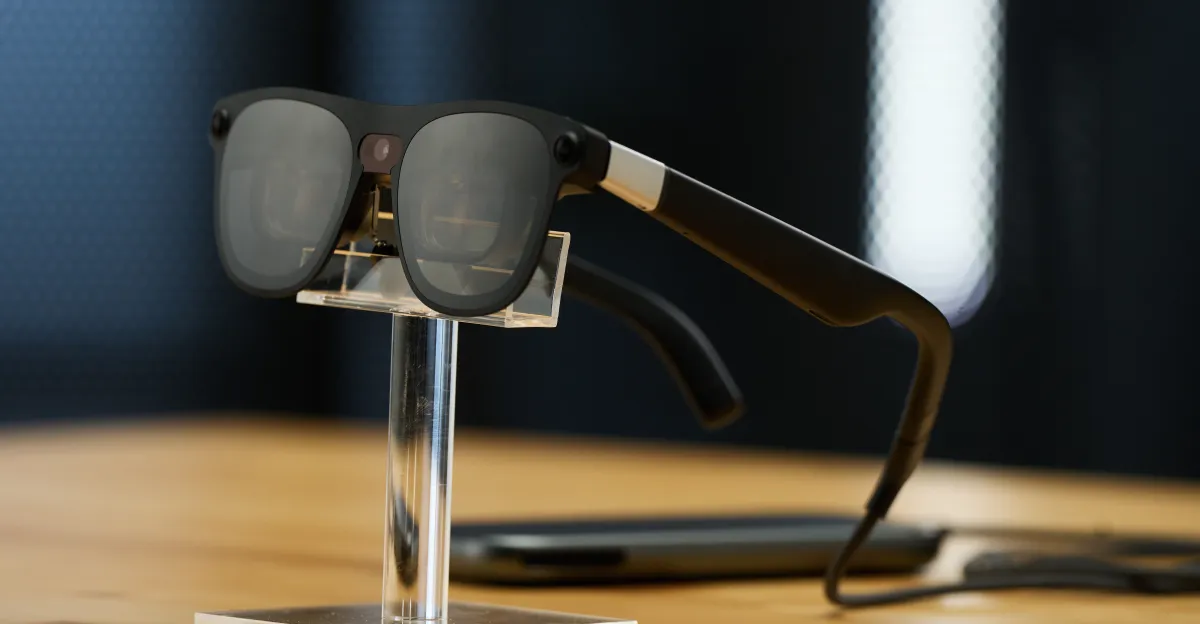
👓 The Gucci x Google Aesthetic: Conquering the Luxury Wearable Market with Project Aura
In the annals of technology history, few products have suffered from a shortage of functionality as acutely as Google Glass. For years, the concept was promising, yet the execution felt like a stark departure from human aesthetics—a "Geordi La Forge" anomaly in a world of discreet, seamless utility. We are poised at a critical inflection point where technology ceases to be about the hardware and begins to be about the lifestyle integration. With the reported partnership between Google and Gucci set to launch under the umbrella of Google's "Project Aura," the industry is witnessing a seismic shift. A magnetic convergence of Silicon Valley’s LLM efficiency and Milan’s sartorial elegance. This isn't just about making a pair of glasses; it is a calculated maneuver to demystify Advanced Reality Interfaces (AR/XR) for the discerning consumer. As we look toward the 2027 launch window, we are entering an era where the barrier to entry for spatial computing is no longer technical, but sartorial.
The era of "technobling"—tech accessories treated as mere novelties—is dead. We are moving toward "technosymbiosis," where the device is so beautifully engineered it dissolves into the user's identity. The rumored Google-Gucci collaboration represents the first major test of this hypothesis. By leveraging the heritage design language of a luxury powerhouse and bundling it with the "Project Aura" Android XR operating system, Google is attempting to solve the most difficult problem in hardware: convincing humans to wear computers on their faces. This post explores the architectural implications of this partnership, the technical hurdles of lightweight AR computing, and why the fusion of high fashion and AI is the only path forward for ubiquitous computing.
TL;DR: Google’s rumored partnership with Gucci, powered by Android XR's "Project Aura," is not just a vanity project—it is a necessary strategy to solve the adoption crisis in spatial computing. By prioritizing aesthetics, power management, and on-device privacy similar to contested retail partnerships with legacy brands, this collaboration aims to transition AR from a novelty into a lifestyle staple by 2027.
🔥 The "Why Now" — Sensory Saturation and the Need for Discretion
Why is 2027 the proposed launch date, and why does luxury fashion matter now? The answer lies in the saturation of the visual medium. Humans are visually overstimulated. Social media has conditioned us to expect constant visual feedback; however, we are instinctively repelled by devices that encourage, or force, us to always be "on." This cultural friction is the primary barrier to smart glasses adoption. We have already seen the success of the Ray-Ban Meta Smart Glasses, which sold hundreds of thousands of units by pivoting to a camera-first, audio-forward lifestyle rather than a computing-first one. But meta’s success underscores a limitation: the "blobs" aesthetic of the housing.
Google, however, faces a different challenge. Unlike Meta, which has built its hardware ecosystem around consumer photography, Google is pushing "Android XR"—a platform designed for spatial navigation, immersive web experiences, and persistent AR layers. Spatial computing requires a screen that rivals the luminosity and clarity of the physical world. Currently, the most viable technology for this is micro-OLED or an advanced LCoS projection system, both of which necessitate significant power and hardware bulk. If Google wants to make the "Project Aura" glasses—essentially the spiritual successor to Glass—work, they cannot rely on the "Cyberpunk sunglasses" trope.
Partnering with Kering, the parent conglomerate of Gucci, Bottega Veneta, and Saint Laurent, provides a shortcut to solving the "design friction" problem. Luxury brands have centuries of experience in comfort, ergonomics, and material science. Kering understands that a product must feel like a natural extension of the wearer ($20k watch vs $100 watch vs $100 time-phone). By stripping away the industrial "tech" noise and replacing it with acetate, titanium, and signature leathers, the user experience shifts from "wearable computer" to "premium eyewear." The timing is also optimal because Android XR is maturing; Google is no longer relying on gimmicks but on a stable, modern mobile OS foundation that can rely on cloud computing for heavy lifts while keeping experience local for speed.
🕸️ The Architecture of "Project Aura" and Android XR
To understand the magnitude of the Google-Gucci collaboration, we must look under the hood at the Android XR platform. For the uninitiated, Android XR marks Google's second major attempt at a spatial operating system, moving away from the alien usability of the original Glass. It is an OS designed to pivot 2D interfaces into a 3D space, bridging the gap between web apps and AR layers. The technical foundation of "Project Aura" relies on a sophisticated split-architecture philosophy, balancing between the heavy processing of the cloud and the latency-sensitive requirements of the headset.
🧠 On-Device AI Integration
The most significant engineering challenge is the AI processing load. Glass 2.0 was criticized (rightly so) for severe latency. To compete in 2027, "Project Aura" must utilize generative AI models that run locally. We are talking about running multimodal LLMs (Large Language Models) directly on the SoC (System on Chip) to process audio streams in real-time.
- Spatial Mapping: The glasses need to construct a real-time point cloud of the environment, vectorizing the user's immediate space to allow for AR interactions (like placing a digital Gucci tote bag on a dining table).
- Personalization Engine: The AI needs to learn the user's preferences. If the user prefers to see navigation overlays in "Monochrome" or "High Contrast," the model learns this locally without uploading biometric data to a server (paradoxically, a privacy feature that luxury consumers demand).
- CompOptic: Given the limited form factor, the optical engine determines the field of view (FoV). We are predicting "Direct-To-Eye" waveguide technology, which chunks data into light bands and beams them directly through the pupil optics, halving the physical thickness of the device.
🔋 Power Management and Thermal Throttling
Luxury materials like high-grade acetate can act as thermal insulators, trapping heat. If Google asks a user to wear high-end wood/acetate frames with embedded micro-OLEDs, thermal throttling becomes a design risk. The engineering solution likely involves a ** hybrid cooling system**:
- Passive Vents: Heat pipes routed through the temple arms (connecting pieces) which act as radiators.
- Phased-Change Materials (PCM): Embedded cholesteric liquid crystals that absorb heat changes from the core and release it slowly when the glasses are removed. This ensures that the wearer never suffers from "neural hot spots"—the discomfort caused by processors hitting temperature caps.
🦶 The "Seamless Hand-Off" Protocol
A critical, often-overlooked technical detail is the link between the glasses and a smartphone. For an 800 million Android user base, the glasses need to be peripheral devices. The protocol requires a Zero-Broswer Power Sleep State. Once the user leaves their phone's Bluetooth range, the glasses must switch to a "proximal cloud" mode. This utilizes "MultiACCESS" protocols, where low-latency data (audio, video feed) is cached on an edge device (perhaps a Kering-owned retail endpoint or local Wi-Fi mesh), meaning the glasses remain functional without a phone in your pocket—an essential feature for the luxury crowd who rarely carry bulky devices.
🛍️ Real-World Applications: From Concept to Commerce in 2027
While the engineering headlines are exciting, the actual value proposition lies in the application. How does a "Gucci-branded layer" of Android XR change the everyday user experience? The answer is found in Immersive Commerce and Contextual Assistance.
🏛️ The "Phygital" (Physical + Digital) Experience
Imagine walking into a physical Gucci store in Milan. Without your phone, your "Project Aura" glasses scan the environment and immediately overlay the "Digital Baguette." The AR layer shows the fabric texture (micro-perforation), allows you to rotate the back of the bag to see the grommets, and displays a dynamic price tag and real-time stock availability of different leathers (e.g., Marmont calfskin vs. GG Supreme canvas). The transaction is frictionless. You tap your temple to authenticate via biometrics (retinal scan), and the item is added to your digital wallet. This removes the "friction" that usually kills high-ticket purchases. You aren't researching later; you are seeing the purchase realization immediately.
🧠 Live Translation in High-Stakes Social Settings
For a business executive at the Met Gala or a tech summit, the glasses could offer a "Confidant Mode." As the microphone captures audio, the local AI transcribes speech into the user's field of view. Crucially, it uses tone analysis to flag anxious or aggressive language in red text, serving as a safety buffer. Furthermore, in multilingual conversations, it overlays subtitles in a custom font that matches the text style of the glasses (Monogram or Sans-Geometric), invisible to others but instantly legible to you. This moves AR from "gaming" to "survival" in complex corporate environments.
🎨 Digital Wardrobe Synchronization
This is perhaps the most "fashion-tech" specific use case. Linked to the cloud via the Kering ecosystem, the glasses can analyze the weather and the user's schedule. If it rains at 4:00 PM, the glasses might prompt the user with a notification visualizing how specific raincoats in their wardrobe might clash with their current outfit—everything rendered virtually. This is a form of "Genius AI Stylist" that operates in the physical realm, guided by the spatial mapping of the glasses informing the AI of body shape, fabric reflectivity, and lighting conditions.
⚡ Performance Metrics, Trade-offs, and Best Practices
As with any complex hardware solution, the integration of such powerful AI and optical technology comes with significant trade-offs. For engineering leadership teams considering similar hardware initiatives, here are the critical performance bottlenecks and optimization strategies.
💪 The Hard Performance Boundaries
- Display Lag: The magic trick of AR is that digital elements must track physical movement with zero latency. Any gap greater than 15ms is perceptible as a "lag" and induces motion sickness. This forces engineers to offload the "hand tracking" and "camera stream" processing to the dedicated NPU (Neural Processing Unit) on the chip, rather than using the main CPU.
- Battery Density vs. Thickness: As of 2023/2024, current lithium-polymer tech has a ceiling. To fit a reasonable 5-hour active usage time into a device that sits 14mm off the face (for optical reasons) requires breakthrough energy density. If the battery degrades in 18 months, that's a consumer relations crisis, especially for a $500+ luxury item.
- Social Acceptance Factor: If the glasses accidentally disables its camera in public spaces (privacy mode), but the user forgets that privacy mode is on, they may miss a crucial notification (like an Uber). Designing for "intuitive state awareness" is a UX engineering challenge that cannot be solved with a checkbox alone.
🛠️ Expert Tip: The "Chameleon" Design API
The API for designing smart glasses should not just be software. The thermal and material requirements must be exposed to the UI layer.
"Ensure your UI renders in grayscale or outlines when the frame temperature exceeds 38°C (100°F). This creates a visual feedback loop informing the user the device is under load, preventing thermal throttling anxiety."
The glasses need to be an act of contextual autonomic regulation. They should only deliver notifications that increase emotional stability or utility, not dopamine. The TPU (Temporal Processing Unit) should filter out "noise" notifications if the user is engaged in high-focus work or dining.
🎯 Key Takeaways
- 🎨 Aesthetics are the New Utility: No AI model will save a product that looks utilitarian. Luxury integration is the primary strategy for overcoming the social rejection of smart glasses.
- 🏗️ Android XR Architectures: Google is moving toward a distributed computing model where cloud LLMs handle heavy synthesis, while on-device NPUs handle real-time video/audio streams to minimize latency.
- 🔋 Thermal Ergonomics: Designers must now treat acetate and titanium as heat sinks, not just structural elements, integrating cooling plates into the frames.
- 🛍️ Phygital Commerce: The real killer app is "Augmented Shopping," where the glasses act as a personal shopper, reducing friction in high-ticket retail (checks Kering's core business).
- 👑 The Kering Ecosystem Leverage: This partnership is multi-dimensional; it grants Google access to exclusive retail channels and Kering’s massive digital infrastructure.
- 🚀 The 2027 Window: Google is betting on the maturation of chipsets (Snapdragon XR2 Gen 2+) to finally close the razor-thin gap between AR performance and passive sunglasses.
- 👁️ Privacy by Design (FOMO): High-net-worth individuals demand privacy. The glasses must become excellent at context-aware privacy (auto-blur when not looking, invisible traces).
Suggested Focus Keywords:
- Google Gucci Smart Glasses 2027 release
- Android XR Project Aura specs
- Spatial Computing fashion trends
- On-device AI smart glasses
- AR hardware thermal design
🚀 Future Outlook — The Evolution of the Wearable Interface
Looking past the immediate Gucci collaboration, we can speculate on the trajectory over the next 12–24 months. The partnership with Kering is likely just the first "Cover Shot" in a broader rollout of Android XR devices across other major fashion houses. We will likely see a Static vs. Dynamic Design Pipeline emerge.
Collections from Gucci, Balenciaga, and Yves Saint Laurent will debut with pre-loaded, embedded AR fashion shows within the glasses. You won't just watch a fashion show on your phone; you will watch the catwalk through the eyes of the participants via AR lenticular displays stitched into the sunglasses' lenses. This blurs the line between digital fashion and physical goods. Furthermore, we are moving toward New Sensory Interfaces. Since the glasses handle vision, the next step for the wrist (the next flat surface) is deep-sensing touch.
We will likely see a "Wrist-Glass" pairing where the glasses handle the visual data and the sleek, slim-lined smartwatch handle the haptic feedback (vibrotactile alerts) corresponding to the visual overlay. The term "Generative Reality" will enter the lexicon—users won't just consume media; they will generate it. The 2027 glasses will likely feature a "Creative Mode" that overlays the user's own artistic sketches onto reality in real-time, a feature currently relegated to expensive professional gear. The convergence of fashion, function, and creativity will redefine the human-computer interface, moving it from the hand to the eye.
❓ FAQ
Q: Why hasn’t Google Glass caught on before, and will the Gucci partnership fix that?
Google Glass failed due to premature deployment and a lack of clear social utility. It gamified work but annoyed consumers. The 2027 version fixes this by relying on "Implicit Utility." Unlike Glass, which waved in your face to take a photo, Aura will likely use gesture contours or eye-tracking activated modes. It will look like a normal pair of glasses until needed, bypassing the "Frankenstein monster" complex. The luxury wrap ensures that wearing it is a signal of status and style, not a badge of engineer identity.
Q: How does the Android XR operating system improve upon older AR versions?
Android XR represents a critical pivot toward Spatial UI (Spatial User Interface). Unlike the flat grid of a phone, Android XR treats verticality and depth as primary axes. It allows apps to be pitched and tilted. Additionally, it fixes the fragmentation issue by running on a unified GPU architecture (typically relying on Mali or Adreno underpinnings) that standardizes the webXR experience across all XR headsets, which is currently a patchwork.
Q: Can we expect the same level of AI intelligence as the new flagship smartphones?
Yes, but with architectural shifts. While flagship phones run heavy LLMs like Gemini, smart glasses must run Optimized Lite Models. The difference is in the Reactive Time. The AI on glasses is designed for "status checking"—notifications, navigation, translation, translation—triggered by sound or gesture. It is less about writing code but more about interpreting your immediate environment.
Q: What about battery life and charging?
For a 2027 release, battery life will likely not be "all-day" in the smartphone sense. Instead, it will employ Magnetic Inductive Charging docks found on retail store counters and at home. It will be a "Central Charging Station" device. By day, you wear it; by night, you dock it. The focus is on "Daily" cycles rather than "Weekend" autonomy, matching the behavior of luxury customers who iPhone-charge their devices essentially daily.
Q: Does this mean I have to buy a Gucci brand just to get the software?
No, Google's track record suggests an Open Ecosystem. Kering provides the shell, but the OS will likely run on standard webXR frameworks. While the Kering partnership might be exclusive for that specific optical packaging, the underlying "Project Aura" tech will likely be made available to other vendors who can meet Google's optical performance standards, preventing the platform from fracturing.
Share This Bit