🤖 The Optical Lens of Truth: Why Modular Telephoto Extenders Should Replace Digital Zoom
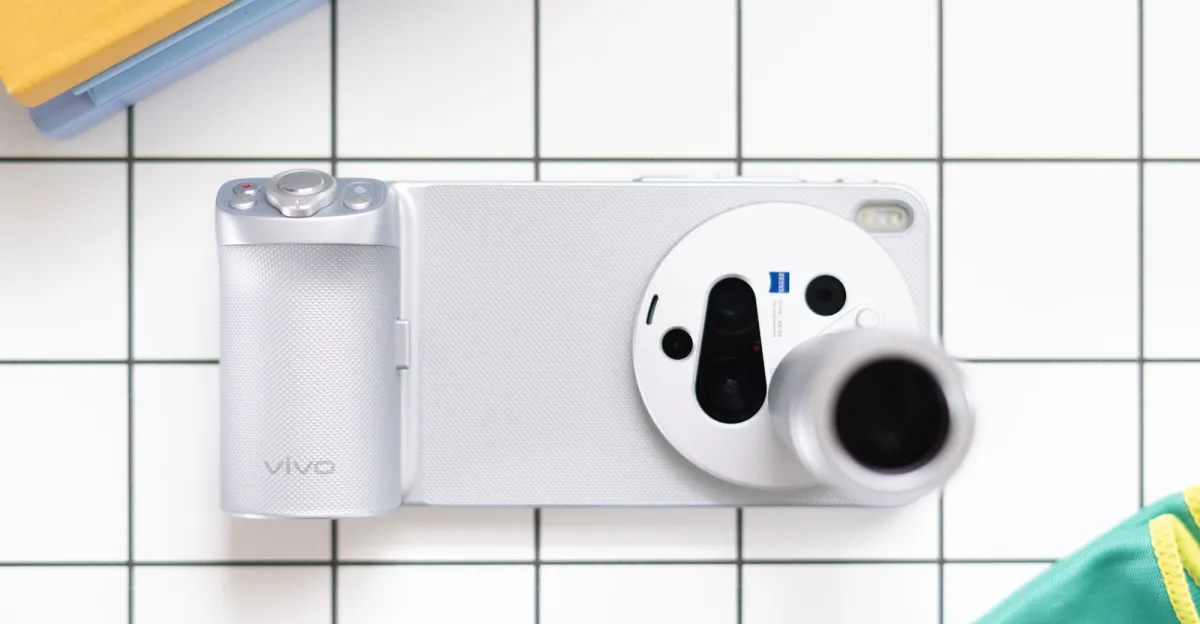
📸 More Phone Cameras Should Come With Telephoto Lenses
The smartphone has fundamentally disrupted the photography landscape, replacing dedicated cameras with a pocket-sized powerhouse that demands less skill but offers more resolution. Yet, despite the gigapixel sensor capabilities and tri-module lens arrays that grace the back of any modern flagship, we are fundamentally navigating the world through a "wide-angle" lens. We take photos from our chests, capturing everything in front of us rather than the details that define a scene. The imminent arrival of the Vivo X300 Ultra with its distinct "Ultra Camera Extension Kit" suggests that the next leap in mobile imaging isn't vertical stack sensor innovation, but rather horizontal optical reach. It is time to move beyond software simulation and embrace physical optics.
While the computer vision models behind our phone cameras have become sophisticated enough to save poorly framed shots, they cannot invent light. The Vivo X300 Ultra’s extender lenses serve as a stark reminder that while computational photography can enhance a capture, it cannot reproduce the physical compression of a long focal length. By physically attaching optics to the rear of a device, users can bypass the harsh blockiness of digital interpolation and experience the nuanced layering and compression that defines cinematic photography.
TL;DR: The Vivo X300 Ultra proves that phone cameras are suffering from a lack of optical reach. By combining a native telephoto sensor with a magnetic, modular extender kit, users can achieve DSLR-like reach without the weight. As AI models saturate, the next flagship upgrade shouldn't be more megapixels—it should be more focal length.
🔄 The "Why Now" — The Limit of Software Zoom
In the high-frequency data streams of the AI era, we are witnessing a paradigm shift in how we capture light. The gap between what a human eye perceives—depth, perspective, and subject isolation—and what a standard wide-angle lens captures is widening. For the last decade, mobile manufacturers have attempted to bridge this gap through computational tricks: neural networks that crop into the in-frame Ultra-wide sensor and "super-resolution" digital zoom. While impressive, these methods are fundamentally wasteful of data. Just-in-time inference on gigapixel resolution inputs is still prohibitively expensive for mobile silicon.
This is where the Telephoto lens kit concept hits a strategic inflection point. We are reaching the physical limit of optical gravitas that can be compressed into a "THL" (Three-Hundred-and-Something Level) device—the thin profiles consumers demand. The FCC and global trade regulations have forced manufacturers to strip out various hardware components to pass certification, yet we continue to run out-of-focus blurry images when scanning a stadium or trying to capture a subject from the safety of a back seat.
The Vivo X300 Ultra’s kit arrives at a moment when the industry is realizing that "passive" sensors are no longer sufficient. Users are demanding active composition tools. The "glitch" of carrying a weirdly sized lens on your phone is quickly fading as the annoyance of squinting at 8x digital zoom outputs becomes the new norm. We are transitioning from "Batch Photography"—snap a burst and hope—back to "Frame Photography," a discipline that relies strictly on optics.
🏗️ Deep Technical Dive — The Architecture of Optical Extension
The practical implementation of modular telephoto optics reveals fascinating architectural challenges that go beyond mounting a piece of glass on a piece of plastic. We must look at the "Pin-Stack" architecture of modern smartphone cameras. A typical flagship today carries a Main (Wide), Ultrawide, and Telephoto sensor stacked vertically. The Vivo kit diverges from this, providing a physical adapter that mounts optics in front of the existing telephoto sensor, effectively changing the optical path before the light even hits the sensor.
🔭 Focal Length Equivalence and Sensor Crop
Understanding the utility of the X300 Ultra kit requires a grasp of focal length and its effect on sensor area. A standard 64mm-equivalent smartphone camera (roughly 3.5x optical zoom) already isolates subject matter against a bokeh-filled background. When Vivo attaches the "200mm equivalent" extender to this telephoto sensor, it is not just "zooming in more"; it is fundamentally altering the geometry of the scene being recorded.
Consider the physics of a crop sensor, which is exactly what the phone sensor is. When light enters a standard wide-angle lens at a certain distance, it spreads diffusely across the large sensor area. As the focal length increases (zooming in), the rays converge more sharply onto smaller sections of the sensor. However, extreme telephoto photography introduces the "tunneling" effect, where the field of view becomes razor-thin.
The X300 Ultra’s approach utilizes a distinct optical lens element “puck” which, due to the laws of refraction, magnifies the image projected by the native telephoto lens. This creates a Large Focal Length. This is critical for photography because longer focal lengths change the perception of speed and distance. A child running toward you at 10 feet looks alarming on a wide lens; the same action at 20 feet using a 400mm reach looks cinematic and distant.
🧠 Computational Hard Limits of Digital Zoom
To appreciate why optical extension is superior, one must understand the degradation curve of digital zoom. Digital zoom is, technically, cropping. When you use software zoom on a 200MP sensor without native optical reach, you are asking the ISP (Image Signal Processor) to process less than 1% of the available data.
The noise floor of a sensor degrades exponentially as you crop. Modern AI denoisers like Snapdragon's HDR engine or Apple’s Photonic Engine are miraculous, but they cannot add detail that was never captured by the sensor. The X300 Ultra kit bypasses this entirely by leveraging native autofocus tracking on the telephoto sensor combined with the magnification of the dedicated optical element.
Think of it this way: Computational photography is the art of making the best of a bad exposure, while optics is the art of capturing a perfect exposure of what you want.
When the reviewer mentioned the inability to perfectly track a kid on a roller coaster using the extender, it wasn't a failure of software; it was a failure of physics. The camera was looking for contrast patterns in a highly dynamic, fast-moving environment. However, the flip side is that once composed, the detail retention in the static shots (like a demolition derby or a stationary carnival ride) was superior to any comparison they could have made using their main camera's crop.
🤖 Autofocus and Shutter Timing
Using a heavy extender changes the center of gravity and potentially the vibration dampening of the device. The reviewer noted a limitation when the lens "banged against the carnival ride seats." This is a mechanical engineering issue.
Standard phone AF points are either on-sensor PDAF (Phase Detection) or laser-assisted. When you introduce an extension lens in front of the telephoto module, you are essentially asking the phone to autofocus on a subject that is much smaller relative to the frame.
From a system architecture perspective, this requires the ISP to prioritize contrast detection subjects or require a more aggressive tracking algorithm that predicts trajectory. The "fun" aspect described in the hands-on—the "lock focus and exposure" half-press—suggests a manual "Orientation Locking" feature is being utilized. This confirms that to truly use these extender lenses effectively, the user interface needs to provide manual controls for shutter speed and ISO, areas where Android has historically lagged behind iOS for "pro" users.
🎯 Real-World Applications & Case Studies
The "Weirdo" Factor
The author of the source text admits to feeling "weirdo" at the spring fair, carrying a strap ripped from Apple's catalog and a phone tower of lenses. This is the immediate barrier to entry for mass adoption. However, this friction is disappearing for two demographics: serious hobbyists who shoot events without permits, and parents who want to document their children from a safe distance.
🎡 Event Photography: The "Pass" at the Gate
A significant use case for this hardware is situational awareness and permission. In the scenario described, a professional camera (Sony a7c) with removable lenses would have beenbidden entry at the derbies due to the caption "cameras with removable lenses." The Vivo X300 Ultra, with its rugged, integrated mount plate, presents as a unified, high-tech smartphone attachment, not a "camera rig." This is a masterpiece of social engineering in hardware design.
Users can now capture conflict, sports, or candid moments in areas previously restricted to patrons. The X300 Ultra's Zeiss lenses offer a distinct visual style—slightly cooler and sharper—than the typical "saturated phone look." This creates a professional output immediately, reducing the need for heavy post-processing.
👨👩👧👦 Long-Form Storytelling
Family outings often result in thousands of square photos of people's torsos. The narrow field of view of the X300 Ultra forces the photographer to move—physically shifting their position to find a compositional anchor. This is an invisible fracturing of the attention economy. By forcing the photographer to step back and look for a better angle, they are composing shots rather than just snapping.
The 400mm equivalent (whenever that specific attachment is utilized) allows for a form of "intimacy at a distance." You can zoom in on a student's expression in a crowd, or the expression of a driver in a demolition derby, without physically occupying their space. This creates a narrative distance that makes the viewer feel like a secret observer.
⚖️ Performance, Trade-offs & Best Practices
While the allure of the Long Mount is strong, the architecture is not without its sacrifices. The immediate tangible user experience is a disruption of the device's ergonomics.
🏋️ The Weight Distribution Problem
Mounting lenses changes the center of gravity. For the user, this means physical imbalance during walks. If the battery is in the bottom third of the phone (standard), but the weight is at the top third, the phone wants to nose-dive into the user's hip. The solution mentioned—attaching a pro camera grip—is architecturally sound, as it restores the balance point to where the hand naturally grips, but it adds bulk.
🔍 Mechanical Vibration
As noted in the review ("banging against ride seats"), the extender lenses introduce a vulnerability to physical shock. The delicate edge-to-edge glass of a standard glass phone camera module is surprisingly resilient to point impacts. However, if the extender lens is a "click-fit" plastic ring, it is not designed to withstand the trauma of bashing against steel or denim repeatedly.
Furthermore, the focal length magnification amplifies motion. A tiny hand tremor at wide angle is invisible. At 400mm equivalent, that tremor is six feet of camera shake. The X300 Ultra likely utilizes a heavier motorized OIS (Optical Image Stabilization) unit in the telephoto stack to compensate, but there is a hard ceiling to what OIS can solve before the shutter speed becomes too slow for a moving subject.
💡 Expert Tip from the Field
"When using extender lenses, abandon the reality of 'perfect focus' in favor of motion tracking. Hold the shutter button halfway down to lock exposure. Do not let go. The AI AF system will hunt, but it will eventually lock onto high-contrast details. Once locked, mash the shutter."
This technique turns a passive recording device into an active shooter's tool, mitigating the shake often caused by the gripping required to hold all that hardware.
🚀 Key Takeaways
- Optical Reach is Compositional Freedom: Adding physical reach allows photographers to flatten reality and isolate subjects in ways purely digital zooms cannot replicate due to noise and detail loss.
- Modular Kits Solve Space Constraints: The Vivo X300 Ultra proves that you don't need a massive DSLR to get long focal lengths; you just need a standardized mounting plate.
- Social Engineering in Hardware: Extenders that look like integrated accessories can navigate "No Photography" policies better than removable-lens pro cameras.
- The Physics of Zoom: Banging a lens hard against a seat doesn't damage the phone, but it does put stress on the mounting mechanism of the extender itself. Durable clamps are critical.
- AI Limits: AI cannot fix motion blur caused by shutter lag. Fast shutter speeds (or rigorous hand-holding) are still mandatory at high focal lengths.
- Perceived Value: Moving from "Basic Phone Camera" to "Camera Kit" creates a shift in the consumer's mindset from passive viewing to active capture.
🔮 Future Outlook — The 5-Year Horizon
The evolution of the telephoto extender kit points toward a future of "Passive AI Hardware." As we move away from closed-system proprietary camera modules toward standardized magnetic optics (much like Apple's MagSafe ecosystem but more robust), the phone could become a "stripped-down sensor" with modular objective lenses.
Imagine a future where the rear camera module is just a blank wall on a phone, with a universal magnetic rail. Travelers could swap between a fisheye, a 35mm portrait, and a 200mm sports lens simply by swapping weights. This theoretically means the phone manufacturer doesn't have to engineer difficult optical paths for every single device, reducing manufacturing cost and allowing the consumer to be the hardware architect.
Furthermore, vehicle integration. With the rise of VWID (Vehicle-Wide Infotainment Display) and cars allowed to be operated partially via phone screens, having a 400mm extender kit for a rear-seat passenger slot would revolutionize the travel experience. Concerts, sporting events, and even aerial photography (winch drones) would transform.
However, one must acknowledge the role of US restrictions, specifically the Foreign Ownership, Control, or Influence (FCOI) rules. Given that the Vivo X300 Ultra is currently China-exclusive, technological convergence in the West may be hindered until regulatory frameworks for these high-grade optical components loosen. The conversation shouldn't be about whether these lenses should exist, but how to package them into a sleek, consumer-grade accessory for the Galaxy S26 or iPhone 17 Pro instead of leaving them in the specialized device market.
❓ FAQ
Q: Can I use the Vivo X300 Ultra telephoto extension lenses on other phones? A: No. The mounting mechanism is proprietary to the X300 Ultra. This creates a "walled garden" effect where the phone is optimized specifically to work with that specific weight distribution and AF data of the lens. However, the industry is slowly moving toward standardized accessory mounts that could allow cross-brand use in the near future.
Q: Does the extender really help with the 200MP sensor resolution? A: Yes. The base telephoto sensor likely uses pixel binning (combining 4 or 9 pixels into 1 for light gathering). By using an optical extender, you are preserving the resolution of the sensor output rather than demosaicing a highly cropped digital image, resulting in sharper photos.
Q: Why don't US phone companies like Samsung or Google do this? A: In the US market, branding and thinness are prioritized over optical versatility. There is a lack of consumer demand for bulky lenses, and US carriers have historically been resistant to bulky accessories. However, with the aging of the "foldable" hype cycle, companies are looking for the next true hardware differentiator.
Q: Is the "gimmick" label fair? A: Initially, I dismissed it as a novelty. However, once you cross the threshold of 3x optical zoom, the utility of going to 8x or 10x via a small puck is undeniable. It transforms the phone from a "proxy eye" to a sophisticated tool. This transition from "gimmick" to "utility" is a common pattern in tech.
Q: How does this compare to the digital zoom found in Google's Pixel or Samsung's models? A: There is no comparison for visual quality. Digital zoom interpolates pixel data, creating a "plastic" texture. The optical extender magnifies the actual light falling on the sensor, creating a rich, cinematic texture that feels like film photography.
📝 Conclusion
The evolution of the smartphone is often sold to us as a journey into the infinite through megapixels and RAM, but sometimes the most meaningful leaps are measured in millimeters. The Vivo X300 Ultra’s telephoto lens kit is a tangible blueprint for the next generation of mobile engineering. It represents a return to manual control over optics, proving that the best camera is the one you have with you, provided it is versatile enough to see what you can't.
We are often trapped by the convenience of the wide-angle lens, capturing the world at arm's length, afraid to step back and truly compose a frame. By adopting the philosophy of optical extension, we free ourselves from the digital noise of software simulation. It is time for hardware giants to stop treating the zoom lens as an afterthought and start treating it as the primary creative instrument for the digital age.
For more insights on how AI and hardware convergence are reshaping the tech landscape, continue exploring the architecture at BitAI.
Share This Bit