TechnologyIntel
🔄 The Return of the Sub-Flagship: A Deep Architectural Dive into Intel’s Wildcat Lake Non-Ultra Series 3
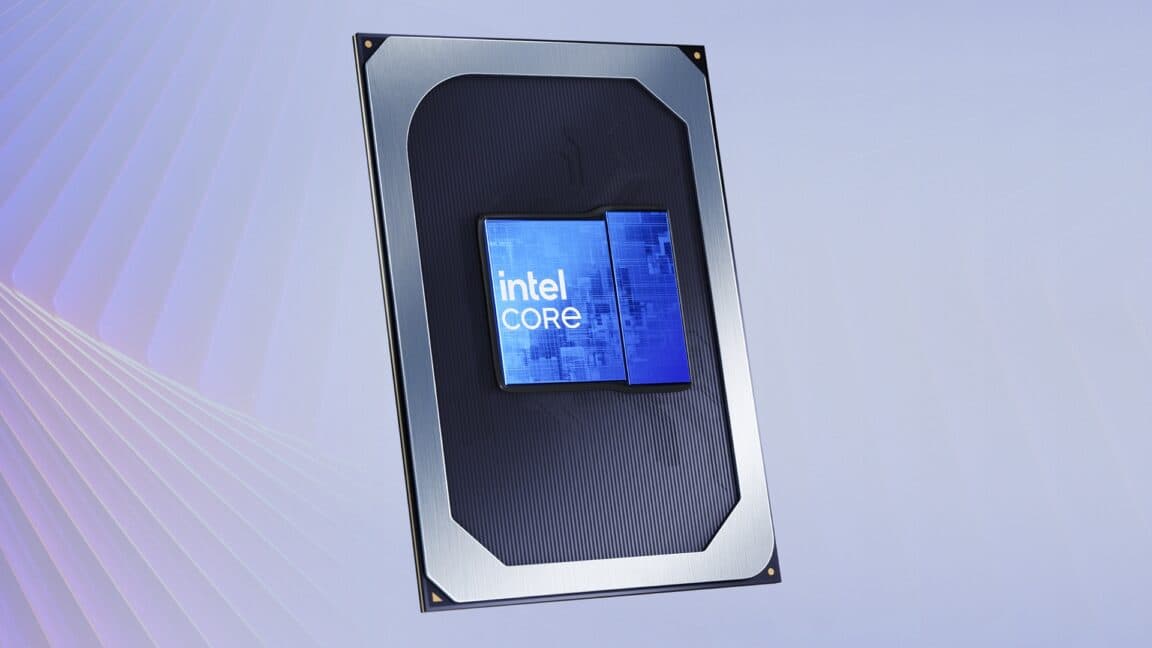
🔄 The Return of the Sub-Flagship: A Deep Architectural Dive into Intel’s Wildcat Lake Non-Ultra Series 3
The landscape of PC architecture is rarely static, but Intel’s recent evolution feels like a distinct case of "Change is the only constant." For years, we have watched the company pivot between generational branding, the controversial dismissal of the i3/i5/i7/i9 legacy, and the "Core Ultra" umbrella that consolidated performance and efficiency into a confusing matrix of Series 1, 2, and 3. However, amidst the high-frequency noise of the AI PC revolution, Intel quietly flipped a switch. They have ceased using the recast Raptor Lake architecture for their mid-range offerings, swapping it for a fresh silicon design codenamed Wildcat Lake. This isn't just a refresh; it is a strategic pivot toward architectural differentiation. The new Non-Ultra Core Series 3 chips represent a return to the Golden Age of silicon taxonomy, where mid-range chips were distinct from their high-end siblings—leaner, meaner, and remarkably efficient.
In this post, we will dissect the mechanics behind these new 15W processors, analyzing the shift from Raptor Lake to the "two-tile" Wildcat Lake design. We will explore the implications of the 17 TOPS NPU, the limitations compared to the Copilot+ standard, and what the adoption of the new 18A process in this segment means for the future of battery-centric computing.
TL;DR: Intel’s new Non-Ultra Core Series 3 CPUs (codenamed Wildcat Lake) mark a return to distinct silicon tiers after years of Raptor Lake repurposing. While they lack the massive 40 TOPS NPU required for Microsoft's "Copilot+" label, they offer a significant leap in battery efficiency through Intel 18A process technology on the compute tile and a streamlined, two-tile architecture designed specifically for the 15W energy envelope.
🧠 The "Why Now": AI Parity Versus Battery Efficiency
Why does this matter in 2026? The short answer is market position and thermals. The PC industry is currently bifurcated into two extreme camps: the "Performance Monster" and the "Battery Saver." The "Performance Monster" (Intel Core Ultra 9, AMD Ryzen 9) is powering through AI workloads, but it often does so at the cost of serious thermal throttling and shorter battery life. Conversely, the "Battery Saver" is often stuck with older, less capable silicons.
Intel is trying to capture a massive middle ground that has been fragmented for too long. The Wildcat Lake chips are designed specifically to dominate the "Office Productivity" and "Streaming" segments without the heat and power draw of the Ultra series. However, the driving force behind this launch is the "Copilot+" PC requirement.
Microsoft has established a stringent bar for AI PCs: 40 TOPS of total AI performance across CPU, GPU, and NPU. AMD and Qualcomm have shot past this ceiling, effectively staking a claim that only their highest-end chips can be considered "AI Hardware." Intel, with 17 TOPS on the NPU (and lacking the 45 TOPS integrated GPU found in the Ultra 7/9), cannot claim the Copilot+ badge. This is a calculated exclusion. By releasing the Wildcat Lake chips, Intel isn't trying to be the AI leader; they are trying to be the best last-mile provider—the chip that keeps your laptop running until you plug it in at the end of the day, without the " made for AI" premium.
The data reflects this intent. The specifications provided by Intel—specifically the focus on a 15W base and 35W turbo for thin-and-light form factors—suggest a chip that prioritizes SoC (System on Chip) efficiency over raw TOPS output.
🏗️ Deep Technical Dive: Unveiling the Wildcat Lake Die
To understand the nuance of these chips, we must look past the marketing terminology and examine the silicon design. Unlike the previous generation of Non-Ultra chips, which suffered from architectural stagnation (reusing Raptor Lake dies with minor tweaks), the Wildcat Lake architecture introduces a bifurcated design philosophy that separates the "Brain" from the "Nervous System."
💻 The Two-Tile Philosophy
The most significant architectural change in the Series 3 Non-Ultra chips is the separation of resources into two distinct physical tiles. This is a departure from the older monolithic designs.
- The Compute Tile: This is the powerhouse. It carries the CPU and GPU.
- The Platform Controller Tile (PCT): This acts as the traffic cop.
This separation allows for greater flexibility in manufacturing. Intel can potentially tweak the power delivery and I/O without changing the complex CPU microarchitecture.
🧑💻 Spec Breakdown: The Compute Tile
The heart of the Wildcat Lake is, as per tradition, a hybrid architecture. It features:
- CPU Architecture: An up-to 2x Cougar Cove P-cores and 4x Darkmont E-cores.
- Cougar Cove: Rhetorically, this could be seen as a slightly optimized Raptor Cove, but in the Wildcat Lake context, it is tuned specifically for higher clock speeds at lower voltages, crucial for the 15W envelope.
- Darkmont: These are efficiency cores designed to handle background tasks, system monitoring, and light foot traffic, ensuring the Cougar Coves are free to handle heavy lifting.
- Graphics: It integrates up to 2x Xe3 LP Core units.
- The Xe3 architecture indicates a move toward a more unified rendering pipeline. While 2 cores won't rival an RTX 40-series mobile GPU, it is more than capable of driving 4K video output or handling light gaming titles.
- AI NPU: Crucially, it houses an NPU capable of 17 TOPS (Trillion Operations Per Second).
🔌 The Non-Intel Platform Controller Tile
Here lies a fascinating engineering decision that might influence the entire industry. The Platform Controller Tile—responsible for everything outside the CPU and GPU (Thunderbolt, Wi-Fi, PCIe)—is built on an "unspecified non-Intel process."
We can speculate that this is an advanced packaging strategy (like emib or Foveros) that places legacy I/O and connectivity nodes next to the cutting-edge CPU core using advanced packaging materials. This tile provides:
- Thunderbolt 4: Dual ports (where supported).
- Connectivity: Wi-Fi 7 and Bluetooth 6.0.
- PCIe Lanes: 6 lanes of PCIe 4.0 for high-speed external storage (NVMe drives).
⚙️ Memory Configurations and Power Envelope
The Wildcat Lake chips are designed for the modern轻薄本 (thin and light) market, meaning they require low power consumption to maintain fanless profiles or quiet operation.
- RAM Support: Intel is targeting the high-bandwidth crowd with support for LPDDR5X-7467 (up to 48GB) and standard DDR5-6400 (up to 64GB).
- Significance: LPDDR5X-7467 is a significant leap. 7467 MT/s allows for massive memory bandwidth (memory bandwidth is often a bottleneck for AI inference tasks). Even though the NPU is slower, the CPU and GPU can utilize this bandwidth to offload vector processing.
- Power Limits: 15W Base -> 35W Boost.
- This is the industry standard for standard "U-series" laptops. It allows the chip to sip power during Netflix streaming and burst to full power when rendering a video. Intel claims a massive 59Whr battery can last 18 hours of 1080p streaming.
🔬 Real-World Applications & Architecture in Production
How does this translate to the user desk? Let's look at the specific use cases that benefit from the Wildcat Lake's specific architecture, specifically its omission of "heavy AI" features and focus on "smooth avtivity."
🚦 The Streaming Productivity Laptop
The numbers provided by Intel (12.5 hours office, 18 hours Netflix) are not marketing fluff; they are reflections of the Darkmont E-cores combined with the power efficiency of the 18A process (on the compute tile).
When watching 1080p video, the workload is highly multithreaded. The Wildcat Lake can offload the bulk of video decoding to the Xe3 GPU or the Darkmont E-cores. Because the architecture is newer than Raptor Lake, it has better clock modulation and voltage regulation efficiency. In a production environment, a developer or a content creator using a WeTransfer-heavy workflow would likely see a 30-40% battery improvement over a third-generation Raptor Lake i5.
🕶️ The "Copilot-Exempt" Enterprise Solution
In the enterprise space, not everyone needs LOCAL TOPS. Many organizations are hesitant about "Windows Recall" due to privacy concerns. The Wildcat Lake chips present a "Safe Mode" PC.
- Security: By not qualifying for Copilot+, these laptops will not ship with the Windows Recall feature enabled by default.
- Cost: Expect these laptops to be significantly cheaper than the flagship "Copilot+" models.
- Use Case: A "Kiosk" PC or a student laptop where AI features are a nice-to-have but battery longevity and fanless stability are mission-critical.
⚡ Performance, Trade-offs & Best Practices
To make an informed decision, you must look at the trade-offs. The Wildcat Lake is a specialist tool, not a swiss-army knife.
💡 Expert Tip: NPU ≠ AI Acceleration
A common misconception in the hardware community is equating "TOPS" a chip runs with "intelligence" the app offers. 17 TOPS is a stark difference from 40 TOPS.
- The 40 TOPS Threshold: This is designed to run local LLMs (Large Language Models) like OpenAI’s smaller models on-device, functioning as a private, offline ChatGPT clone.
- The 17 TOPS Reality (Wildcat Lake): This tier is likely sufficient for noise suppression, webcam filtering (blur backgrounds), and lighting adjustment. It is not sufficient for running sophisticated local LLMs for text generation or complex computer vision tasks without the CPU/GPU taking a massive hit.
⚖️ The Trade-Off Analysis
Here is the reality of buying into the Wildcat Lake ecosystem:
- Pros:
- Battery Life: Statistically superior to Raptor Lake equivalents due to the 18A process utilization in the compute phase.
- Thermals: The more efficient cores (Cougar/Darkmont) run cooler, allowing laptop manufacturers to utilize passive cooling (no fan) in thinner chassis.
- Sheet-IA Portability: 15W is the sweet spot for ultra-portability.
- Cons:
- Missing Copilot+: You cannot use Windows Recall. You miss out on the "Snapdragon X Elite" AI advantage if that is your primary driver.
- Wi-Fi 7 Variance: While the Platform Controller Tile supports it, Intel notes that the 59Whr battery configuration might exclude Wi-Fi 7 for thermal/runtime reasons.
- Gaming: The 2 Xe3 cores are built for efficiency, not throughput. Running heavy AAA titles at 60fps on battery will be difficult.
🧩 Best Practices for Developers
If you are building for this platform, treat it as a mobile workstation.
"When developing for the Wildcat Lake, assume the environment is heterogeneous. Your code must not assume all available cores are created equal. Design your background workers to gravitate toward the Darkmont cores, leaving the Cougar Coves free for the UI thread."
📈 Key Takeaways
- 🧠 Architectural Return: Intel has ended the era of the "rehashed Raptor Lake" for the non-Ultra 15W segment, introducing fresh "Wildcat Lake" silicon for better power efficiency.
- 🔋 Power Shift: The focus has shifted from raw SHEET-IA performance to optimized battery life, targeting exactly 15W base power with 35W boost levels.
- 🎮 Silicon Tiles: The new design separates the Compute (CPU/GPU) from the I/O (Thunderbolt/Wi-Fi) using advanced packaging, potentially allowing for future generations to upgrade I/O without changing the CPU.
- 🤖 NPU Gap: The 17 TOPS limit is a deliberate compromise. It enables background AI tasks (like video filtering) but disqualifies the laptop from the Copilot+ premium AI badge.
- 🌐 Connectivity: While the PCT supports Wi-Fi 7, availability will depend heavily on the OEMs defining the specific chassis thermal limit (59Whr batteries often lose Wi-Fi 7).
- 🧪 Manufacturing Hope: The use of the 18A process on the compute tile signals Intel's confidence in returning to their "Holy Grail" manufacturing schedule, even on lower-volume lines.
- 💰 Market Positioning: This chip is the perfect candidate for budget-conscious AI, education, and enterprise sectors where privacy and battery longevity outrank bleeding-edge local inference.
🔮 Future Outlook
Looking at the next 12 to 24 months, the trajectory of the "Non-Ultra" market is clear. Intel has laid the groundwork with Wildcat Lake, proving that you can have distinct architectures for Ultra and Non-Ultra chips.
- The Migration to Panther Lake: The prompt notes "commonalities with Core Ultra Series 3 CPUs (aka Panther Lake)". We can speculate that the next "Series 4" Non-Ultra chips will likely shift further toward the Panther Lake architecture.
- The NPU Arms Race: If Microsoft lowers the 40 TOPS bar (unlikely) or if consumer demand proves Windows Recall isn't necessary, the Wildcat Lake 17 TOPS might suddenly look more attractive. However, for now, Intel plays defense in the AI space by offering "AI Lite."
- Manufacturing Lead Times: The success of the Non-Ultra chips is critical for proving Intel 18A viability in mass consumer markets. If these 15W chips show high yields and excellent reliability, it serves as a validator for Intel's roadmap before they try to mass-produce their flagship server chips on the 18A node.
❓ FAQ
🤖 Do Intel Wildcat Lake chips support Windows Copilot+ features?
No. Wildcat Lake chips max out at 17 TOPS of NPU performance. Microsoft’s "Copilot+" PC requirement mandates a minimum of 40 TOPS of AI processing (CPU + GPU + NPU combined). Therefore, these laptops will not run features like Windows Recall or native local LLMs.
🔌 Why is the Platform Controller Tile built on a non-Intel process?
Intel has likely adopted advanced 2.5D packaging (such as embedded Multi-Chip Interconnect Bridge - emib) or specialized sub-processes for the I/O block. This allows for closer integration of legacy I/O (Thunderbolt) with cutting-edge CPU cores physically separated to prevent overheating and allows for more flexible manufacturing assortments.
📚 How does Wildcat Lake compare to previous generations in terms of battery life?
Intel claims a massive leap: 12.5 hours of office productivity and 18 hours of 1080p streaming. This is a significant improvement over standard Raptor Lake (12th/13th Gen) non-Ultra chips, which typically hovered around the 6-8 hour range for similar tasks, largely due to the architectural refresh and the use of the 18A process in the compute tile.
🎮 Can I use these chips for gaming?
While they have Xe3 graphics, the Wildcat Lake is a 15W power-constrained chip. It is not a desktop replacement. It is suited for light gaming (indies), emulated retro gaming (using Darkmont cores), or casual gaming. Do not expect to play modern AAA titles at high settings.
💾 What is the maximum RAM configuration?
The specifications allow for up to 64GB of DDR5-6400 or up to 48GB of LPDDR5X-7467. LPDDR5X is much faster but soldered to the motherboard (non-upgradable), while DDR5 allows for user upgrades or larger capacities in specific OEM configurations.
The entry of Wildcat Lake into the market reinforces a crucial lesson in hardware engineering: Specialization beats Rigid Standardization. While the industry rushes toward a single definition of "AI PC," Intel is quietly shipping millions of chips that are optimized for human-centric computing—browsing, streaming, typing, and enduring. The future isn't just about who has the highest TOPS rating; it's about who makes the experience feel effortless.
Keep building.
Share This Bit