OpenAIAIAI AssistantLLMAI Agents
🧬 The Socratic Specialist: Why GPT-Rosalind Is the Future of Biology
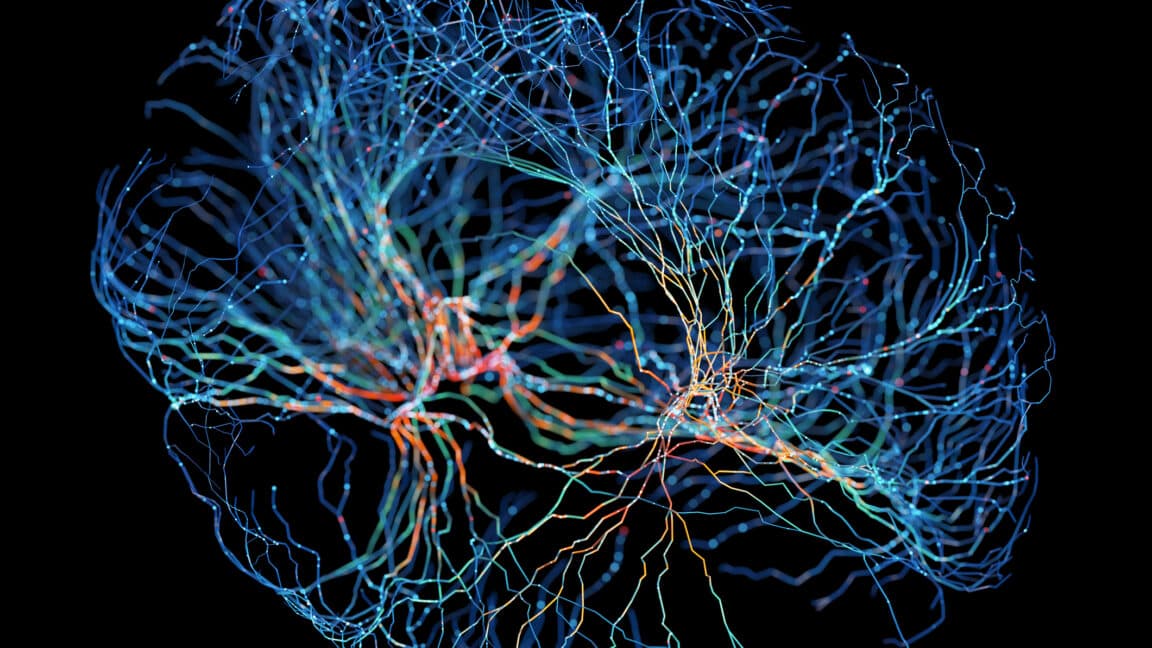
🧬 The Socratic Specialist: Revolutionizing Science with a Domain-Specific LLM
The modern biology lab is hitting an informational ceiling that is frankly, frankly crushing. We are no longer constrained by the resolution of our microscopes or the sensitivity of our thermocyclers; we are constrained by the deluge of data. Decades of advanced sequencing have generated petabytes of genomes, transcriptomes, and proteomes, creating a knowledge landscape so vast that a single researcher is statistically likely to be a layperson in almost every specialized niche they accidentally stumble into. Enter GPT-Rosalind: OpenAI’s seismic shift away from the generalist "jack-of-all-trades" AI model toward a highly specialized "master of one," specifically engineered to navigate the labyrinthine pathways of biology. In this deep dive, we aren't just looking at a new chatbot; we are examining a fundamental pivot in software architecture where the engineering stack meets the molecular stack, moving us closer to a world where algorithmic reasoning can propose viable drug targets in seconds.
In an era dominated by "dumb" APIs that connect to "smart" models, GPT-Rosalind represents the opposite trajectory: a model that is fundamentally smarter at one thing than a generic model could ever hope to be. Unlike the generic scientific models from tech giants that are trained on the open web—amassing a fragmented understanding of physics, literature, and botany—OpenAI’s new entrant was distilled specifically on 50 high-frequency biological workflows. This isn't just fine-tuning; it is a foundational architectural adaptation. By training on workflows rather than raw text, the model learns the mechanics of biology: how to traverse public databases like GenBank or ChEMBL, how to infer protein structures from amino acid sequences, and how to logically connect a specific genetic variation (genotype) to a phenotypic outcome (the resulting trait or disease). This connectivity creates a feedback loop where the model doesn't just predict the next word; it predicts the next logical step in a synthetic biology experiment.
🌊 The "Why Now": Why Biology Needs a Specialist AI
Why has the industry suddenly pivoted to biology-specific LLMs, and why is the timeline aligning in 2026? The answer lies in the mismatch between the capabilities of General Purpose AI and the rigid, multi-step nature of scientific research. Standard LLMs are optimized for conversation, which is often causal and loose. Biology is deductive and structural. When a biologist asks a generic AI, "How do I fix X," the generic AI returns a chemical recipe from Wikipedia that is outdated or legally restricted. Generalist models suffer from a "context vacuum"; they know the what and the where, but they lack the deep how required for wet lab execution.
Furthermore, the data bottleneck is real. The "Moor’s Law" for computer chips applies to the hardware, but global sequencing output is outpacing computational capacity. We are drowning in data, but we lack the human intelligence to curate it effectively. This is where GPT-Rosalind enters with a critical industry thesis: specialization beats generalization. By integrating specific workflows, we are bridging the gap between the database query and the lab bench. This is the critical turning point where AI stops being a "glass slipper" fit for all conversation and becomes a "workboot" for science. The urgency is driven by the need to translate genomic raw signals into actionable pharmaceuticals at a scale that human teams simply cannot maintain, addressing the "valley of death" where drug discovery is notoriously expensive and prone to failure.
🧠 The Architecture of Aptitude: Decoding GPT-Rosalind's Technical Stack
To understand why GPT-Rosalind works, we must dismantle the typical generative AI architecture and replace it with a domain-specialized variant. The core of this system relies on Workflow-Quantized Instruction Tuning. Unlike standard models trained on the entirety of the public internet, which contains ~1% relevant biological literature and ~99% everything else, GPT-Rosalind was distilled through a "curriculum of workflows." This means the training data mimics the logical flow of a lab. When a prompt comes in, the model doesn't just retrieve a fact; it navigates a process. It understands that to "suggest a pathway," it must first "fetch known interactions from the pathway database," then "filter by toxicity," and then "rate candidates by efficacy."
👨🔬 Rooting Out the Sycophant: The Skeptical Tuning Mechanism
One of the most profound architectural shifts highlighted by Yunyun Wang, the Life Sciences Product Lead, is the deliberate introduction of "skepticism" into the model's incentives. OpenAI realized that a sycophantic model—designed to agree with the user—is a danger in biology. If you ask an eager-to-please model to suggest a drug target for a rare fever, it might straddle the line and hallucinate a connection, potentially leading to wasted lab resources or, worse, dangerous experimental designs. To counter this, the engineers engineered a "Refusal and Correction" alignment. The model is heavily penalized for hallucinations and rewarded for confidence intervals.
🔬 The Semantic Bridge: Connecting Genotype to Phenotype
Under the hood, GPT-Rosalind acts as a sophisticated bridge between heterogeneous data types. Standard LLMs treat text as arbitrary tokens based on statistical probability. GPT-Rosalind, however, imbues tokens with semantic context relevant to biological structures. This allows the model to perform RAG (Retrieval-Augmented Generation) on biological context.
- The Mechanism: When the model "reasons" through a problem, it synthesizes information not just from the potential answer, but from the process of constructing that answer.
- H3 Example: 1D-to-3D Folding: The model doesn't just guess the answer; it processes the amino acid sequence. It visualizes the chain (1D), predicts the folding (2D), and infers the final structural topology (3D). This is a complex multi-modal reasoning task. It moves beyond simple NLP (Natural Language Processing) into NPB (Neuro-Protein Biology) reasoning.
# Conceptual architecture flow for a biological query
class GPT_Rosalind_Runner:
    def __init__(self, wg_id=50):
        self.workflow_graph = self._load_specialized_workflow(wg_id)
        self.sanity_check = openai.SkepticalPolicy()

    def analyze_gene_target(self, gene_sequence):
        # Step 1: Semantic Analysis of the Sequence
        sequence_key = embed_biology_model(gene_sequence)

        # Step 2: Pathway Inference via RAG
        potential_pathways =检索公共数据库(Workflow_Content=self.sanity_check)

        # Step 3: Toxicity & Efficacy Filtering
        safe_candidates = self._filter_candidates(
            candidates=potential_pathways,
            skepticism_factor=0.9 # High skepticism threshold
        )

        return self._debug_reasoning(safe_candidates)

# Insights:
# - The 'skepticism_factor' is a hyperparameter not found in standard
#   consumer models, ensuring biological safety.
# - Embedding biological data (like sequences) requires different
#   cluster math than standard text embeddings.
The "reasoning" ability cited by Wang refers to this multi-step navigation. It’s not a chain-of-thought "aha!" moment; it’s the model deftly tying metaphorical shoelaces (pathways) together where the laces (regulatory mechanisms) are dry and sparse. The "expert-level" designation is derived from specific benchmarks that measure precision recall in the context of PubMed literature and pathway databases, effectively mimicking a PhD student’s retrieval accuracy without the student's caffeine dependency.
🧪 Beyond the Chatbot: Real-World Applications in Production
If we look beyond the press release, where does GPT-Rosalind actually live in the wild? The utility of a biology-tuned LLM extends far beyond writing an email to a collaborator. In production environments, this model serves as a "Scientific Solution Architect." Take the scenario of a novel disease outbreak. A lab team in the US sequencing the pathogen won't be able to instantly read every paper ever written on that specific viral strain in 2025.
GPT-Rosalind automates the Literature review phase. It ingests the new sequence data—say, a mutated spike protein—and instantly queries its internal map of 50 workflows. It determines that "workflow 12" (variant analysis) is the active protocol. It then cross-references this against public databases to find pre-existing antibodies. This isn't just data processing; it's cognitive automation. The model prioritizes drug targets for the life sciences product lead. Instead of presenting a top-10 list, it presents a ranked logical progression.
Consider drug discovery pipelines: traditionally, identifying a drug target takes years. A human chemist looks at a protein, guesses it might be a receptor, and starts testing. GPT-Rosalind can simulate that intuition by analyzing the regulatory network surrounding that protein. If the protein sits at a "hub"—a singular node that regulates ten critical other pathways—the model flags it as a high-value target. This specificity allows biotech companies to reduce the "garbage in, garbage out" cycle of early-stage research, focusing expensive wet-lab simulations only on the most probable candidates. It effectively democratizes access to biological literacy, allowing a junior scientist to have a senior-level intuition regarding pathway connectivity.
⚡ Performance, Trade-offs & Best Practices
Deploying a specialized model like this isn't without its friction points. While the "skeptical tuning" helps, the architecture still battles the inherent noise of biological data. General LLMs are trained on roughly 45 trillion tokens of the internet's untamed chaos. While GPT-Rosalind was fed curated biological workflows, it is still anchoring its answers in a probability space with fewer "secure" weights.
🛠️ Tactical Deployment Guidelines
When engineers integrate these specialized models into existing stacks, they need to adhere to specific integration protocols to maximize utility and minimize hallucinations.
- Input Sanitization: Always scrub raw genomic sequences (FASTA/FASTQ formats) of low-quality noise before feeding them into the model. General-purpose noise prevents the specialized model from focusing on the signal.
- The "Chain of Curation": Do not treat GPT-Rosalind as a black box. Use it as a precursor layer. Ask it to list potential pathways, then take that list, and validate the steps with a human expert or a command-line tool (like BLAST) before execution.
- Context Window Management: Biology papers are dense. Don't ask the model to "read 50 papers in one go." Break the workflow into iterative questions: "List the mechanisms," then "Analyze the mechanisms," then "Refine the mechanisms."
💡 Expert Tip (The Dark Forest): Treat GPT-Rosalind not as a "Discoverer" but as a "Corroborator." In biology, theories can survive for centuries without evidence. When the model suggests a new pathway, view it as a hypothesis to be tested, not a fact to be used. The "skepticism tuning" keeps the AI from confidently spouting nonsense that sounds plausible, but always, always verify the synaptic connections with public literature databases before merging them into your research hypothesis.
⚖️ The Hallucination Trade-off
The most immediate criticism leveled at GPT-Rosalind (and LLMs in general) is the persistent issue of hallucination. While the skeptical tuning reduces confidence in bad answers, it does not eliminate the "creative" generation of novel biology that is totally false. An analogy needed here is the difference between "confabulating a story" and "inventing a protein." The model might perfectly explain the Krebs cycle because it has memorized the text, but it might invent a new enzyme function with a novel mechanism that cannot physically occur under the laws of thermodynamics. Engineers must treat the output as "visualized data" rather than "ground truth."
🔑 Key Takeaways: The Strategic Shift
- 🧩 Specialization > Generalization: Moving from generalist models to workflow-specific architectures creates a massive leap in domain accuracy.
- 🧪 The Skeptical Advantage: Political correctness is dangerous in science; GPT-Rosalind's "skepticism" tuning ensures the model errs on the side of caution rather than agreement.
- 🔗 Workflow Integration: The model's power comes from its training on specific operational workflows, allowing it to handle databases (like ChEMBL) rather than just human language.
- 🚫 The Regulatory Wall: Access is currently gated (US-based, trusted access), acknowledging the dual-use nature of biological engineering and the need to prevent malicious optimisation of pathogens.
- 🧠 Epistemic Humility: Even reasoning-level models need validation; biological data is too complex for a single model to verify 100% without human-in-the-loop verification.
- 📲 The Plugin Strategy: OpenAI is using a tiered access model (limited Life Sciences Research Plugin) to balance innovation with safety, a necessary strategy for high-stakes biotech.
- 🔮 Future Frontier: The shift toward "Semantic Reasoning" in AI—where models understand the structure of data (sequences, graphs) rather than just the text—is the defining trend of the next decade in scientific AI.
🎬 The Future Outlook: The Agentic Lab
What does the next 12 to 24 months hold for the intersection of AI and biology? We are on the precipice of the "Agentic Lab." If GPT-Rosalind is the Sherlock Holmes of bio-inference, the future tool is the Watson that does the legwork. Currently, models automate analysis; soon, they will automate experimentation. The infrastructure allows for "closed-loop" systems where the AI suggests a protein structure or a synthetic route, the lab automation gear builds it, and the sensor feeds the data back to the model for the next iteration.
We will likely see a fragmentation of the AI market. The generalist models (GPT-5, Claude 4) will remain excellent for coding and writing, but B2B companies will start to compete by snapping these generalist heads onto specialized biological bodies trained on RNA patching, histopathology, or structural biology. "GPT-Rosalind" is just the first iteration of a family of models. Eventually, we will see LLMs for specific organisms (e.g., "GPT-Mouse"), specific organelles, or even specific legal/ethical frameworks for clinical trials. The boundaries between the digital and physical worlds of biology will dissolve, and the model's ability to prioritize drug targets will be the guiding hand for the next generation of antibiotics and therapeutics.
❓ Frequently Asked Questions
H3: How does a biology-tuned LLM differ from asking ChatGPT about science? While a general model like ChatGPT has access to biology knowledge via the internet, it lacks the "soft skills" of a biologist. It doesn't know how to run the workflow. A biology-tuned LLM like GPT-Rosalind knows the specific syntax for querying the WHOOP database to find protein structures and understands the causal links between genetic markers and physiological symptoms. It optimizes for the process of discovery, not just the information retrieval.
H3: Is GPT-Rosalind safe to use in unregulated environments? No. As OpenAI has noted, the model is restricted to US-based trusted entities. The inclusion of "skepticism" tuning is specifically to flag potential harmful applications, such as identifying proteins that could increase the infectivity of a virus. Unregulated deployment poses a significant biosecurity risk, and the model is heavily gated to ensure the safety protocols are maintained.
H3: What does "reasoning" mean in this context? In OpenAI's context, reasoning is defined here as multi-step logical deduction. A standard LLM predicts the next token; a reasoning model connects token A to token B based on a logical chain of events. For GPT-Rosalind, reasoning means connecting a gene mutation to a metabolic pathway disruption based on known regulatory mechanisms, rather than just predicting a sentence that sounds like it fits the context.
H3: Can GPT-Rosalind actually predict protein folding? GPT-Rosalind can infer likely structural or functional properties of proteins based on text descriptions and amino acid sequences, referencing database records. However, it does not possess the spatial visualization capabilities of dedicated AlphaFold tools. It works best by suggesting candidates for analysis to a human expert, rather than replacing the specialized physics calculations required for exact protein folding directly within the text generation stream.
H3: What was the role of Rosalind Franklin in the model's naming? The naming is a tribute to Rosalind Franklin, a pioneering X-ray crystallographer whose work was instrumental in understanding the structure of DNA. By naming the model after her, OpenAI underscores the fusion of AI and humanistic scientific history, highlighting the transition from static data collection (as was Franklin's work) to dynamic generation and hypothesis testing.
This concludes our technical breakdown of the newest wave in AI-driven life sciences. If you are looking to understand how to architect pipelines that react to such specialized models, or if you want to explore the nuances of grounding AI in high-stakes data, check out our latest documentation on building AI governance frameworks.
Summary of Focus Keywords (SEO Strategy):
- Biology-tuned LLM: Primary Topic
- OpenAI Rosalind: Specific Model Name
- Drug Discovery AI: Application Sector
- Genomic Data Analysis: Technical Process
- Skeptical AI Alignment: Safety Mechanism
- AI in Science: Broader Industry Context
- RAG (Retrieval Augmented Generation): Technical Implementation
Share This Bit