Technology
💎 The Vault is Titanium, but the Wall is Drywall: Microsoft Recall's Architectural Blind Spot
🔒 The Vault is Titanium, but the Wall is Drywall: Microsoft Recall's Architectural Blind Spot
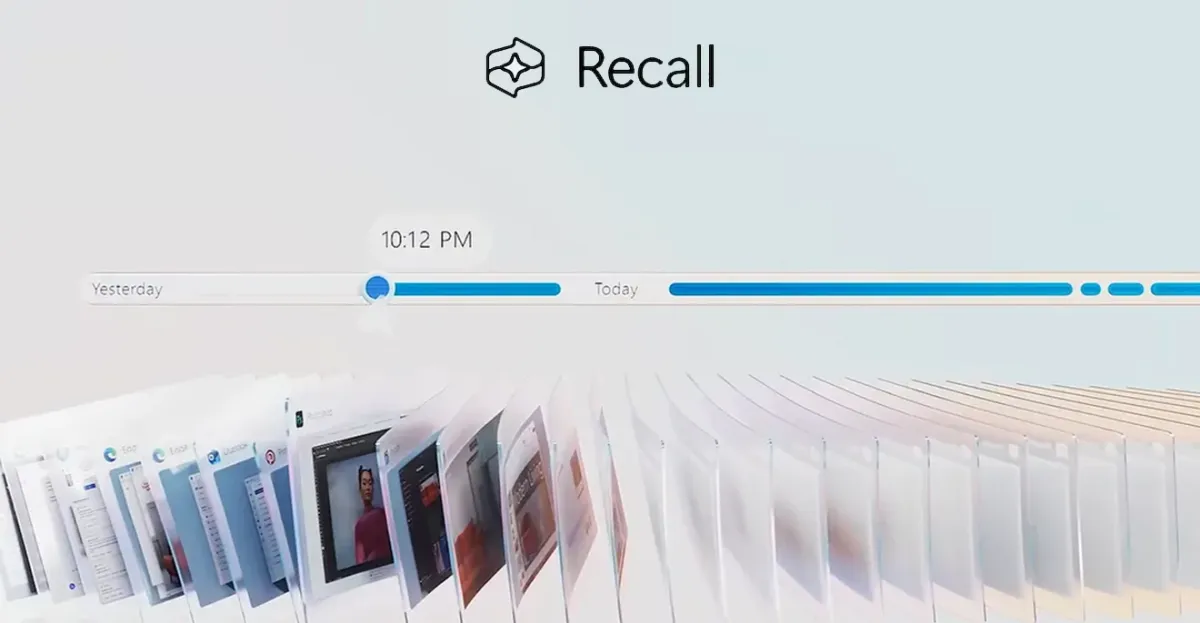
The intersection of artificial intelligence and consumer operating systems has always been a double-edged sword: we chase convenience with one hand while aggressively guarding our digital sovereignty with the other. Recently, Microsoft ignited a firestorm with the announcement of Windows Recall, an AI-powered feature designed to take screenshots of your daily activities to help you search through them instantly. While the promise of a "second brain" for your PC is seductive, the initial backlash was swift and unequivocal, branding the feature a catastrophic security vulnerability. Now, after a one-year design overhaul focused on hardened security, a chilling development has emerged. Security researcher Alexander Hagenah has released a sophisticated new tool, TotalRecall Reloaded, which demonstrates that the very architecture Microsoft built to secure this data is susceptible to bypass through standard OS mechanisms.
In this deep dive, we will peel back the layers of Microsoft’s new defense strategy—focusing on Virtualization-based Security (VBS), hardware enclaves, and Windows Hello—and analyze exactly how modern malware can use Windows’ own flexibility against it. We will explore the concept of "latent malware," the meaning of stateless authentication failures, and why the "Trust Boundary" Microsoft believes it has built is actually much more permeable than they admit.
TL;DR: Microsoft’s redesign of Windows Recall introduced a VBS-backed secure enclave and Windows Hello authentication, aiming to create an "unhackable" vault for screenshots and keystrokes. However, researcher Alexander Hagenah’s "TotalRecall Reloaded" proves that while the hardware vault is solid, the software interface allows malicious processes to wake up the Secure Element, bypass authentication constraints, and exfiltrate sensitive AI-correlated data.
🔥 The "Why Now" of AI-OS Integration
Why does this matter now? We are currently witnessing the "Copilot Era," where the OS is no longer just a static container for applications but a dynamic reasoning engine. The pressure on OEMs and software architects to embed AI into the silicon layer is immense. Microsoft’s push for "Copilot Plus PCs" hinges on the promise that this AI runs locally, protecting your data. However, the delivery mechanism—the "Kernel Sink"—takes a massive snapshot of what is moving through the memory.
This creates a massive asymmetry. The capability to reconstruct your day, your passwords, and your messages is infinitely more valuable to a hacker than a traditional screenshot image. The fact that Microsoft attempted to ship this feature without a glass-box proof of concept has made this a defining moment for Edge Device Security. As CEO Satya Nadella famously postured, "If you’re faced with the tradeoff between security and another priority, your answer is clear: Do security." Yet, the implementation of Recall seems to prioritize "do convenience" over the rigorous mathematical proofs required for zero-trust memory enforcement.
🏗️ Deep Technical Dive: The Myth of the Ironclad Enclave
To understand the breach, we must first understand the fortress. Microsoft’s redesign of Recall was rooted in Virtualization-based Security (VBS) and the concept of a "Secure Enclave." On a functional level, Recall attempts to map the GPU memory (where screenshots are generated) into the secure state. It uses a "Kernel Sink" to hash image frames into the memory.
🧠 Understanding the Secure Enclave Architecture
Microsoft moved the core logic of Recall out of the standard application space and into a restricted, hypervisor-managed environment. The goal was to protect the data at rest using Hardware-enforced Memory Encryption and Integrity.
- The VBS Enclave: This is a chunk of memory secured by the Hypervisor, invisible to standard OS kernels.
- Windows Hello Integration: The system requires a face or fingerprint scan before it serves up the data to the user interface. The logic dictates that if malware were running, it couldn't "see" the UI to steal the data, nor could it access the VBS memory.
🧱 The "Drywall" Vulnerability: How Injection Bypasses The Boundary
The critical architectural flaw identified by Alexander Hagenah lies not in the encryption algorithms or the hypervisor enforcement, but in the software boundary between the secure vault and the insecure user interface.
"My research shows that the vault is real, but the trust boundary ends too early," Hagenah states. He explains that this isn't a hack of the TPM (Trusted Platform Module) or the ENCLAVE itself, but rather an exploit of the software orchestration layer.
Here is the technical breakdown of how TotalRecall Reloaded executes a bypass:
- Concurrent Execution (The Race): The tool runs in a standard, unsigned user-mode process. Standard Windows processes have the ability to inject code into themselves (or other processes) to manage their own memory and UI thread. Unauthorized processes utilize this legitimate API to "wake up" the Recall UI component.
- Triggering Authentication: In the redesigned operation, the malicious process sends a signal to the Recall service requesting a page view. This triggers a Windows Hello prompt. The hacking tool does not bypass the face scan; it forces it.
- The Stateful Leak: Once the user successfully authenticates (or if the attack uses a "clickjacking" vector to obscure the prompt), the authentication session is open. The totalRecall tool then queries the API exposed by the Recall service to fetch the cached data. Because the service validates the current user's token rather than detecting the presence of the malignant token inside the same memory space, it serves the data.
- Polymorphic Querying: Hagenah describes the tool as "stateless" to Microsoft. By leveraging rapid, anti-hammering protections that are designed to slow down a single script, but can be flooded by a temporary daemon, the tool can re-poll the database faster than protections can lock it down.
This highlights a terrifying reality about the Windows Security Model known as Protected Process Light (PPL). Microsoft admits that user-mode processes have legitimate flexibility to modify their own code and memory—flexibility that is abused by malware to simulate the conditions necessary for this bypass.
Code Example: The Mechanism of "Latent Malware" Injection
# Conceptual representation of the injection vector described in the analysis
class MalwareInjector:
    def __init__(self):
        self.target_process_id = sp.OpenProcess(PROCESS_ALL_ACCESS, False, RECALL_UI_PID)
        self.remote_thread = sp.CreateRemoteThread(self.target_process_id, ...)

    def wake_and_hijack(self):
        # The tool injects logic directly into Recall's UI thread logic
        payload = self.generate_screenshot_request_payload()
        sp.WriteProcessMemory(self.target_process_id, local_memory_offset, payload)

        # Trigger Callback: Forces Windows Hello UI to pop up in the background
        self.target_process_id.InjectEvent("TRIGGER_AUTHENTICATION_UI")

        # During the "blink" or user interaction, grab the memory dump
        time.sleep(2.0) # Wait for user interaction window
        stolen_data = self.dump_recalled_state()
        return stolen_data
The fundamental issue is the OS flexibility. Windows allows a process to modify its own code. This act of self-modifying code is a standard part of dynamic link libraries (DLLs). However, in the context of a secure enclave, this act is akin to the "Trojan Horse" story—if the wall protecting the city is manned by the same soldiers that let the horse in, the city falls. Here, the "enemy" is inside the process, and the process's own permission to modify itself allows the extraction of the drywall that surrounds it.
🧪 Real-World Applications and Forensic Context
While "TotalRecall Reloaded" is a research tool and not yet widely deployed in the wild, its existence provides a concrete blueprint for forensics. The dark side of this capability is understanding how Infostealers could be evolving.
Currently, malware like "RedLine" or "Lumma" targets clipboard data, passwords, and browser sessions. Recall goes a step further by storing context.
- Redacted Text: Imagine a text editor window open showing a password. Recall captures this even if it's masked. An infostealer could simply request the Recall data for that window, bypassing the clipboard snipper that the malware itself might accidentally overwrite.
- Polymorphic UI: If an attacker can mimic the "Authorized Recall Process" via user-mode injection (bypassing the Kernel Guard logic), they could have a local admin on the machine feeding them high-value context data directly from memory.
This moves us toward a future where Memory Scraping is the standard vector for high-value enterprise espionage, rather than network interception or credential stuffing. The attack surface is local, intimate, and recursive.
⚡ Performance, Trade-offs, and Best Practices
The implementation of Recall creates a distinct performance tax. Hashing high-resolution screenshots every few seconds consumes significant GPU compute cycles and RAM bandwidth. The "Secure Enclave" helps isolate this from user-facing performance, shifting the cost to the background security infrastructure.
However, the architectural trade-off is clear:
- Security vs. Flexibility: Windows allows user-mode injection. The trade-off is that the network inference attacks described above are technically impossible to legislate away without drastically reducing the usability of the OS.
- The "Optional" Paradox: It is worth noting that Microsoft has made Recall optional. Users can uninstall it. But as an AI-native OS feature, it is rarely fully disabled in enterprise environments where productivity-intelligence balance is required.
💡 Expert Tip: If you are a security-hardened architect evaluating this, do not rely on the "Vault is Titanium" heuristic. Your threat model must account for the memory manipulation capabilities of standard system processes. If a malicious actor has access to the user session, they can simulate the intent required to retrieve data from the Secure Enclave, bypassing access control via the Enclave Host.
💡 Key Takeaways
We've seen that while Microsoft has made significant improvements in the cryptographic layering of Windows Recall, the security boundary is defined by a "soft" software layer rather than hardened hardware enforcement. Here is the summary of this architectural fracture:
- 🛡️ Hardware Enforcement Exists: The VBS Enclave and memory encryption are robust and difficult to breach directly.
- 🚪 Trust Boundary Failure: The gap exists between the Secure Enclave and the OS Application Host, known as the user-mode boundary.
- 🧩 Lateral Movement via Injection: Malware can use legitimate OS programming interfaces (PPL/User-mode) to inject triggers into the Recall UI, forcing authentication and data disclosure.
- 😵 Stateless loopholes: Protecting against single-threaded hammering is insufficient against polymorphic, background threading designed to exploit state timeouts.
- 🔐 Authentication is not Impersonation: The system trusts the presence of a valid user token, even if the request originated from a third-party process injected into the same memory context.
- 📊 Data Value is Increased: Recall captures more than images; it captures context history (browsing, messaging, typing) that creates a high-value surface for memory scrapers.
🚀 Future Outlook
What happens next? We are likely to see a renaissance of Hardware Root of Trust standards for AI specifically. The industry will move toward "AI-Chiplets" where the memory controller itself prevents data export to standard DRAM unless authenticated via a specialized cryptographic key handshake. We may also see the emergence of "VBS-Agnostic" Recall, where the data never leaves the secure hypervisor context but is processed there, rather than copied into user memory for HTML rendering (the "Drywall" leak point).
Furthermore, expect legal and compliance standards to shift. GDPR and other privacy laws treat "surveillance" data differently than "usage analytics." Microsoft’s experience with Recall will likely spur a new class of "Privacy by Design" regulatory frameworks that require a "Zero-Click" architecture where data never touches a standard RAM structure at all.
❓ Frequently Asked Questions
How does TotalRecall Reloaded bypass Windows Hello?
TotalRecall Reloaded does not bypass the Windows Hello biometric scan. Instead, it leverages Windows' software flexibility. It injects code into the Recall UI process or mimics a user interaction to force a Windows Hello prompt to trigger. It then waits for the user to authenticate (or utilizes a timing window) to scrape the data before the session token expires. It relies on the fact that the authentication check validates the "Current User," not the "Source of the Request" (which is malware).
Why is the Windows "Injection" capability considered a threat?
Windows architecture allows processes to modify their own memory and code payloads to enable dynamic features. This is a standard practice for software updates and DLL injections. However, malicious actors (malware) use the exact same API calls to inject their own logic into the Recall service. Microsoft argues this is a feature, not a bug, because malware can capture screenshots without Recall regardless. The flaw is that Recall did not sufficiently distance itself from the EVIL process to prevent it from "ringing the doorbell" to access the good content.
Can I completely disable Windows Recall to be safe?
Yes, Microsoft has provided an uninstall option for the Experience Feature. However, removing the snapshot data is not the same as removing the exposure. The architecture relies on kernel sinks and secure memory management. If you do not trust your hardware's security validation (which is a stretch for most business users), the risk remains theoretical but high. Disabling the feature removes the high-value vector.
What is "Latent Malware"?
"Latent Malware" refers to malicious code or scripts that run in the background without immediately causing harm or stealing data. It "rides along" like a passenger, waiting for a specific trigger—such as a user authenticating to a secure system—to execute a specific exfiltration payload. In the context of Recall, this malware would sit dormant until it wakes the UI to trigger the Windows Hello prompt, at which point it strikes.
Is Microsoft addressing this vulnerability?
Microsoft's official stance is that the changes demonstrate intended protections. They claim the access patterns are consistent with how Windows works and that the authorization system (with timeouts and anti-hammering) prevents abuse. They accepted the disclosure but categorized it as a logic flow exploit rather than a cryptographic breach, indicating they do not see it as a "Security Boundary Bypass" in their strict definitions. However, the researchers stand by their assessment that the flaw undermines the promise of "security-first" AI.
💎 Conclusion
The saga of Windows Recall is a masterclass in the difficulty of balancing revolutionary AI innovation with the rigid requirements of cybersecurity. It appears Microsoft built a fort made of titanium to store their gold, but left the roof open, allowing anyone with a ladder (user-mode injection) to climb in. Alexander Hagenah’s TotalRecall Reloaded serves as a necessary shock to the system, proving that Privacy by Design must encompass the behaviors of the operating system itself, not just the hypervisor.
As we move deeper into the age of AI-native PCs, we must remember: Trust is not built on what is hard to hack, but on what is impossible to fake. Until Windows完美 (perfectly) isolates the user-mode manipulation layer from the secure data layer, the Wall will remain, at best, a highly fortified wall with a slightly cracked foundation.
If you found this analysis of the security architecture behind AI operating systems insightful, be sure to subscribe to the BitAI newsletter for deep-dives into the intersection of architecture and intelligence.
Focus Keywords: Windows Recall security, TotalRecall Reloaded, Microsoft Recall vulnerability, VBS Hyper-V, AI privacy breach, Windows Hello bypass, memory scraping malware.
Share This Bit