AppleMicrosoftXboxTechnology
The Xbox-M365 Bundle: Orchestrating a Counter-Strike Against the MacBook Neo
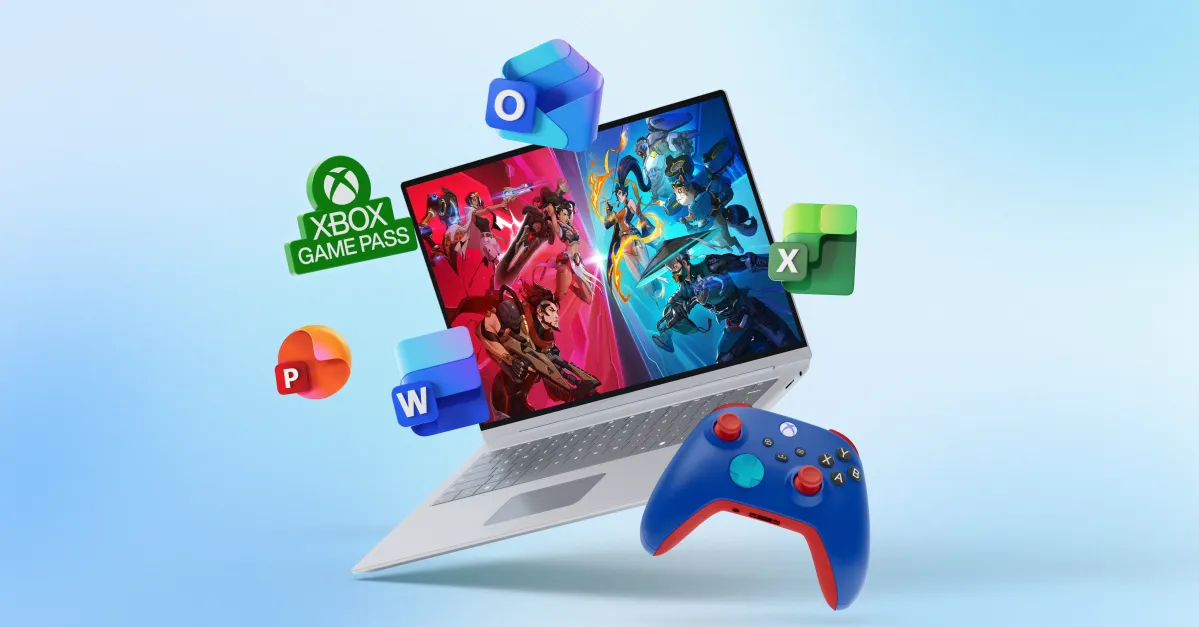
🤯 The $599 Shockwave: How Microsoft’s Arcade Bundles Modernize Windows for the New Generation
TL;DR: Apple’s MacBooks entering the sub-$600 arena has triggered a fundamental re-evaluation of the Windows ecosystem. Microsoft’s response isn't just shallow discounting; it’s a sophisticated orchestration of hardware partner incentives, software ecosystem lock-in, and service monetization. By bundling Xbox Game Pass and Microsoft 365 Premium, Microsoft is attempting to redefine the value proposition of a PC, moving beyond raw silicon specs to total user value and retention.
The introduction of the MacBook Neo has done more than just offer a slightly brighter screen or an OLED panel; it has punctured the corporate vow of "nec plus ultra" in pricing, establishing a $599 floor for premium ultrabooks. For Apple, this is a defensive move to keep the education demographic from migrating to Windows. For Microsoft, this is a strategic emergency. However, the response from Redmond is not one of panic, but of calculated, aggressive marketplace engineering.
It’s a classic David-vs-Goliath scenario, but with a twist: Microsoft is arming its "Davids"—Acer, Asus, Dell, HP, and Lenovo—with a payload of digital ammunition. We are witnessing a paradigm shift where the hardware vendor no longer owns the customer at the checkout counter; the service provider does.
📉 The High-Stakes War for Student Economics
The "Neo Effect" is the first domino to fall in what analysts are calling the "Budget Supercycle." Until now, the education market was segmented by price. You had cheap Chromebooks and expensive MacBooks. The middle was non-existent. The MacBook Neo destroyed the middle.
Where a base model MacBook Air retailed at $999, the student pricing dropped to $499. This is not a discount; it is a price war. The implications for the hardware supply chain are terrifying. PC manufacturers (OEMs) are operating on razor-thin margins. A $10 margin on a laptop suddenly evaporates when a competitor sells a functional, albeit less optimized, machine for half the price.
To understand the gravity of this move, one must look at the economics of the student. Students are budget-constrained. They are value-maximizers. If $499 gets them a long-battery-life, wallet-friendly Apple computer, why would they pay $800+ for a Windows machine?
Microsoft’s counter-argument is essentially: "Yes, you can buy Apple. But you can't play the smash-hit game Starfield or do your Thesis work without paying us $100 a year extra." This is the pivot point.
Microsoft is effectively saying: "We aren't just selling you a computer; we are selling you a portal to a lifestyle and a suite of productivity tools." This is the beginning of the "Per-User Economy"—where the hardware is the green energy, but the subscription is the utility.
🏗️ Dissecting the "Microsoft College Offer" Architecture
The mechanics of this offer are fascinating because they reveal how Microsoft is restructuring its B2B2C partnerships. It is no longer a simple transaction: Manufacturer sells Box to Consumer. Now, the loop is more complex.
📡 The Ecosystem Lock-In Layer
The core of this architectural change is the bundling of 12 months of Xbox Game Pass Ultimate alongside Microsoft 365 Premium.
From a technical architecture standpoint, this is a masterclass in retention engineering. The Windows OS is the foundation—the web server, the display driver kernel. But it is unresponsive without a user.
- Xbox Game Pass provides the dopamine hit. It mitigates the "jank" that often accompanies Windows gaming (driver updates, compatibility issues) by offering a certified, cloud-streamed or local library of titles.
- Microsoft 365 provides the utility. It forces the user into the weeds of OneDrive, Teams, and Copilot.
When a user activates these services, they are syncing their lives to the Microsoft Cloud. The "stickiness" of the device increases because the data is cost-prohibitive to leave. Moving your thesis from OneDrive to Google Drive is annoying. Moving your Game Save progression because you bought a Mac is a catastrophe for a student gamer. By offering these "freebies," Microsoft lowers the Competitive Cost of Switching.
⚙️ The ARMic Friction
Interestingly, the source material highlights devices powered by Qualcomm’s Snapdragon X processor. This positions these machines in a unique technical niche.
While Apple has the M-series chips, which are native to macOS, the Snapdragon X Elite represents Microsoft's push for an open ecosystem. However, running "Neural Processing Unit" (NPU) accelerated workloads on Windows-emulated ARM is a unique engineering challenge.
The irony here is delicious. Microsoft is using its software muscle to counter a hardware invasion. The PC makers providing these Snapdragon laptops are banking on the "Instant On" experience of ARM to compete with the portability of the MacBook, while Microsoft ensures they have the software legs to stand on it.
🛠️ Deep Technical Dive: The Logic of the Bundle
To understand why this matters technically, we must look at the Cost of Acquisition (CAC) versus Lifetime Value (LTV). For a student starting college, a laptop purchase is a massive sunk cost.
Microsoft’s strategy relies on the "Long Tail" of value.
- Hardware Discount: Brings the student through the door ($429 - $599).
- Software Welcome Bonus: Creates immediate utility ($365 of value added at zero initial cash outlay).
- Auto-Renew: A subtle, implicit trap. If they cancel the Xbox subscription or the 365 license, they lose the value of the bundle, creating friction against switching platforms later.
Let's visualize the logical flow of this strategic decision:
graph TD
    A[Apple Announces $599 MacBook Neo] --> B{Microsoft Competitive Reaction?}
    B -- No Action --> C[Sales Loss: Student Demographic]
    B -- Aggressive Bundling --> D[Hardware Partners Discount Devices]
    D --> E[Lower Barrier to Entry]
    E --> F[Bundled M365 + Game Pass]
    F --> G[High Stickiness / Ecosystem Lock-in]
    G --> H[Future Job Skill / Content Creation Opportunity]
    C --> I[Long term OS Market Share Decline]
    H --> J[Stabilization of Windows Market Share]
💼 The Economics of the OEM Consolidation
The inclusion of major OEMs like Acer, Asus, Dell, HP, and Lenovo suggests a centralized command structure. Microsoft is effectively allocating "advertising credits" or "margin supplements" to these manufacturers.
In the enterprise world, this is known as "Buy-In" programs. Microsoft pays Lenovo to not only put Windows on the hardware but to actively market the specific bundle configuration. This aligns the incentives. If Lenovo pushes a MacBook Neo, they lose the margin kickback from Microsoft for the specific partner hardware.
This is a technical strategy regarding Supply Chain Coordination.
🧠 AI Integration Considerations
While the prompt focuses on hardware deals, we must analyze the AI implication. Microsoft 365 Premium is the gateway to the future of AI-assisted computing (Copilot, advanced analysis tools). Apple offers similar tools, but the deep integration of these AI features with the AI-accelerated laptop chips (M2/M3 or Snapdragon X) is the battleground.
By giving away the software that runs these AI interfaces, Microsoft ensures that the hardware in a student's hand today is the hardware capable of running tomorrow's AI models. It is investing in the "Training Data" of its own future workforce.
🌐 Real-World Applications & Case Studies
Let's look at how these plays are manifesting in the real world.
🖥️ The "OmniBook" Example
Walmart’s promotion of the HP OmniBook 3 at $429 is a targeted strike against the entry-level Mac market.
- H3: Hardware Analysis: The Snapdragon architecture in these devices is often misunderstood. It is not a weak x86 emulator; it is a fresh start for efficiency. It allows for multi-hour battery life without needing a massive power brick (which the Neo also lacks).
- H3: The Student Workflow: A student buying this will likely sit in a lecture hall. The $429 price point allows schools to replace desktop labs entirely with cheap, efficient, fanless laptops for non-CAD students.
🎮 The Gaming Ecosystem
The inclusion of the Xbox Design Lab controller is a sneaky brilliant move.
- H3: The "Casual" Conversion: Most students are not buying an Xbox console for $500. They are buying games for $10 a month.
- H3: Hands-on Interface: Giving them a controller makes the transition from PC gaming to Console gaming seamless. If they love the controller, they are more likely to subscribe to Game Pass Ultimate.
📦 Surface as the Trojan Horse
Microsoft is discounting its own Surface devices days after raising prices. This indicates a reaction time of near-zero. Surface devices in this price bracket are usually mid-range.
- Case Study: The Surface Laptop Go or comparable ASP models are likely being re-targeted at students who want "brand cachet" without paying the heavy tax of the Pro models.
By doing this, Microsoft maintains its dual-earnings strategy: subsidized hardware volume from partners (Lenovo/Dell) to capture the mass market, and premium margins from Surface to maintain brand integrity and enterprise security partnerships (SSTP).
⚡ Performance, Trade-offs & Best Practices
The strategy relies on optics—or rather, "Perceived Value."
📊 The "Related Tuple" Problem
There is a distinct trade-off in buying a sub-$500 Windows laptop over a sub-$600 Mac. The "Tuple" (Rustica) of quality: Performance, Build, Display.
- Apple optimized this tuple perfectly.
- Windows competitors often make a trade-off on build quality to hit the price point.
The bundles do not fix this. You cannot bundle "build quality" in a subscription. This is the weak point of the strategy. Users will eventually "feel" the difference when dropping the laptop or opening a heavy pre-game app bundle.
🛡️ Security and Privacy
Microsoft is a large server of data. By bundling 365, they are escalating the surveillance-protection debate.
- Tip: Students must understand that "Free" software usually implies "Free to use" but "Expensive to sacrifice privacy." However, for 12 months, the security provided by enterprise-grade Defender and SSO (Single Sign-On) is a distinct advantage over the "walled garden" of Apple or Google.
💡 Expert Tip
"Don't just look at the hardware price tag. Calculate the total cost of ownership based on software needs. If you need Office Suite and you want to play AAA games on low settings, the bundle makes the Windows machine mathematically viable. If you just need a PDF reader, the MacBook Neo still wins on battery and build."
🚀 Future Outlook: The Next 12-24 Months
We are entering a volatile era of OS pricing.
Apple has proven that $600 is a "Psycho-Smart" price point. It is just high enough to be considered "premium," but low enough to be accessible to parents. Windows OEMs are squeezed. They cannot drop prices further without destroying inventory value.
Therefore, the Software-First Strategy is the only path forward.
- Hardware Stagnation: We won't see massive price drops. We will see consolidation. Better screens and faster Wi-Fi 7 will be the upgrades.
- Service Penetration: Bundles will become the norm. We will see Intel subscription chips (though unlikely) or deeper integration of cloud computational power where the local machine is just a dumb terminal.
- ARM Warfare: We will see more Snapdragon-based laptops. The challenge for Microsoft is ensuring that general desktop apps (Adobe Photoshop, AutoCAD, DaVinci Resolve) run natively or near-natively on these chips. If they do, the MacBook Neo is obsolete instantly.
The "Neo Effect" will force Microsoft to double down on Windows 11 features that make it feel like a distinct platform, different from macOS. Features like Teams integration, Copilot, and Xbox connectivity already do this.
✂️ Key Takeaways: The Architecture of Counter-Attack
- 📉 The $600 Floor: Apple has established a new psychological baseline for computing. It forces the Windows market to re-evaluate its default pricing strategies.
- 🔐 Ecosystem Lock-in: The bundle (M365 + Game Pass) is designed to make switching difficult not because the hardware is locked, but because the ecosystem content is locked.
- 🤖 AI-First Bundling: Microsoft is effectively "Premium-ing" AI tools. By giving away the software that includes AI copilots, they are training the next generation of workers on their platform.
- 🏢 OEM Consolidation: This deal requires the collective "buy-in" of the major PC manufacturers. It signals a rare unified front against a single competitor.
- 🕹️ Gaming as a Value Prop: Since you can't easily beat Apple on raw portable power, you win on entertainment. The Game Pass integration is the "heart beat" of the deal.
- 🔋 ARM Ambition: The inclusion of Snapdragon chips is a bid to unify the hardware architecture under a unified "Always Connected PC" development model, leveling the performance playing field.
- ⚖️ True TCO: The cost analysis is shifting from Initial Purchase Price (IPP) to Total Cost of Operation (TCO), where annual subscriptions are the true cost drivers.
🗄️ FAQ: Decoding the Move
❓ Why did Microsoft offer this bundle so early this year?
Microsoft typically runs major back-to-school campaigns in August and September. Launching these deals in late Spring or June (or throughout the summer as reported) suggests an urgent reaction to the MacBook Neo announcement. It is a preemptive strike to prevent students from locking into an Apple ecosystem before the school year begins.
❓ Is the Snapdragon processor in these laptops a good investment?
In short, yes, if you prioritize battery life and portability over raw desktop-replacement power. Qualcomm’s Snapdragon X Elite is a powerhouse chip that is efficient but sometimes lags significantly behind Intel Core Ultra or AMD Ryzen in heavy-rendering or high-end productivity workloads. However, for a student laptop—a device for reading, writing, and light editing—the efficiency advantage allows for the thin, light chassis that Apple offers.
❓ Will I actually get a free Xbox controller?
Only if you participate in the Xbox Design Lab promotions. The primary deal is the bundled Game Pass Ultimate. The controller is an optional add-on for customization or a specific localized promotion tied to partners like Walmart or Best Buy. It is not universally distributed with every qualifying PC purchase.
❓ How does this compare to Apple's $100 student discount?
Apple's discount (essentially raising the price to $999 then selling it for $899, or selling the $1200 base model for $1099 and the "Neo" for $499) is a static price adjustment. Microsoft's offer is dynamic and value-additive. You are paying the equivalent or slightly higher price for the same base hardware, but receiving $200-$300 worth of software credits. This is "Silverware Pricing"—it appears you aren't spending more in total (or feel less pain at the register), but the vendor captures value on the recurring service revenue.
❓ Which manufacturers are actually benefiting from this?
The list is comprehensive: Acer, Asus, Dell, HP, and Lenovo. These companies are the beneficiaries of the margin subsidies provided by Microsoft to drive adoption. By participating, they validate the "Wintel" (Windows + Intel/ARM) partnership against the "Apple Silicon" ecosystem.
🎬 Conclusion
The battle for the student demographic is merely a proxy for the next decade of computing. By ceding the hardware price war to Apple, Microsoft has decided to win the software war. The move—bundling 12 months of productivity and entertainment into a sub-$600 package for students—is a masterstroke of retention marketing.
It acknowledges a hard truth: For the next generation, a computer is not a static vessel; it is an access point to a digital life. By subsidizing the Access Point and monetizing the Portal, Microsoft is leveraging its "M&A" (Marketplace and Application) dominance to keep pace with Apple's "Hardware-First" dominance.
If this works, we will see a revitalization of the Windows market, characterized not by faster processors, but by richer ecosystems. The MacBook Neo will remain a beautiful object. The question is: will students choose the object, or the lifestyle?
Stay tuned for more deep dives into the intersection of Enterprise Architecture and Consumer Tech on BitAI.
Keywords for this post: Windows Laptop Deals, Apple Neo Impact, Student Tech, Xbox Game Pass Ultimate, BitAI Architecture, Tech Market Analysis, Microsoft Strategy.
Share This Bit