IndiaUPIGoogleMetaAmazonGoogle PayPhone Pay
Why Amazon & Meta are Lobbying for New UPI Rules: India's Market Share Crackdown Explained
🚀 Quick Answer
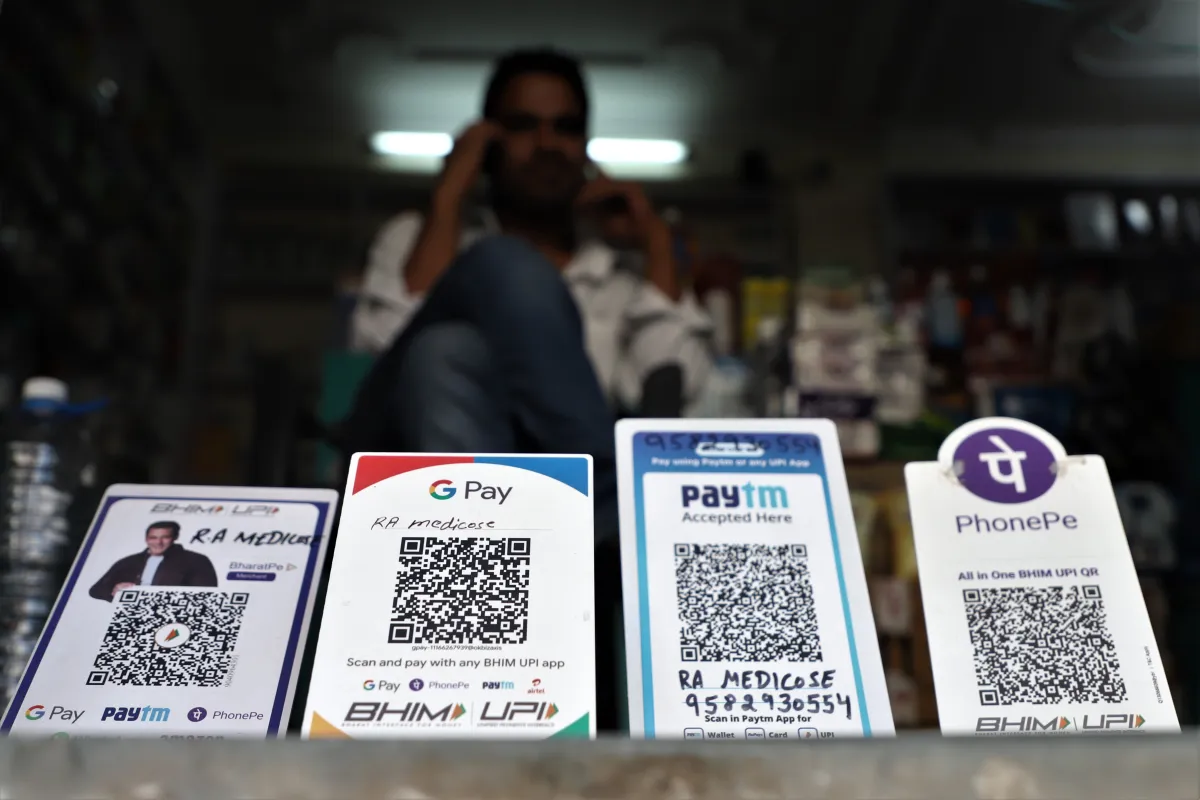
- Major Agressive: Amazon, Meta, CRED, MobiKwik, and Flipkart meet NPCI Thursday to challenge current UPI dominance.
- Core Issue: Google Pay and PhonePe control ~80% of UPI transactions, prompting calls for UPI market share regulation.
- Key Demands: stricter limits on user acquisition, fair access to merchant onboardings, and protections against data abuse.
- Context: The proposed 30% market cap was delayed from 2025 to 2026, but still looms large over the industry.
- Impact: A regulatory shift could fundamentally change how developers build and integrate payments in India.
🎯 Introduction
India’s digital payments landscape faces a seismic shift as rumors of UPI market share regulation intensify. While Prime Minister Modi pushes for digital rupee global expansion, the country's instant payments market is scrutinized. The Supreme Court recently cleared the path for the National Payments Corporation of India (NPCI) to address UPI market share regulation, sparking fears among startups and smaller fintechs that the market is about to get harder to navigate.
This isn't just about corporate lobbying; it’s a code war being fought in parliament, not just on GitHub. The potential caps illustrate a classic trade-off: consumer dominance versus competitive fairness.
🧠 Core Explanation
A high-stakes meeting is scheduled for Thursday in India, where executives from Amazon Pay, Meta (WhatsApp), CRED, MobiKwik, and Flipkart’s Super.money will sit down with the National Payments Corporation of India (NPCI).
Why? To push back against the monopoly of Walmart-owned PhonePe and Google Pay.
Data from NPCI shows a stark reality: PhonePe and Google Pay combined accounted for roughly 80% of the 22.6 billion transactions on the UPI network in March. When you have a business model that relies on hyper-density—where 1 billion users are necessary to make the economics work—it is nearly impossible for a new player like MobiKwik or Amazon to compete fairly without regulatory intervention.
The agenda isn't vague. They are seeking restrictions on how dominant apps onboard users, requests for fair access to merchant data, and scrutiny over data collection practices.
🔥 Contrarian Insight
"The fear of a duopoly is overblown; what we are seeing is a defense of 'Network Effect Lock-in' masquerading as a fight for consumer fairness. When Google removes the UPI button from the home screen, it’s not just convenience; that’s a hard-coded API call to their operating system. If the GPL (General Public License) applied to mobile OSes the way it does to software, the DOJ would have intervened a decade ago. The fact that this is just now becoming a 'regulatory issue' highlights how weak the mobile OS is as a platform compared to the Web."
🔍 Deep Dive / Details
The Political Economy of UPI
The UPI system is the backbone of the Indian digital economy. While it has democratized payments by removing the "fat finger" problem of entering bank details, a "winner-takes-all" dynamic has emerged.
- The Deferred Cap: A year ago, India considered capping any single app’s share of UPI transactions at 30%. This deadline was moved from 2025 to December 31, 2026. The delay effectively gave PhonePe and Google Pay more time to cement their dominance, ensuring that the 30% cap—if implemented—will be hitting already dominant players significantly harder than new entrants.
- User Acquisition Moat: PhonePe recently crossed 700 million registered users and spans 98% of India's postal codes. For a new app to acquire merchants, they need to be visible to users. If the incumbent control the interface, they control the access to the network.
- The Lobbying Tactics: The input from TechCrunch suggests the lobbying focuses on "product design and monetization." This is developerspeak for "They are too good at extracting value from us."
🏗️ Industry Architecture Analysis (The Tech Perspective)
From an engineering and product architecture standpoint, this battle is interesting.
The Current Ecosystem: Currently, UPI is a rails system. Apps like PhonePe and Google Pay are Super-Apps or wrapping layers on top of these rails.
- API Fragmentation: Smaller apps often struggle because UPI pushes are not uniform. PhonePe has integrated deep with BHIM and state-specific payment systems, creating a massive, non-documented API pile-up that new developers hate building against.
- Data Hygiene: When the dominant players onboard users, they implicitly "own" the relationship via the OS overlay. If the government or NPCI steps in to enforce "clean" onboarding—where a user must choose who they are paying and where the money goes—the UX for the user becomes worse (more friction), but the data access for the app becomes fairer.
⚖️ Practical Value: What This Means for Builders
If you are a developer building the next big thing in Indian payments, this Hollywood script plays out in your codebase:
- Don't rely on Network Effects alone: If you are building a loyalty app tied to payments, assume you won't automatically get the merchant base of PhonePe.
- Deep Integration is Key: You cannot just ask users to launch a UPI app. You need a custom UI (UI Kit for UPI) that feels branded. The lobbying from big tech suggests they want to win back the "launch point" on the phone screen.
- Compliance is the New Feature: The "fair access to features" clause means you might need to lobby for the same level of integration (like AutoPay and Payment Mandates) that PhonePe has secured.
Action Item: Audit your app's reliance on UPI APIs. If you are just a display layer over the default UPI prompt, you are exposed to these regulatory shifts.
⚡ Key Takeaways
- Policy Shift: A significant meeting at NPCI Thursday will address UPI market share regulation concerns.
- The Problem: PhonePe and Google Pay command roughly 80% of all UPI transactions.
- The Solution (Demanded): Restrictions on user acquisition tech and data access for smaller competitors.
- The Outcome: Users might see slightly more friction (choice prompts) if regulators force the "big apps" to stop being the default.
❓ FAQ
Why did India postpone the 30% market cap last year? They wanted to ensure the ecosystem was stable and had time to let smaller players breathe, but the dominance of Google Pay and PhonePe persisted, reigniting the crisis.
Can a third app like Amazon Pay compete with Google and PhonePe? Not easily on standard UPI. Their competition comes from "Buy Now Pay Later" (BNPL) and Payments Bundles, but on pure transaction volume, the duopoly is formidable.
What exactly will the regulation change for users? Ideally, less data snooping and less forced app usage, but practically, it could mean you have to choose your payment app every time you pay, rather than it happening automatically.
🔗 Related Topics
- UPI vs UPI Credits: How India's Payment System is Splitting (Technical Guide)
- The Death of the Payment Gateway: How PhonePe is Building a Financial OS
- NPCI vs Google: The Battle for India's Digital Wallet
🔮 Future Scope
The next 12 months will be critical. If the meeting on Thursday results in concrete "fair access" rules, we will see a flurry of technical standardization specs coming out of NPCI to define who gets to see what data. If the government pushes the 30% cap harder, we might see a temporary but chaotic restructuring of the market shares.
🎯 Conclusion
The struggle between Amazon and Meta to stop Google Pay and PhonePe is about more than market share; it is about the future architectural control of India's money flow. As developers, we should watch this closely because API standards in banking move slowly, but political decisions move fast.
If you are in the FinTech space, prepare for the argument that "open access" is about code, and "fair access" is about policy.
Share This Bit